 Boao Rubber
Edge Conveyor Belt Technology: Optimizing Bulk Material Handling in Bangkok
An in-depth analysis of vertical transport engineering, regional demand dynamics in Thailand, and global supply chain resilience.
1. Context & Regional Industrial Landscape of Bangkok
Bangkok, the economic epicenter of Thailand, has evolved from a commercial shipping port hub into a sophisticated nexus of high-value manufacturing, food processing, and chemical distribution. The surrounding Eastern Economic Corridor (EEC) initiative has further catalyzed regional investments in automotive fabrication, metallurgy, and infrastructure development. With space becoming a premium commodity in industrial zones like Samut Prakan, Pathum Thani, and the Bangkok Metropolitan Area, local plant layout designers are facing the critical challenge of configuring vertical or near-vertical bulk transport systems.
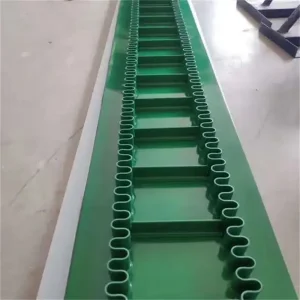
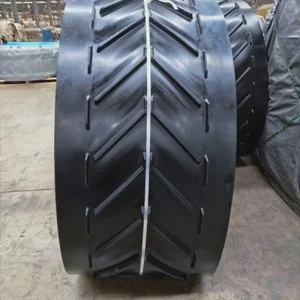
Traditional trough-type flat conveyor systems require substantial footprint footprint due to their limited incline limitations (typically restricted to 15-20 degrees depending on the material). This constraint is highly inefficient for crowded urban storage silos, chemical blending facilities, and food processing mills. The introduction of corrugated edge (sidewall) conveyor belts has revolutionized these installations, allowing steep-angle material handling up to 90 degrees. Bangkok’s regional sectors, including processed tapioca starch exports, steel smelting lines in nearby Chonburi, and sand-gravel mixing facilities servicing Bangkok’s mass-transit expansions, are shifting to these space-saving vertical transport systems.
2. Anatomy of High-Inclination Corrugated Edge Belts
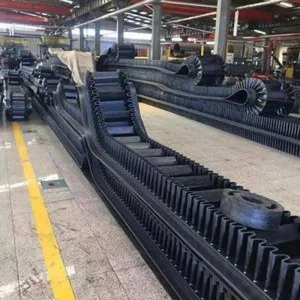
A high-inclination edge conveyor belt is a multi-component engineering system designed to balance tensile strength, transverse rigidity, and operational flexibility. The system consists of three main elements:
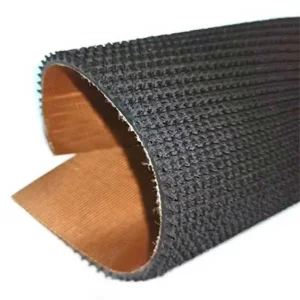
- Cross-Rigid Base Belt (XE/TX types): Engineered to provide exceptional lateral stiffness while maintaining structural longitudinal flexibility. This prevents sag on return runs and minimizes alignment drift.
- Corrugated Sidewalls: Manufactured from premium, high-elasticity rubber compounds. The sinusoidal wave design allows the belt to bend smoothly around pulleys without cracking or suffering structural fatigue. Fabric-reinforced sidewalls provide superior load confinement under heavy bulk volumes.
- Cleats (T, TC, TCS profiles): Bolted or vulcanized directly to the base belt. The cleats act as shelves, holding the material securely in place during steep-angle ascension. For vertical lifts (up to 90°), TCS (cleat with built-in side-wall flaps) ensures minimal material loss.
| Parameters | DIN Standard Requirement | Boao Jinao Brand Capability | Operational Value for Bangkok Operators |
|---|---|---|---|
| Tensile Strength (EP/NN) | 100 - 630 N/mm per ply | Up to 1000 N/mm (Custom Steel Cord) | Durable handling over tall silos & loading piers |
| Abrasion Resistance | < 200 mm³ (DIN Y) | < 120 mm³ (Super Wear-Resistant) | Extends lifespan handling abrasive aggregate/sand |
| Working Incline Angle | 18° - 45° | Up to 90° (Vertical Transport) | Saves up to 75% floor footprint in urban sites |
| Elongation at Break | Min 400% | > 450% (High elasticity rubber) | Prevents edge cracks during high pulley revolutions |
3. Supply Chain Resilience: The China-Thailand Strategic Partnership
For engineering procurement managers in Bangkok, supply chain reliability is just as vital as physical mechanical specifications. Sourcing edge conveyor belts from Hebei Boao Rubber Technology Co., Ltd. provides immediate structural benefits. Our factory, located in Boye County’s Rubber Industrial Park, integrates raw material sourcing directly with specialized manufacturing lines. By owning independent chemical and physical testing labs, every production run is certified before departure.
Furthermore, the maritime corridor from Tianjin or Qingdao Port directly to Bangkok Port (Klong Toey) and Laem Chabang Port ensures highly predictable lead times of 10 to 14 days. Coupled with the regional benefits of the China-ASEAN Free Trade Agreement (ACFTA) and Form E certification, Thai importers enjoy optimized duty rates and hassle-free customs clearances. This eliminates the traditional bottleneck associated with sourcing heavy machinery components from distant markets.
4. Technology Roadmap: The Shift to AI-Enabled Predictive Belt Logistics
The future of material handling systems lies in the intersection of rubber formulation technology and digital diagnostics. Boao is researching the integration of RFID tags and wear-indicator threads directly into the base belt. For high-output installations, like cement plants and coal-fired power facilities, unexpected belt failure translates into expensive downtimes. By embedding micro-sensors, modern operators in Bangkok can track belt temperature, speed variations, and cover-layer thinning in real-time. This structural data can feed predictive maintenance algorithms, alerting operators to plan replacements long before a tear occurs.