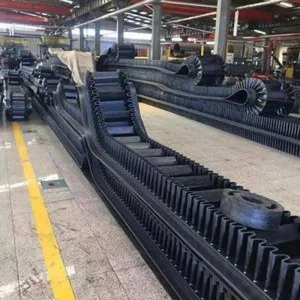
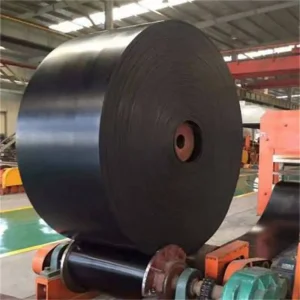
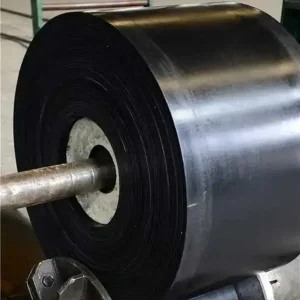
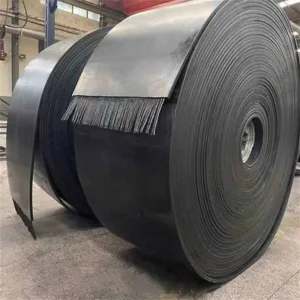
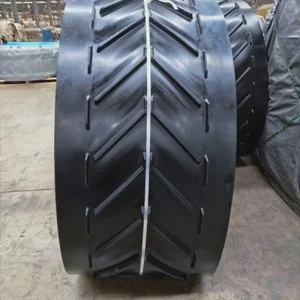
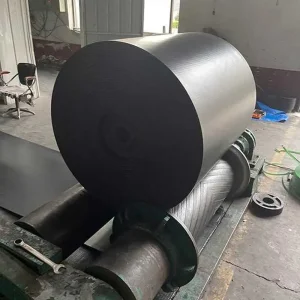
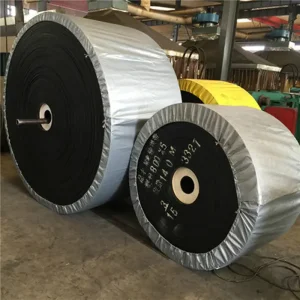
Engineered to handle sintering raw ores, slag, coke, clinker, and hot aggregates. Explore our top 8 performance-rated systems below.
An authoritative engineering breakdown on compound design, carcass reinforcement, and thermal degradation patterns.
In high-capacity plants (coke, cement, metallurgy, steel), material transport occurs under severe thermal stresses. Operating under constant exposure to high temperatures ranging from 100°C to well over 300°C causes regular elastomers to harden, crack, and lose crucial tensile properties. This thermal degradation occurs due to the breakdown of polymer chains under extreme oxidation and thermodynamic fatigue.
To prevent premature replacement cycles, heat-resistant conveyor belts utilize premium synthetic elastomers. Ethylene Propylene Diene Monomer (EPDM), Chlorobutadiene, and advanced styrene-butadiene rubbers (SBR) form the structural backbone. The EPDM compound stands out due to its fully saturated backbone, rendering it highly resistant to oxidation, ozone breakdown, and molecular degradation under prolonged heat exposure up to 250°C continuous temperatures, and peak spikes exceeding 400°C.
Choosing the correct elastomer compound grade is essential to match specific processing needs. Specifiers should analyze the structural temperature of both the conveyed material and the belt surface. Here is the operational breakdown of the standard heat resistance categories:
| Compound Grade | Max. Material Temperature | Max. Belt Surface Temperature | Typical Application Scenarios |
|---|---|---|---|
| T1 (Class 1) | Up to 125°C | Up to 100°C | Hot foundry sand, fertilizers, coal transport, agricultural slag. |
| T2 (Class 2) | Up to 150°C | Up to 125°C | Sintered ores, hot clinker, gypsum, chemical processing lines. |
| T3 (Class 3) | Up to 180°C | Up to 150°C | Cement clinker, hot cement mills, coke handling plants, metallurgy slag. |
| T4 (Ultra-High) | Up to 250°C / Peak 400°C | Up to 180°C / Peak 200°C | Blast furnace charge feed, ultra-hot calcined materials, sintering discharge lines. |
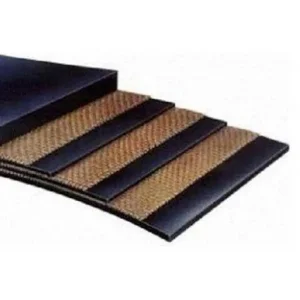
A high-performing heat resistant conveyor belt relies on an integrated, multi-layered system designed to maintain structural integrity under extreme heat:
Authoritative industrial engineering, integrating advanced material research and automated vulcanization since 2004.
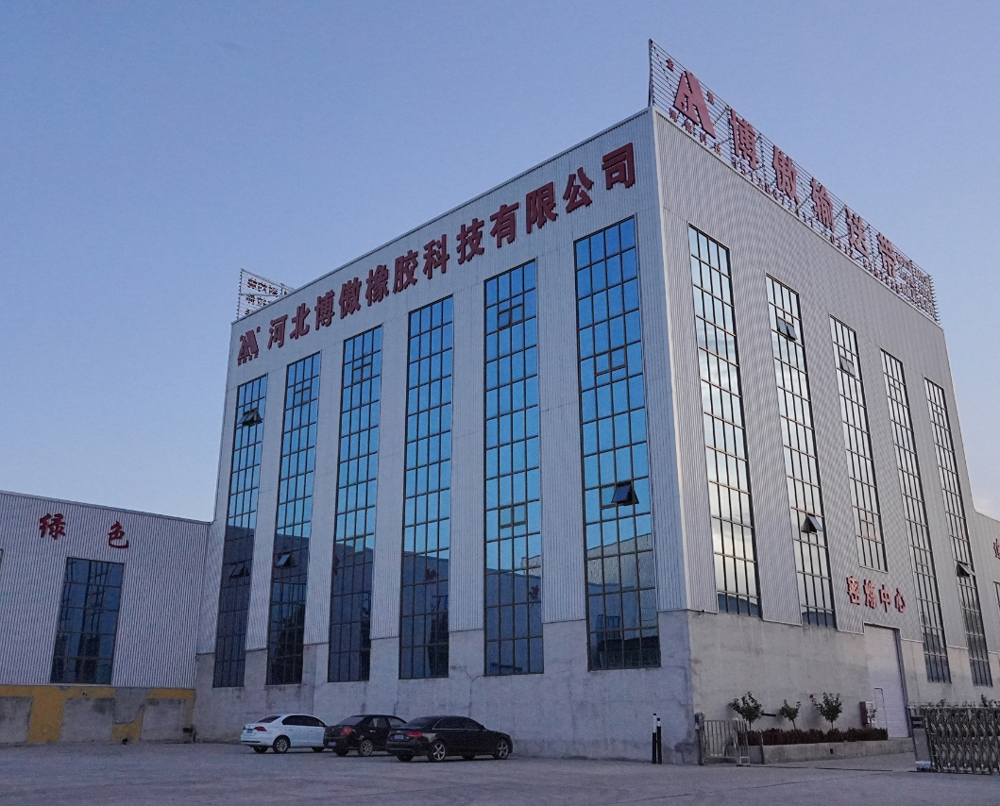
Established in 2004 and operating in the Rubber Industrial Park of Boye County, Baoding, Hebei Province, Hebei Boao Rubber Technology Co., Ltd. (marketing under the premier "Jinao" brand) is a leading Chinese manufacturer specializing in advanced conveyor systems. Spanning over 30 acres of modern production space, our facility integrates raw compound formulation, automated vulcanization, chemical analysis, and physical structural testing under one roof.
With an emphasis on strict international standards, we maintain a complete quality control workflow. Every batch of raw EPDM polymer, synthetic rubber, carbon black, and reinforcement fabric undergoes strict inspection at our dedicated material laboratories. Our advanced physical and chemical testing rooms verify high thermal resistance, tensile strength, and abrasion resistance, ensuring no substandard products leave the facility.
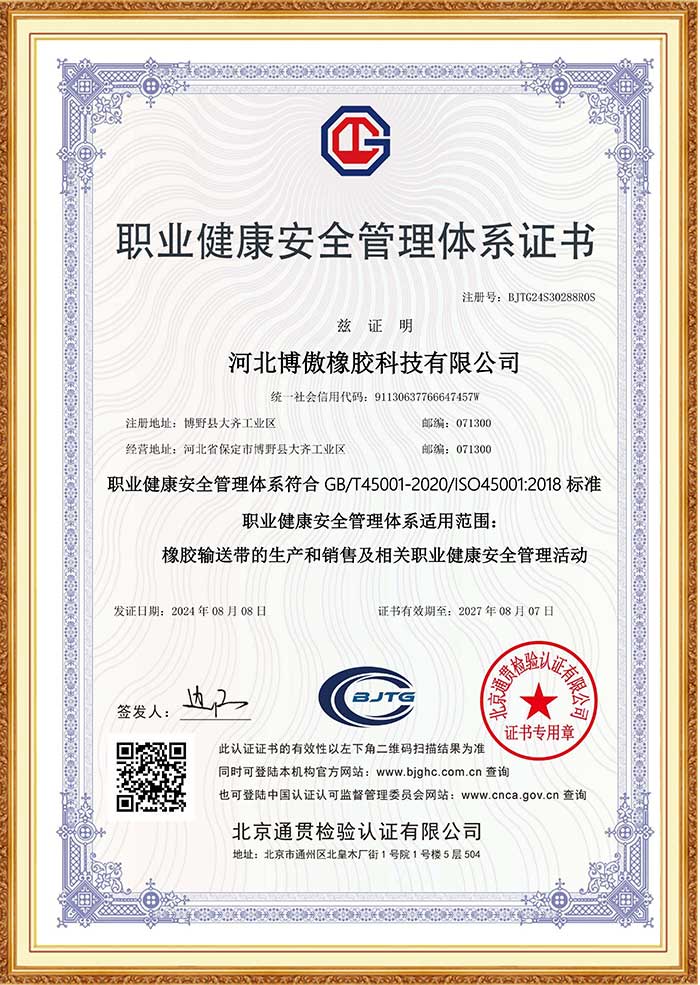
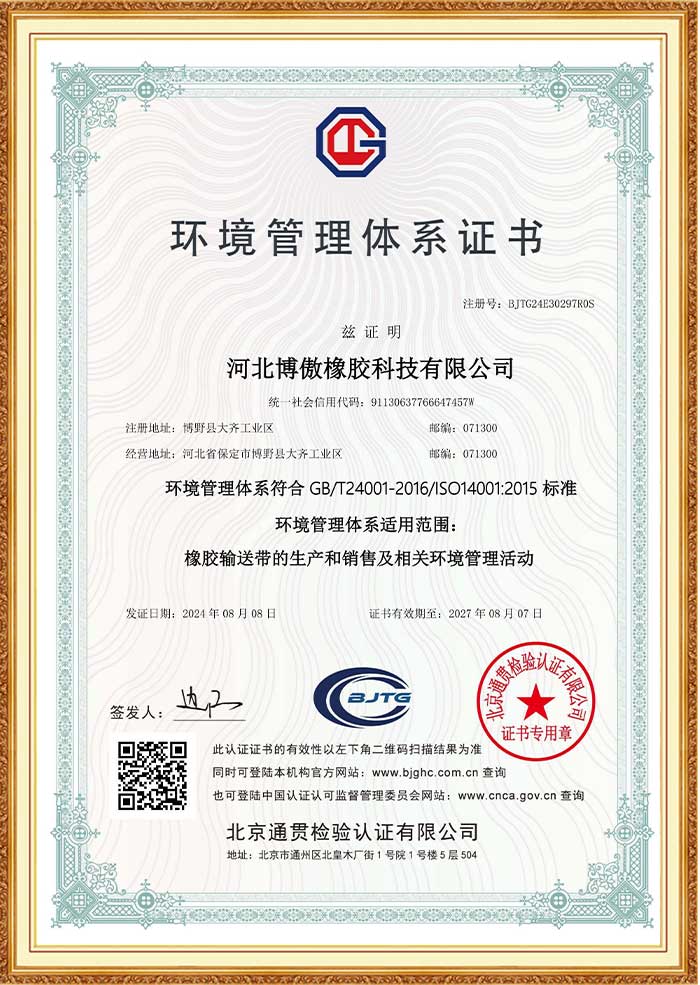
Our commitment to quality management is backed by leading certifications, ensuring reliable performance across heavy industries.
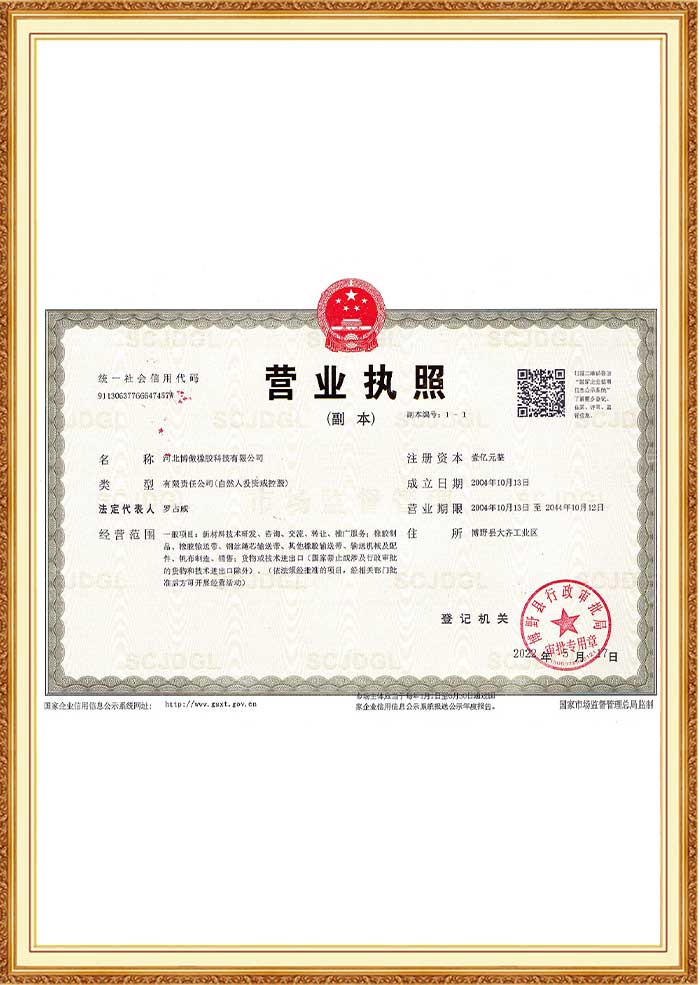
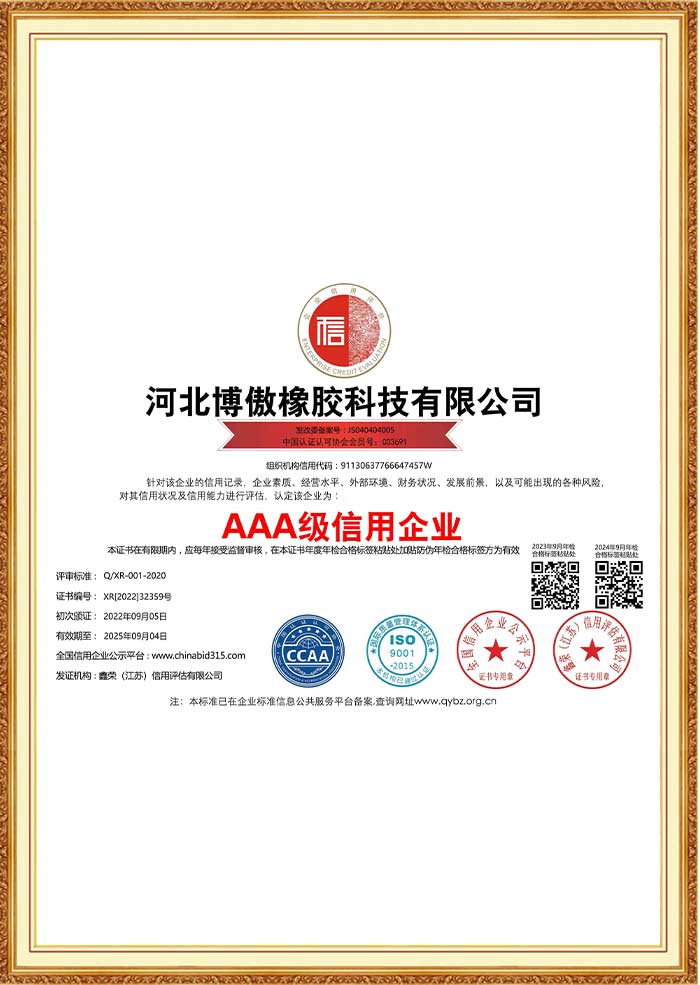
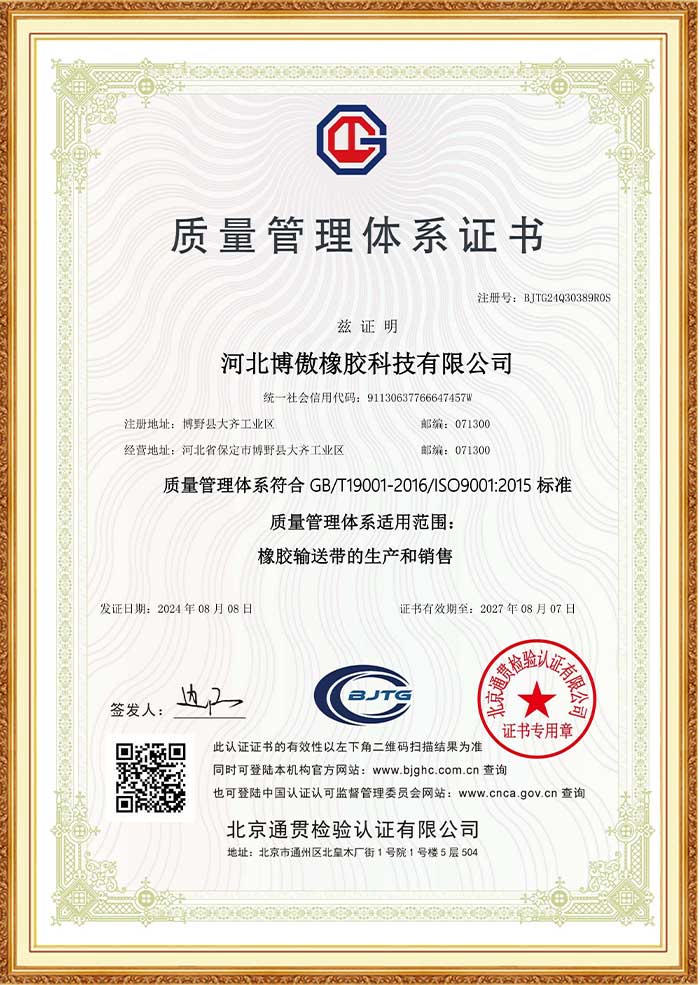
Understanding the supply chain efficiency, advanced compounding technologies, and structural cost benefits of Boye Rubber Industrial Park.
Hebei Province, particularly the Boye County industrial cluster, is home to a robust conveyor belt manufacturing ecosystem. Our factory benefits from direct partnerships with nearby premium carbon black refineries, high-tensile fabric weaving mills, and specialized chemical vulcanization agent suppliers. This proximity minimizes raw material transport costs and simplifies quality control processes, ensuring reliable lead times.
Modern Chinese manufacturers utilize large-scale automated multi-platen presses and continuous rotary curing machines (Rotocure). These systems apply uniform pressure and precise thermal gradients across the belt carcass. The resulting elastomer compound is uniformly vulcanized, eliminating weak points and assuring uniform heat resistance across the entire length of the belt.
From custom fabric plies (EP/NN/Steel Cord) to customized edge configurations, our facility accommodates specific engineering requirements. By adjusting cover rubber thickness ratios (e.g., 6mm + 2mm or 8mm + 3mm) and tailoring EPDM blend structures, we deliver high-performance solutions for heavy-duty applications, offering an exceptional cost-to-performance ratio for international procurement teams.
Delivering high-reliability transport infrastructure to the world's most demanding bulk material handling projects.
Handling sintered ore, hot coke, and pelletized iron at temperatures exceeding 250°C. Our T3 and T4 EPDM belts are engineered to resist rapid oxidation, maintaining elasticity and preventing carcass scorching.
Transporting hot cement clinker directly from rotary kilns. These materials present a combination of intense dry heat and high abrasive wear, requiring robust wear-resistant covers combined with deep thermal protection.
Conveying hot bottom ash, fly ash, and processed boiler fuel. Our fire-retardant, heat-resistant conveyor designs protect structural frameworks while handling highly volatile, high-temperature materials.
Boao Rubber products have earned the trust of major industrial groups. Here are some of our key corporate cases:
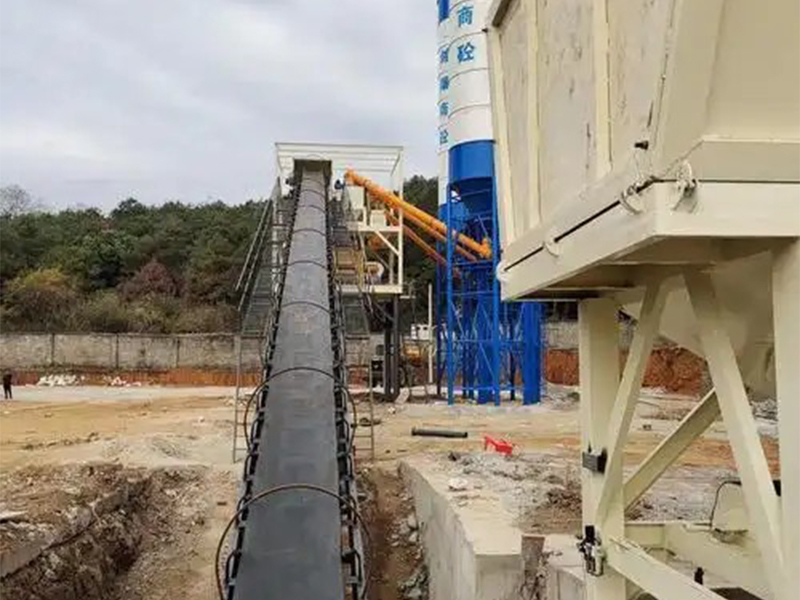
China Railway Group Mixing Plant
Conch Cement
Datong Coal Group
Tsingshan Group
Jidong Cement Group
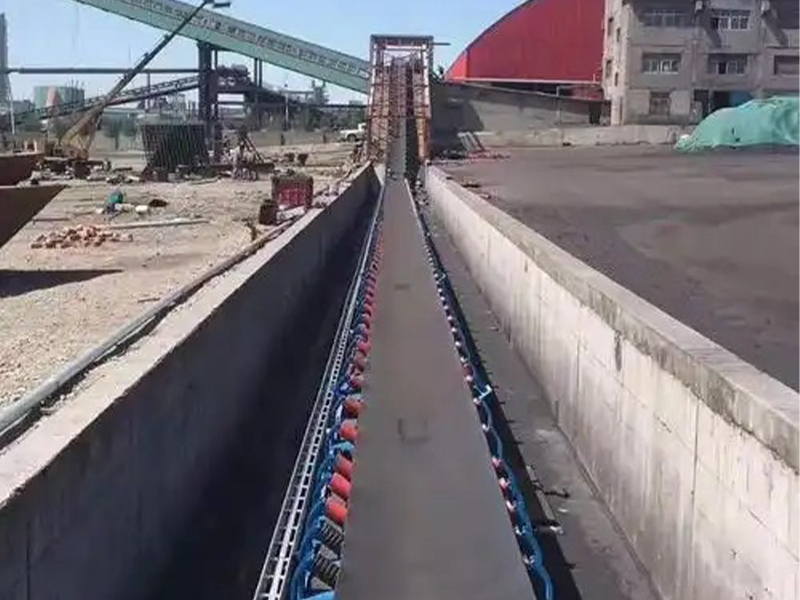
Jinmei Group Coal Conveying Line
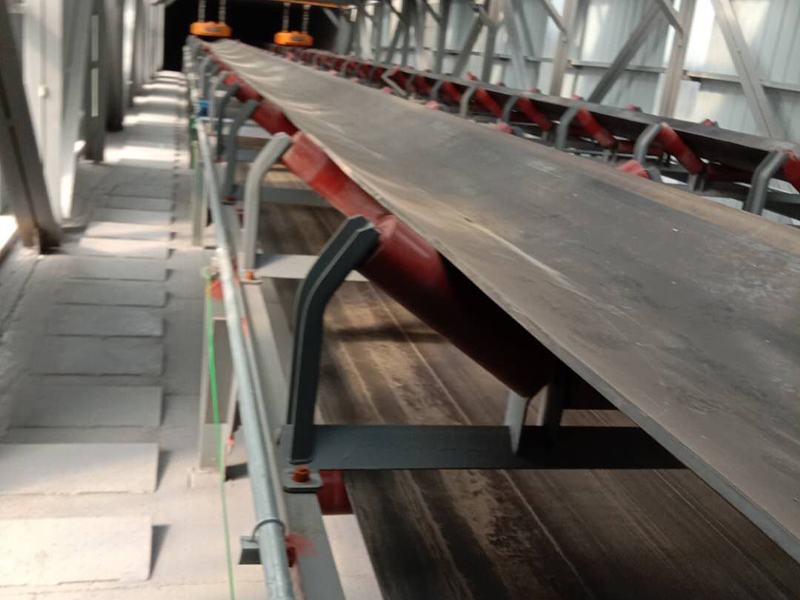
Taihang Steel
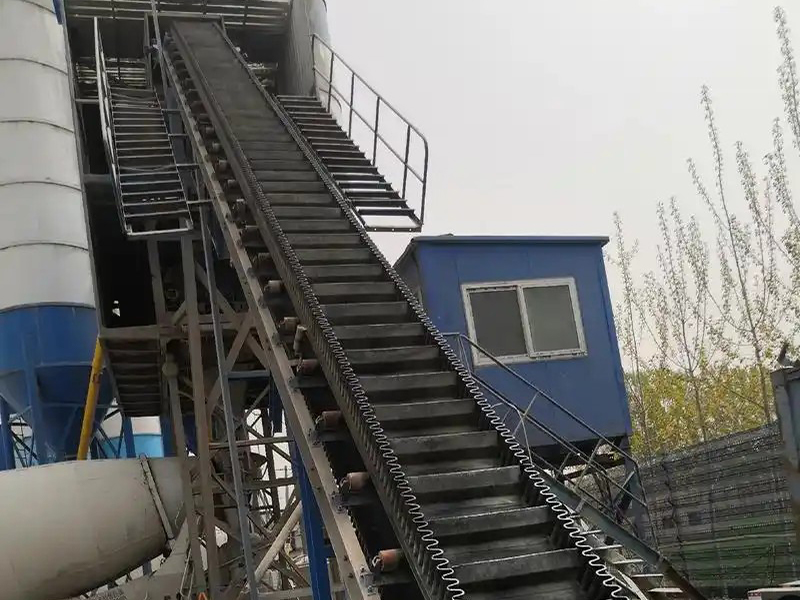
Puyang Steel Group
Maximizing belt service life with professional maintenance, vulcanized splicing, and emergency repair programs.
We provide planned replacement, hot vulcanized splicing, structural inspections, preventative maintenance, and emergency repairs for heavy-duty conveyor systems.
Our solutions include the supply of high-grade conveyor belts and raw repair rubber. We offer inventory storage programs to ensure safety stocks match our clients' operational schedules.
Through planned hot splicing, rubber surface repairs, and regular maintenance, we help clients extend their conveyor belt service life, reducing operational downtime and lowering the total cost of ownership.
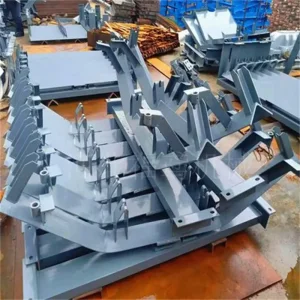
Complete your material handling infrastructure with flame-retardant belts, heavy-duty nylon lines, idler rollers, and brackets.
How the integration of AI diagnostics, real-time thermal monitoring, and green chemistry is shaping the future of bulk handling.
Heavy industries are transitioning toward predictive maintenance solutions. By embedding continuous fiber-optic temperature sensors or pairing systems with automated thermal cameras, operators can monitor belt surface heat in real time. This allows the system to identify localized hotspots before they damage the belt carcass, helping to prevent unscheduled shutdowns.
Sustainability is an increasingly important factor in global procurement. The industry is moving toward eco-friendly vulcanization agents that reduce sulfur emissions during manufacturing. Our research at Boao Rubber focuses on refining compounding technologies to lower carbon footprints while maintaining high levels of heat and wear resistance.
Next-generation conveyor systems are utilizing hybrid fabrics that combine aramid fibers with specialized polyester weaves. These designs offer high mechanical strength and thermal stability with minimal elongation under load, making them ideal for long-distance, high-temperature material handling.
Partner with Hebei Boao Rubber Technology Co., Ltd. for reliable, high-temperature material handling solutions. Our engineering team is ready to design a system tailored to your specific application requirements, material temperatures, and mechanical configurations.
Our laboratory-tested Jinao brand products offer the durability needed to optimize your production lines. Contact us today for product specifications, pricing, and project support.
Email us details about your project, including operating temperatures, conveyed materials, belt length, and width requirements, to receive a prompt technical proposal.
Get answers to common technical questions about choosing, installing, and maintaining heat-resistant conveyor belts.
 Boao Rubber