Engineered for high load capacities, superior elasticity, impact absorption, and severe industrial conditions.
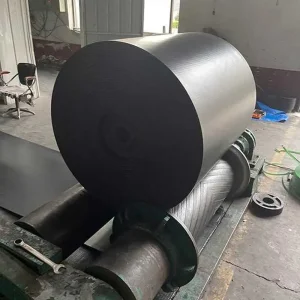
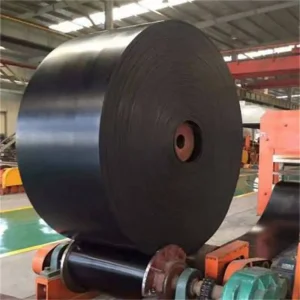
In the modern industrial landscape, rubber conveyor belts have become the backbone of bulk material transport systems across multiple sectors. From mining operations extracting raw materials from deep underground to port facilities handling millions of tons of cargo annually, heavy-duty rubber belts facilitate the seamless movement of materials that power our global economy. The evolution of these critical components reflects decades of engineering innovation, material science breakthroughs, and an unwavering commitment to operational efficiency and safety.
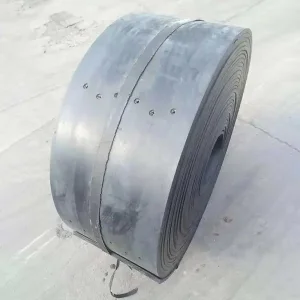
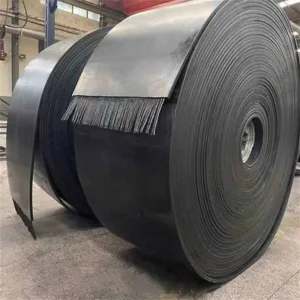
Nylon rubber conveyor belts—designated as NN (Nylon/Nylon) conveyor belts—represent one of the most significant engineering breakthroughs in flexible tension members. Using high-modulus, low-shrinkage polyamide fibers in both warp and weft, nylon belts deliver unmatched performance characteristics. Unlike traditional cotton carcasses, nylon composite frameworks possess outstanding fatigue resistance, permitting highly reliable operations even under extreme tensile cycling.
Tensile Strength & Resilience: Nylon fibers exhibit exceptional elastic recovery, allowing the belt to absorb heavy mechanical shock loads at loading ports and transfer points without structural rupture.
Outstanding Troughability: The crosswise flexibility of polyamide carcass construction ensures perfect conformity to troughing idlers, minimizing belt tracking issues and material spillage.
Corrosion and Rot Resistance: Unaffected by humidity, dampness, or biological degradation, making NN belts ideal for deep shaft mines and wet processing yards.
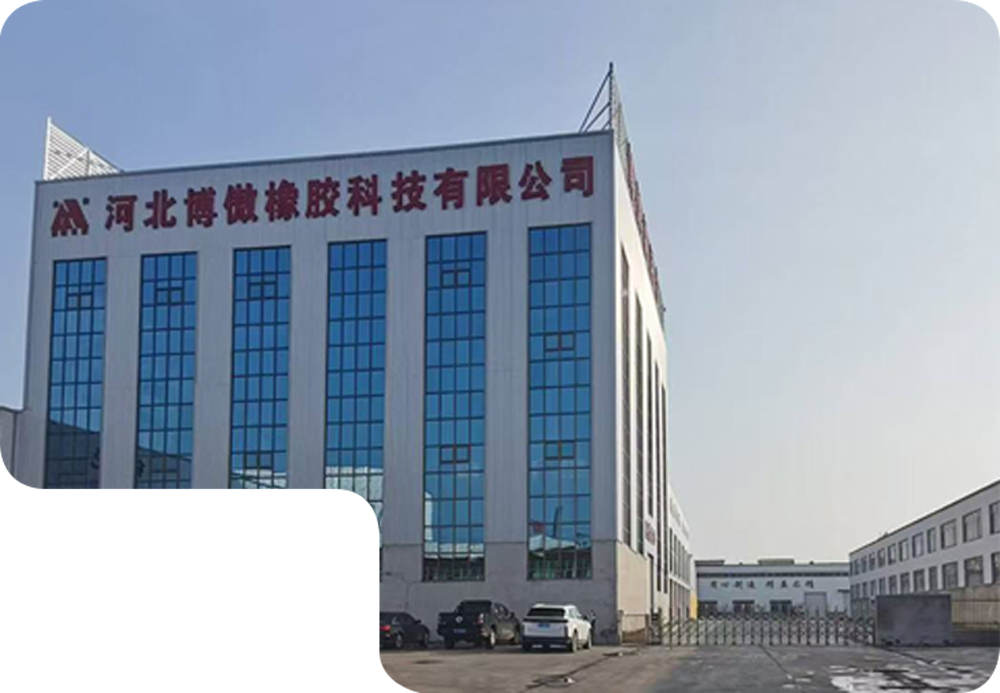
Located in the heart of the boye county Rubber Industrial Park in Baoding, Hebei Province, Hebei Boao Rubber Technology Co., Ltd. has established itself as an industry leader since its foundation in 2004. Spanning an expansive production footprint of over 30 acres, we design, develop, and manufacture robust conveyor belts and critical conveying components under our premium "Jinao" brand.
Our commitment to excellence has driven us to pass the international quality management system certification in one go. By maintaining fully integrated vulcanizing lines, advanced rolling systems, and state-of-the-art testing equipment, we control quality from raw rubber polymers to finished rolls of heavy-duty belts.
Our facility houses an independent chemical analysis room and physical testing laboratory. This ensures that every raw ingredient, rubber compound batch, and woven polyamide textile undergoes meticulous scrutiny before, during, and after manufacturing.
Innovating the next generation of conveyor systems with advanced molecular formulations and smart structures.
We are transitioning from standard Polyamide 6 to proprietary Polyamide 66 interweaves combined with low-creep polyester (EP) matrices. This provides exceptionally low permanent elongation (less than 1.5%), drastically reducing the required take-up stroke on extremely long conveyor lines.
Embedded conductive loops and RFID tags represent the future of preventative maintenance. Our R&D division is developing smart sensors that continuously monitor the carcass integrity, sending real-time alerts if rip or tear propagation is detected.
In response to global sustainability mandates, Jinao is formulating cover rubbers that substitute traditional petroleum-derived processing oils with renewable, bio-derived vulcanization agents. This reduces our environmental footprint while maintaining absolute compliance with DIN 22102 abrasion indices.
As heavy industry moves toward higher speeds (up to 8.5 m/s) and larger throughput capacities, our Nylon-based carcasses are specifically processed to optimize compound adhesion. Using standard RFL (Resorcinol Formaldehyde Latex) dipping baths, our internal laboratories achieve rubber-to-fabric adhesion values exceeding 8 N/mm. This prevents ply separation under extreme reverse bending and ensures a long structural lifespan.
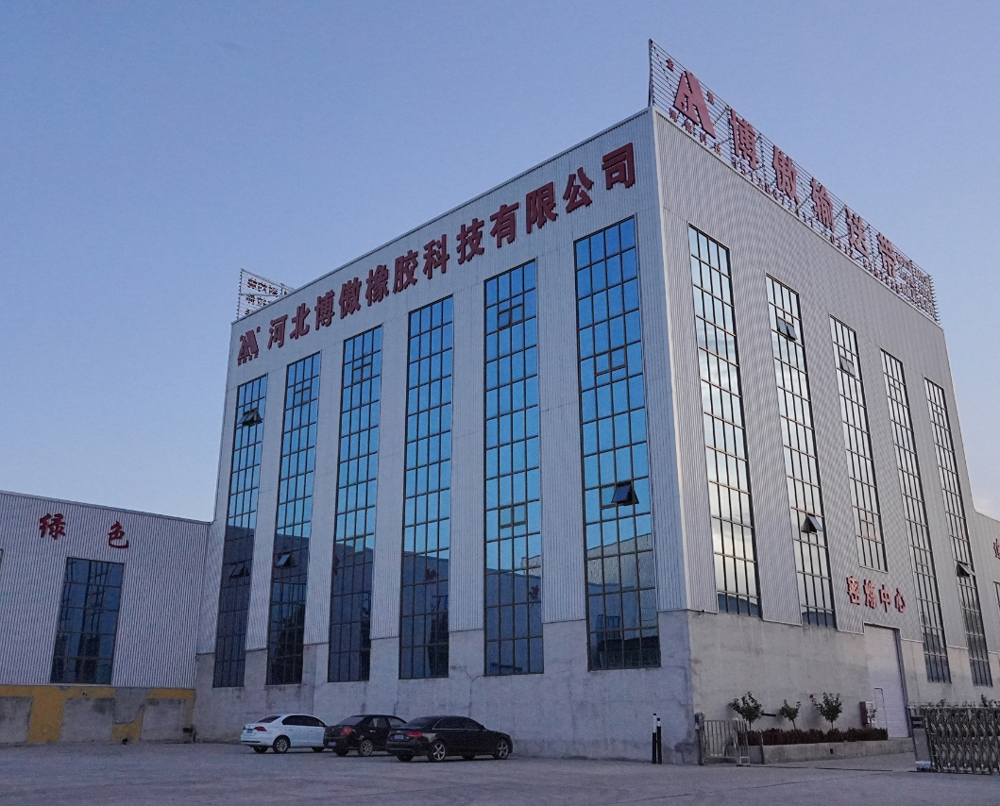
To ensure that only qualified materials enter and leave our factory, Hebei Boao Rubber Technology maintains a state-of-the-art laboratory facility. We don't rely on random audits. We test every batch of rubber compounds and canvas cords before processing.
Focuses on verifying raw materials: natural rubber grade evaluation, carbon black dispersion, anti-aging additives, and sulfur vulcanization ratios. This ensures the chemical longevity of the belt carcass against ozone exposure.
Equipped with high-precision tensile testers, DIN abrasion wheels, ozone test cabinets, and thermal aging ovens. Every Jinao belt must maintain its cover-to-carcass adhesion, tensile strength, and cold-bending characteristics under simulate ambient conditions.
From initial engineering consultations to site splicing inspections, our technicians support operations across the country and overseas, helping key industries run reliably year-round.
Custom-engineered rubber belts designed to excel in the most challenging industrial environments.
Our heavy-duty NN conveyor belts feature high impact absorption and tear resistance, making them ideal for carrying abrasive copper, gold, iron ore, and run-of-mine coal over long distances.
For sinter plants, coke transportation, and slag processing, our heat-resistant rubber conveyor belts can handle constant material temperatures up to 200°C and spikes up to 400°C without crack propagation.
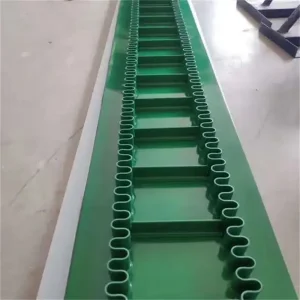
Our raw meal feed and clinker transport systems use highly stable high-inclination corrugated sidewall belts to prevent bulk slip, maximizing volumetric throughput on steep inclines.
In highly corrosive maritime environments, our acid/alkali-resistant and anti-ozone rubber cover compounds prevent rubber cracking and degradation, facilitating fast bulk carrier loading cycles.
Jinao's flame-retardant conveyor belts are certified under national coal mine safety protocols (such as MT 147 and DIN EN ISO 340 standards). This guarantees safety by self-extinguishing within seconds of ignition.
We provide food-grade lightweight PVC/PU and anti-static rubber belts that prevent organic dust explosions, maintaining sanitary transport for grains, cereals, and fertilizers.
Jinao brand products conform to rigorous international standards, including ISO 9001, DIN 22102, AS 1332, RMA, and SANS.
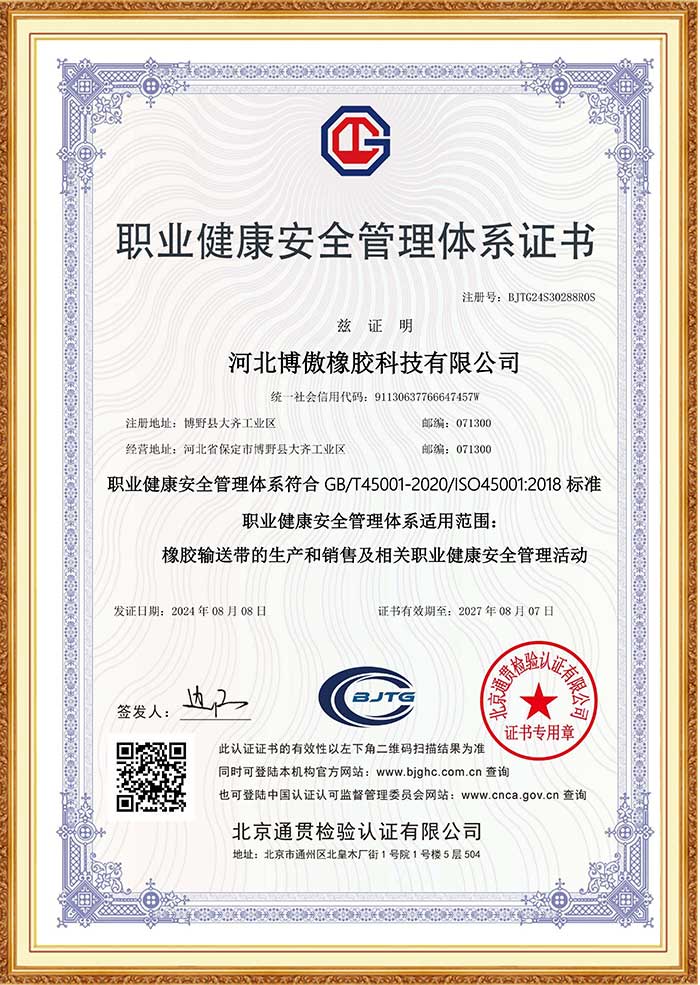
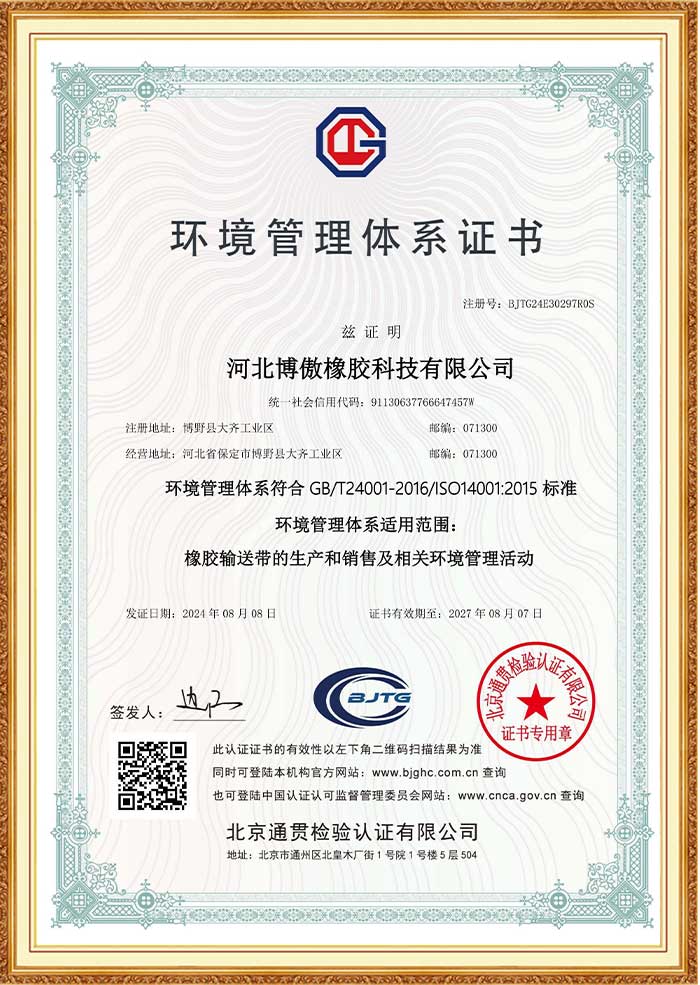
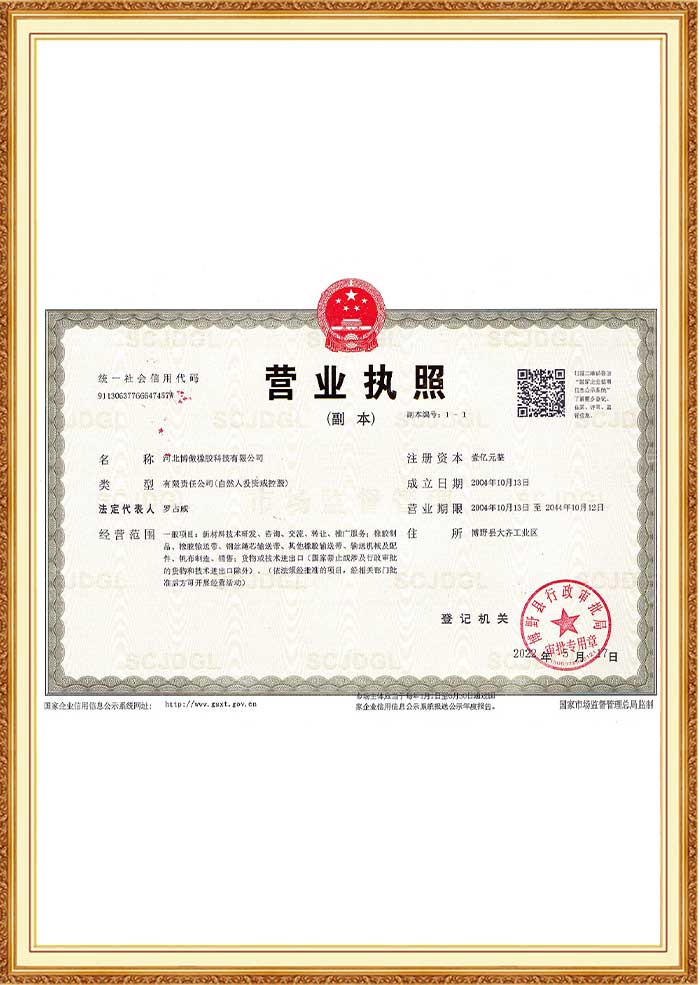
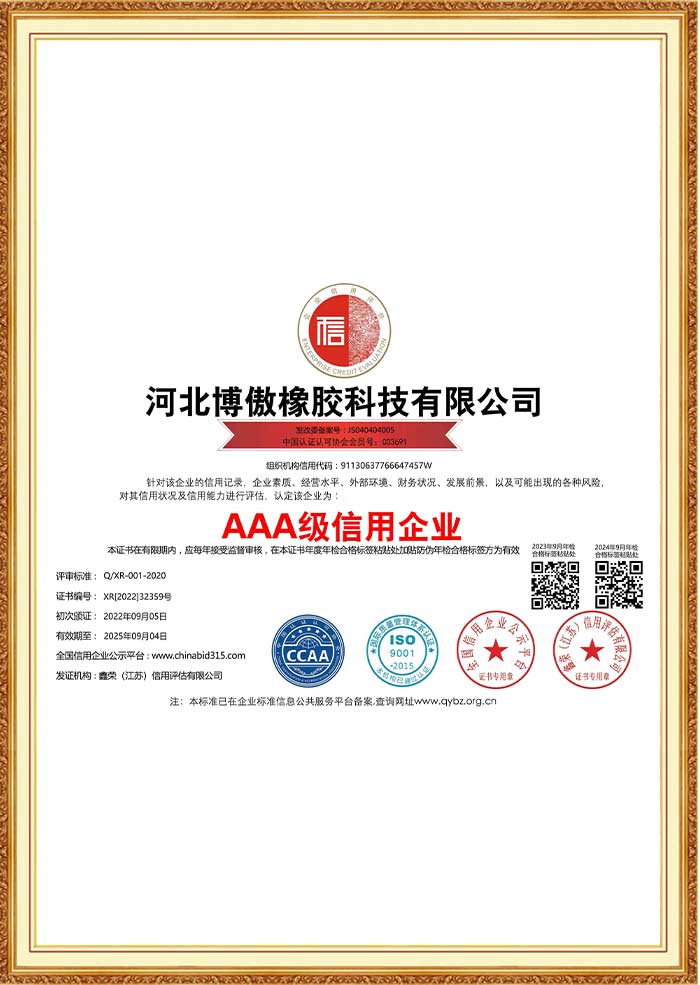
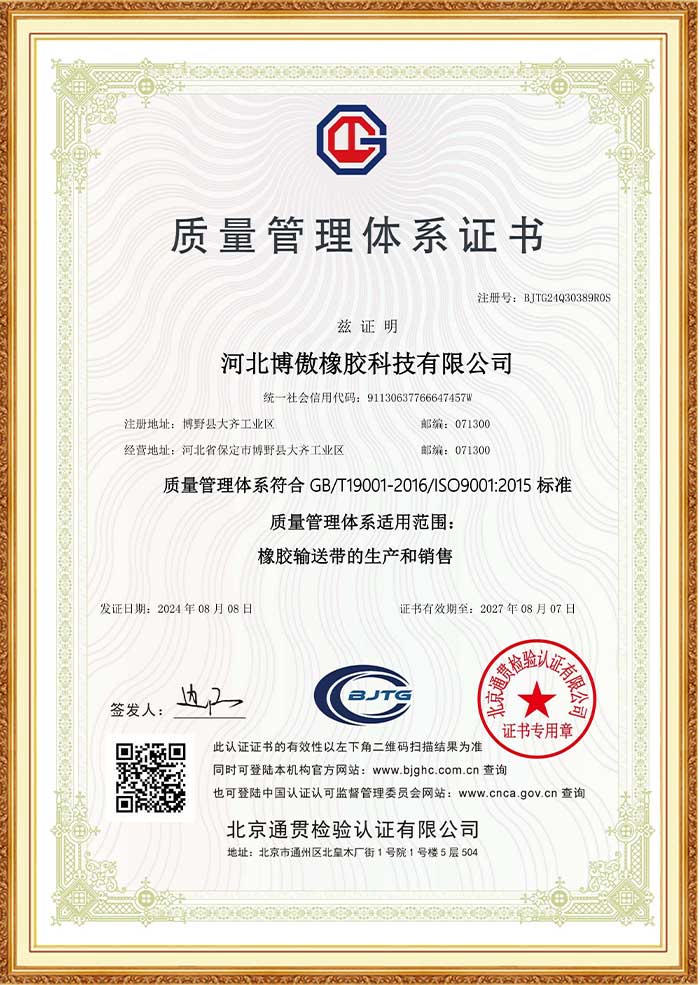
Our quality management is optimized to ensure consistent vulcanization cycles, uniform cover thicknesses, and reliable physical properties across all products.
Combining raw material logistics, high-volume production lines, and strict quality control.
By keeping raw textile weaving, calendering, and high-pressure vulcanization presses under one roof in Boye County, Baoding, we eliminate inter-stage transport lag and protect the materials from environmental moisture. This streamlined setup allows us to complete orders quickly and reliably.
Through direct supply agreements with China's top polyamide yarn producers and high-grade natural rubber importers, we stabilize our raw material costs. This allows us to keep our pricing highly competitive while maintaining reliable access to premium materials.
Our production facilities utilize modern multi-roll calenders and heavy vulcanizing presses. This advanced machinery maintains consistent vulcanization temperatures and pressures across the entire length of the belt, preventing weak points or variations in thickness.
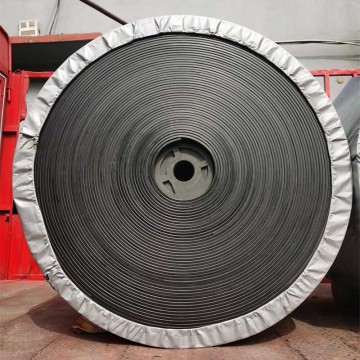
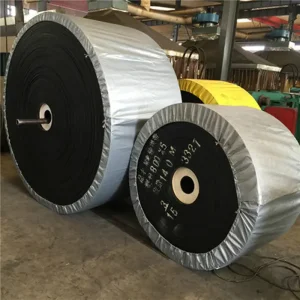
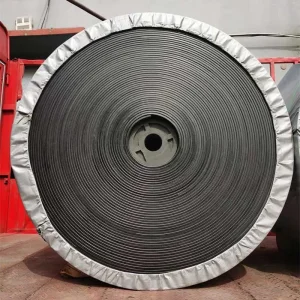
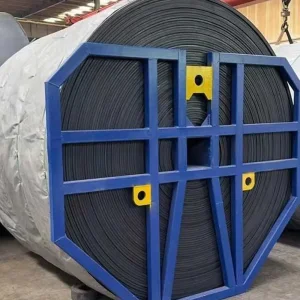
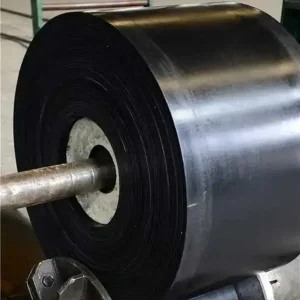
Every belt roll is wrapped in protective, moisture-resistant packaging and secured on steel cores to prevent damage during long-distance ocean shipping. We handle all export documentation to ensure hassle-free customs clearance and reliable delivery to your site.
Jinao conveyor belts are trusted by major industrial groups across mining, steel manufacturing, cement, and power generation sectors.
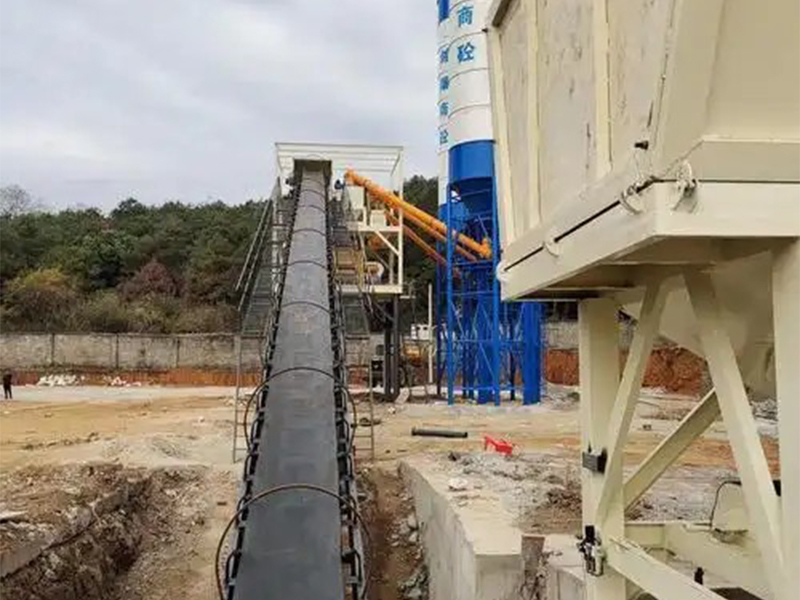
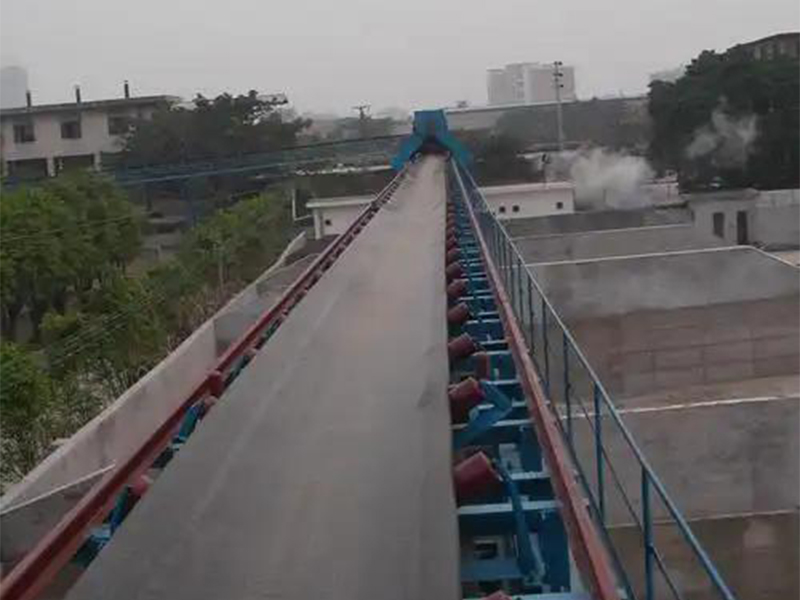
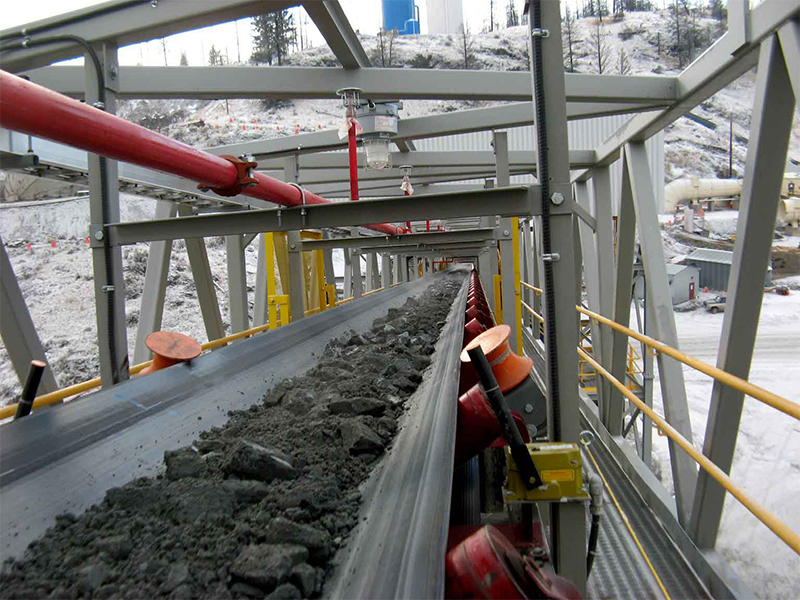
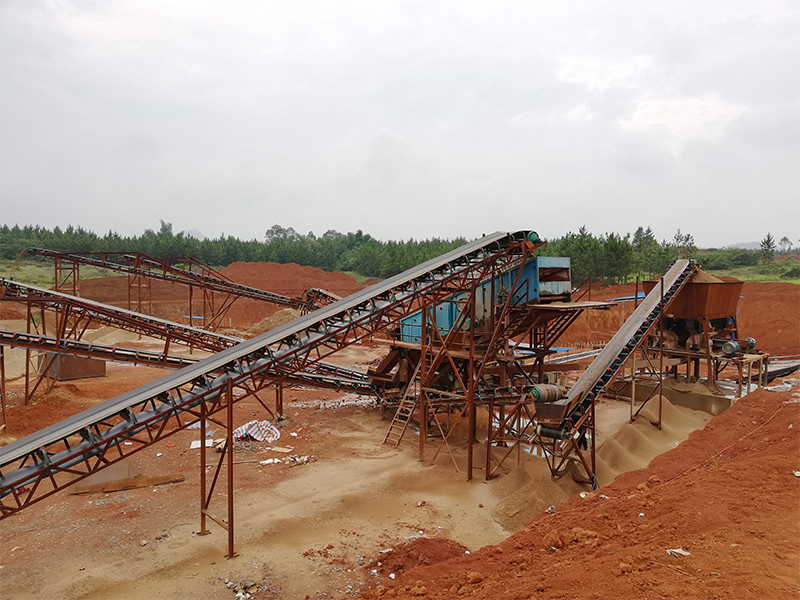
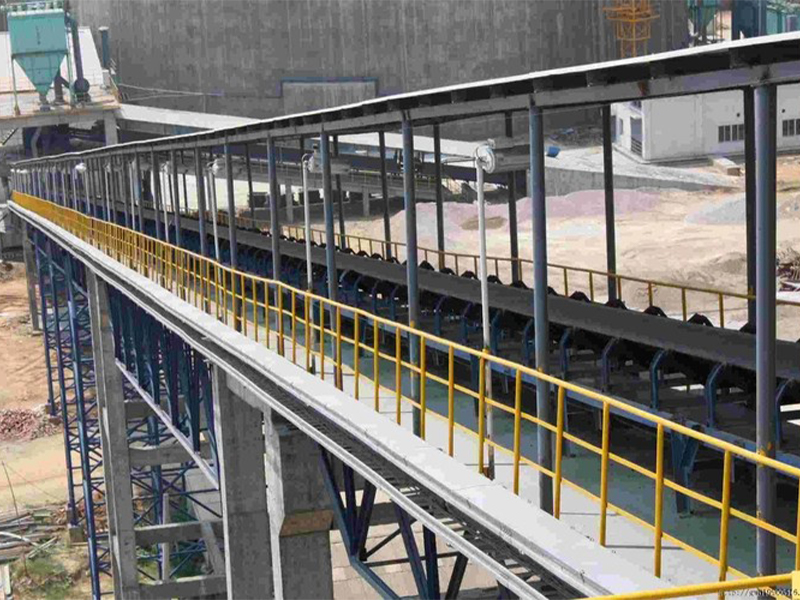
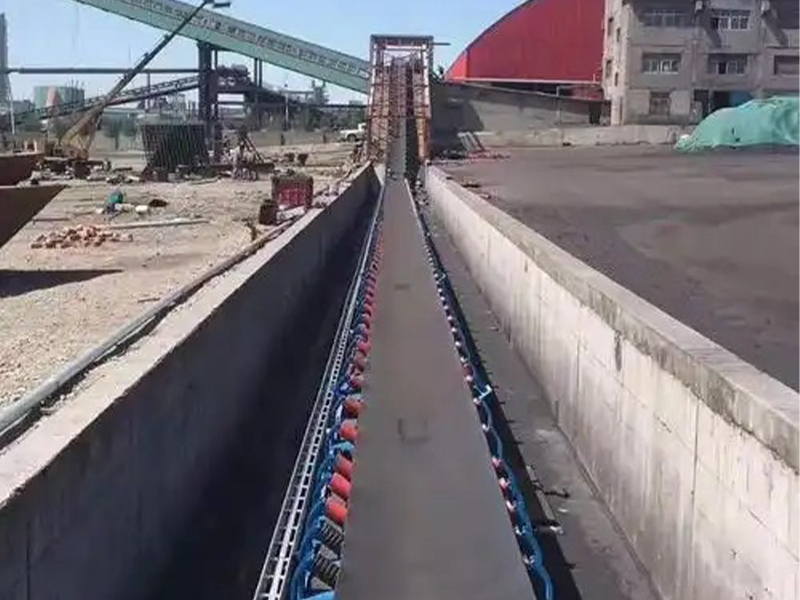
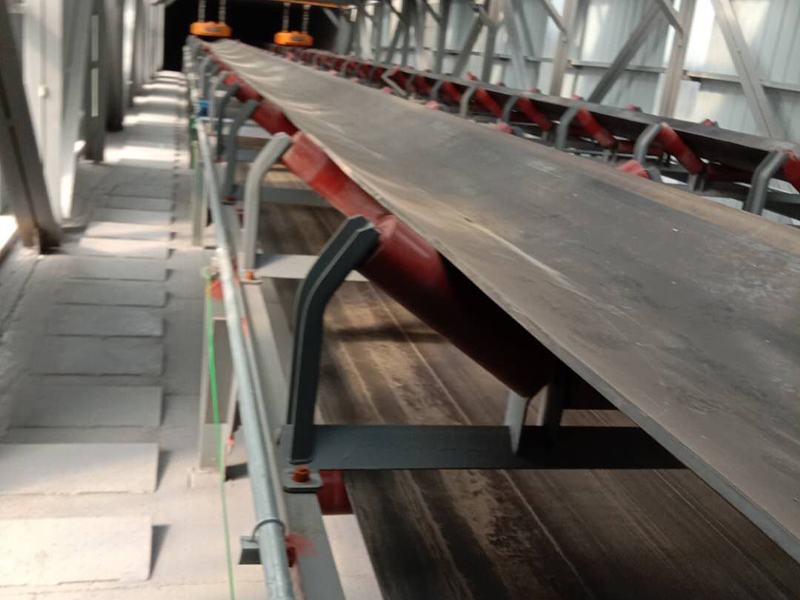
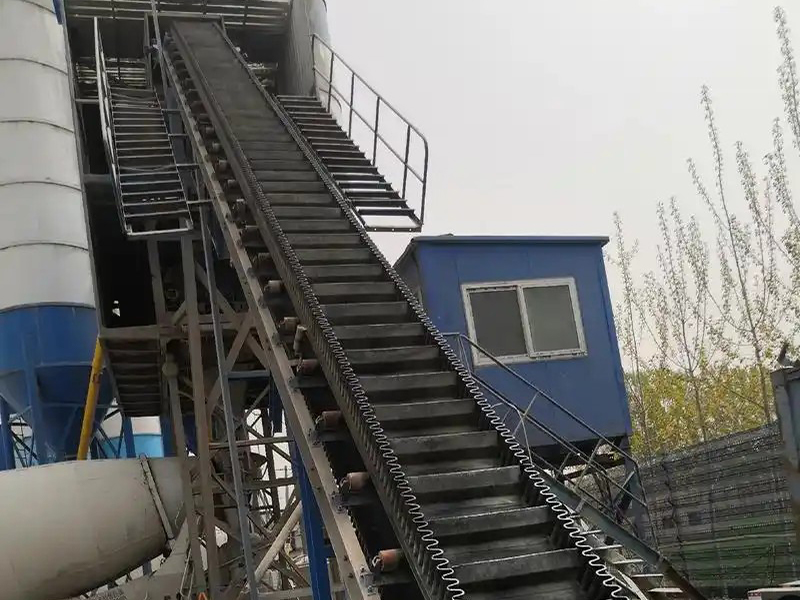
Comprehensive, all-in-one solutions: on-site engineering support, calculated wear management, and custom configurations.
We provide full-lifecycle support, including planned belt replacements, hot and cold vulcanized splicing, ultrasonic thickness monitoring, and emergency repair services.
We supply rubber materials, maintain customized safety stock to match your production schedules, handle inventory storage, and perform regular inspections and wear measurements.
We focus on improving belt conveyor runtimes, minimizing dynamic carcass friction, reducing power consumption, and extending operational life to deliver a clear return on investment.
Our team works to prevent belt tracking issues, eliminate cover scoring, and ensure your system runs safely and economically throughout its lifespan.
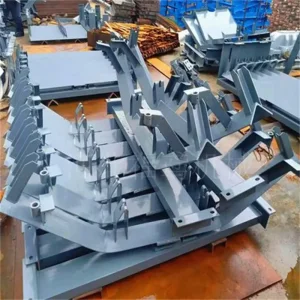
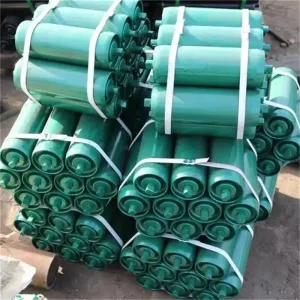
Explore our wide range of conveyor belts, heavy-duty idler rollers, and structural conveyor accessories.
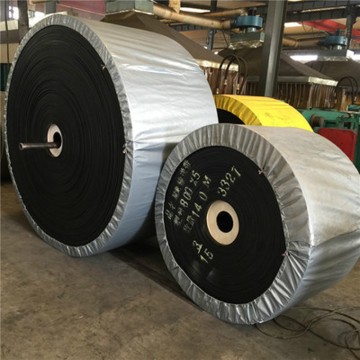
Expert answers to common questions about selecting, installing, and maintaining nylon rubber conveyor belts.
We are committed to providing you with the highest quality products and excellent services. If you have any questions or need assistance with our products, please feel free to contact us and we will be happy to help.
Get in touch with our engineering team for customized calculations, specific cover grade advice, or a detailed quotation for your project.
Explore our range of heat-resistant, cold-resistant, acid-alkali resistant, steel-reinforced belts, and idlers.
 Boao Rubber