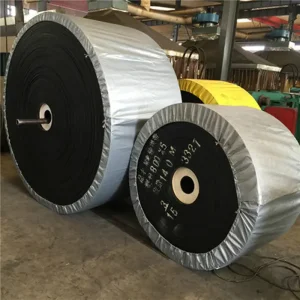
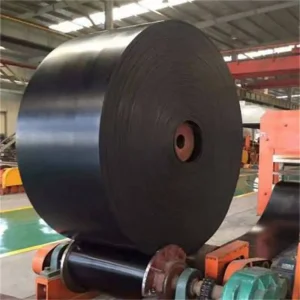
Explore our premium range of industrial-grade conveyor belts, idlers, and engineered wear components certified for demanding operating environments worldwide.
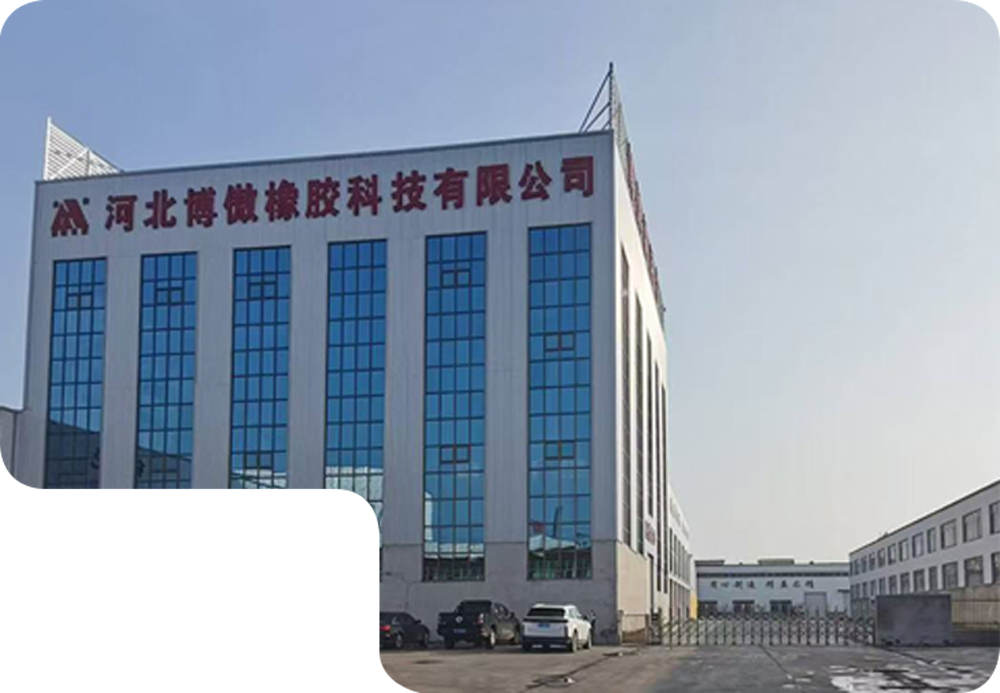
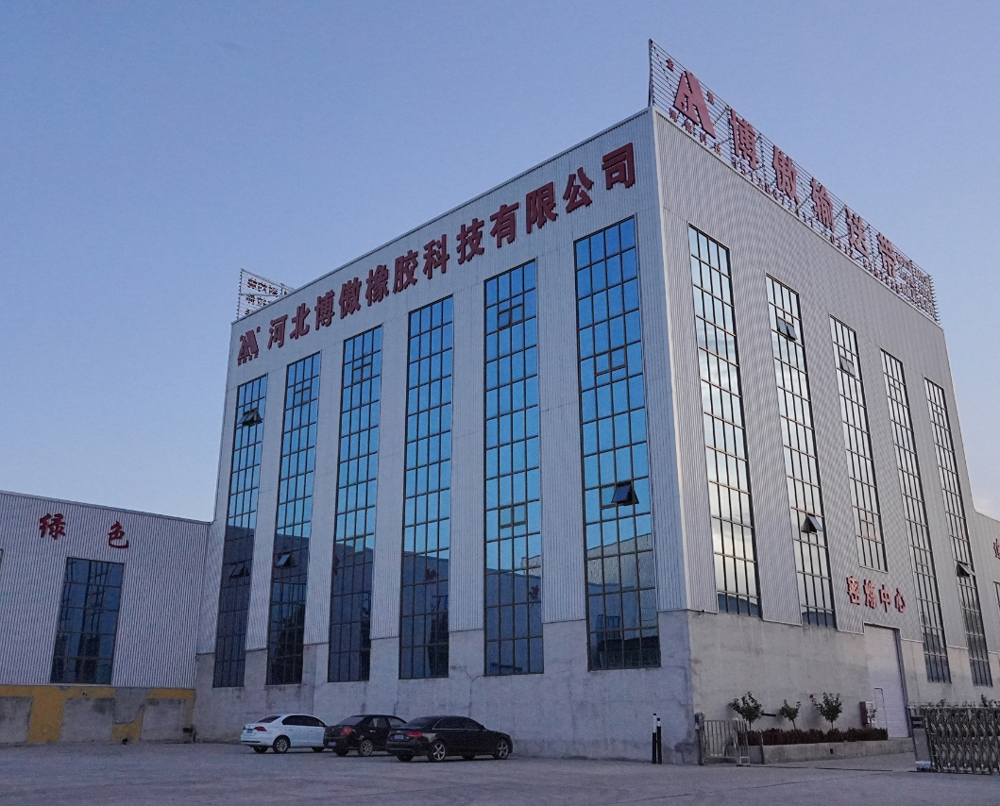
Established in 2004, Hebei Boao Rubber Technology Co., Ltd. is located in the heart of northern China's manufacturing base—the Rubber Industrial Park of Boye County, Baoding, Hebei Province. Over the span of more than two decades, we have scaled our production facilities to cover an area of over 30 acres, becoming an international, multi-faceted enterprise.
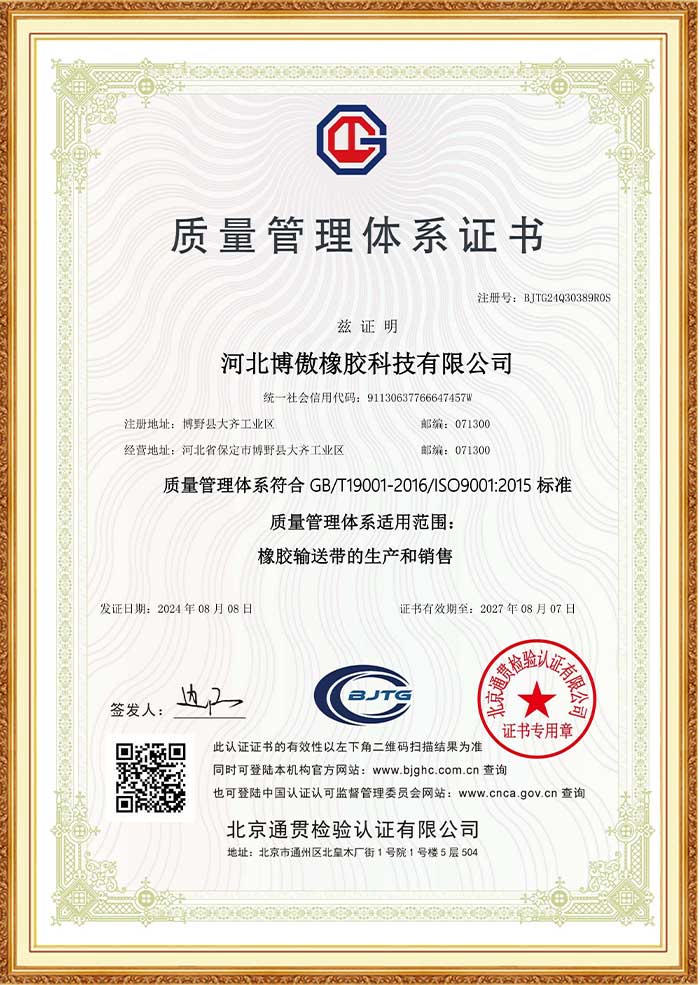
Through our signature brand "Jinao", we provide a unified vertical service integrating advanced product development, polymer research, structural engineering design, automated manufacturing, and dedicated technical support. Boao has achieved and maintained full compliance with the international quality management system certification, guaranteeing standard-compliant solutions for complex raw bulk materials.
Conveyor systems used in chemical, agricultural, mining, and manufacturing applications frequently handle materials that contain heavy concentrations of hydrocarbons, lipids, animal fats, and synthetic lubricants. Standard rubber belts manufactured with general-purpose elastomers swell, blister, and degrade rapidly when exposed to these oily compounds. The engineering of high-performance oil-resistant conveyor belts represents a complex intersection of organic chemistry, polymer blending, and reinforcement material science.
Natural rubber (NR) and styrene-butadiene rubber (SBR) feature a largely non-polar molecular structure. When these rubbers interact with non-polar solvents or oils (such as mineral oils, fuel, or petroleum products), a process of molecular diffusion occurs. The oil molecules penetrate the elastomer matrix, weakening the intermolecular van der Waals forces and disrupting the cross-linked vulcanization network.
This swelling causes catastrophic failure in the system. The physical effects of this degradation include:
To prevent these failures, manufacturers use polar elastomers like Nitrile Butadiene Rubber (NBR) or Chloroprene Rubber (CR). The presence of polar groups (such as the nitrile group -C≡N in NBR) creates a strong barrier against non-polar oil molecules, dramatically lowering the absorption rate and maintaining the structural integrity of the conveyor belt.
The global demand for oil-resistant conveying solutions has seen substantial growth over the past decade. Industrial expansion in emerging markets, coupled with more stringent environmental regulations in North America and Europe, has forced operators to optimize processing uptime. The scrap metal recycling industry, for instance, relies heavily on these belts to transport metal shavings coated in cutting fluids and coolants.
In the agricultural sector, the rapid consolidation and mechanization of grain processing terminals have increased the throughput of oilseeds (such as soybeans, canola, and sunflower seeds). Because seed oil is highly penetrating, standard belts fail within months. Adopting highly customized oil-resistant formulations guarantees years of continuous service, minimizing downtime costs that can exceed tens of thousands of dollars per hour.
To ensure compatibility across international operations, oil-resistant conveyor belts are classified according to strict standards such as DIN 22102 and ISO 1817. The table below outlines the primary classifications used by engineers to specify the correct grade for their operations:
| Class Grade | Primary Elastomer | Oil Resistance Level | Typical Material Transported | ASTM D471 Swell Resistance |
|---|---|---|---|---|
| MOR (Medium Oil Resistant) | SBR + NBR blend | Moderate | Wood chips, compost, agricultural grains, fertilizers | < 30% volume change |
| OR (Oil Resistant) | NBR / CR base | High | Coal with mineral oils, metal scrap, machine parts | < 15% volume change |
| SOR (Super Oil Resistant) | Premium High-Nitrile NBR | Exceptional | Hot asphalt, solvent-treated soils, heavy petroleum crude | < 5% volume change |
A. The Grain Handling Terminals of North America and Europe: In major agricultural corridors, bulk grain loaders run 24/7. Grain oils contain unsaturated fatty acids that degrade conveyor compounds. Boao's food-grade oil-resistant belts are engineered to meet FDA requirements while resisting swelling, ensuring contamination-free transport of corn, wheat, and oilseeds.
B. Heavy Metallurgy and Automotive Recycling: Industrial scrap metal processors handle materials heavily saturated with hydraulic fluids, motor oils, and active lubricating agents. These applications require a hybrid belt featuring high cut-and-gouge resistance alongside superior oil defense.
C. Fertilizer and Chemical Plants: Chemical processing plants combine oily substances with acidic or alkaline materials. Our specialized compounds provide dual resistance, ensuring chemical stability and stopping degradation from complex petroleum-based chemical compounds.
Providing ultimate trust through precision testing, advanced engineering control, and strict compliance with national and international manufacturing standards.
We feature an independent chemical analysis laboratory and physical testing facility to monitor every stage of production—from raw rubber polymer procurement to vulcanization and final load testing.
Our quality control inspectors utilize precision vulcanization testing, DIN abrasion wheels, and high-frequency pull testers. This guarantees that only products meeting international regulations leave our factory floor.
Backed by a robust design infrastructure and a responsive after-sales service team, Jinao conveyor products are exported to industrial hubs worldwide, including ports, mines, and processing plants.
Compounding Lab
Precision Calendering

Vulcanization Press
Heavy Press Line

Slitting & QC
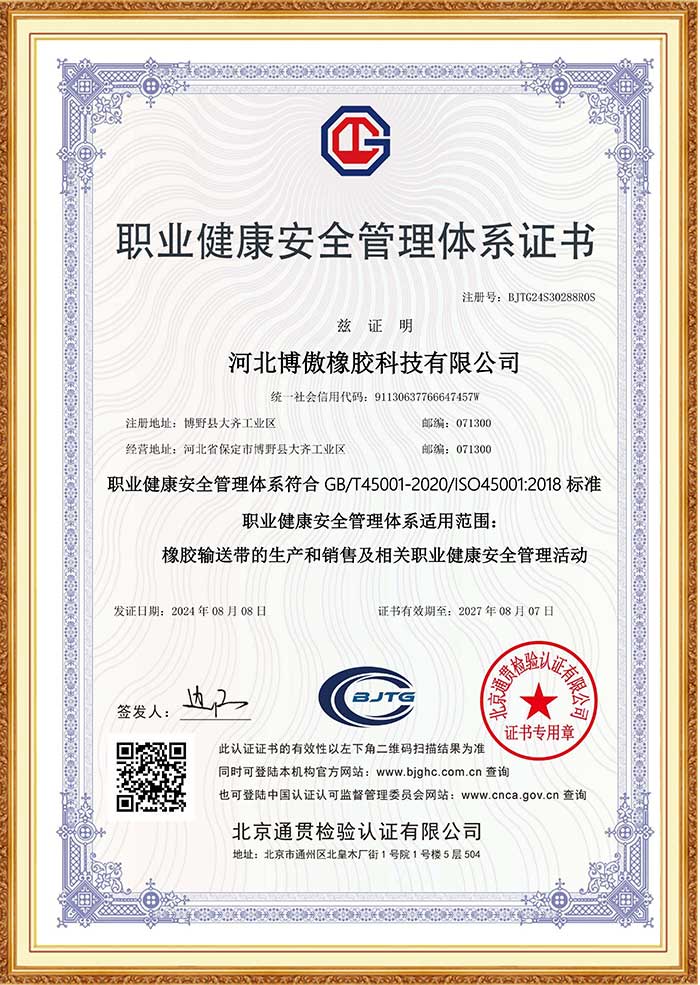
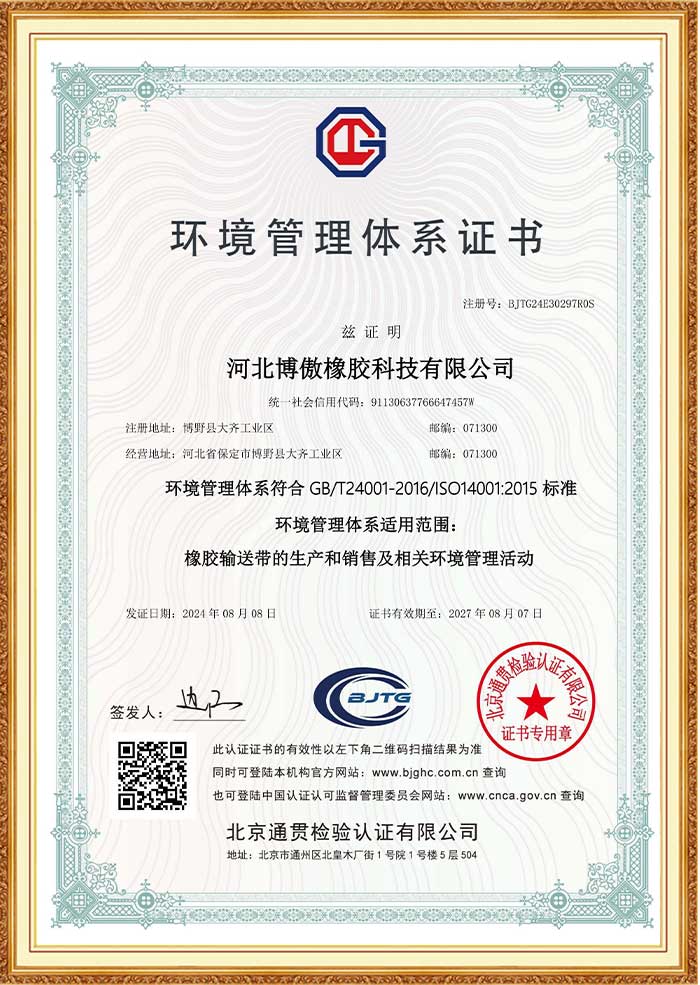
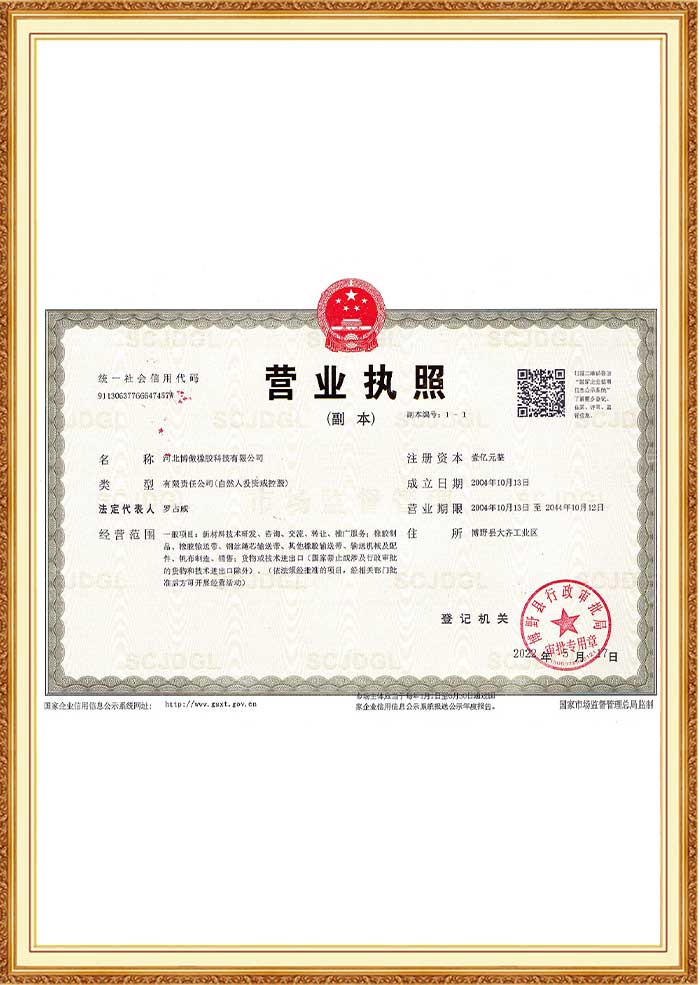
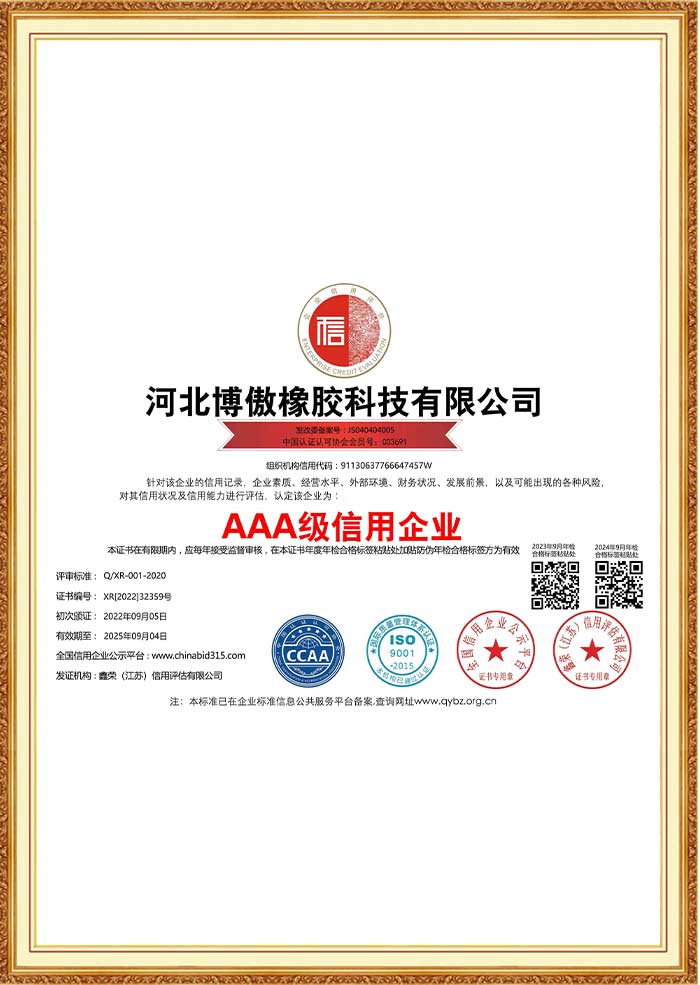
We actively secure national certifications to confirm that Jinao products deliver reliability for complex bulk industrial processing systems.
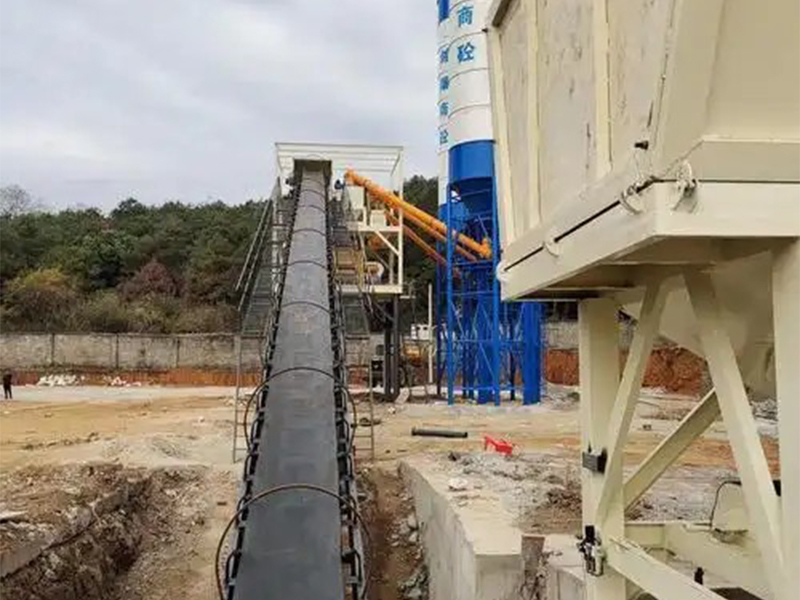
China Railway Group
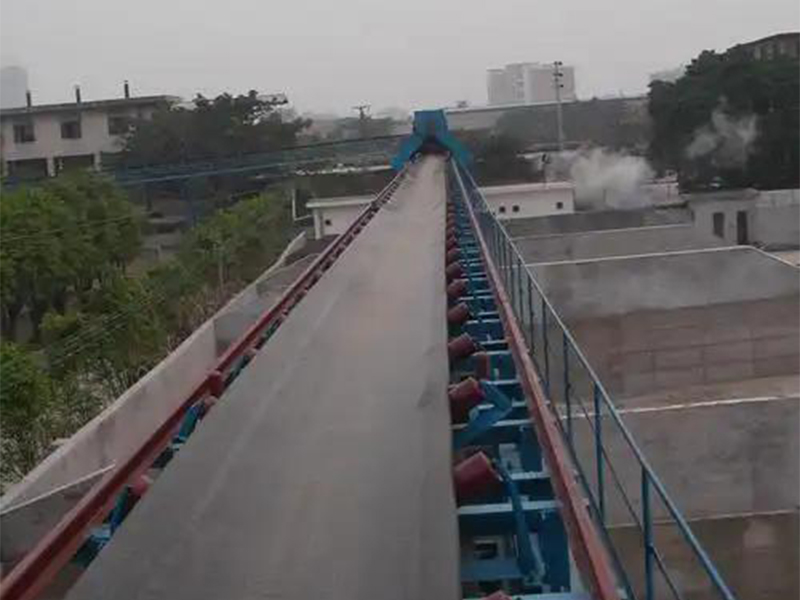
Conch Cement
Datong Coal Group
Tsingshan Group
Taihang Steel
The requirements placed on industrial conveyor systems continue to grow. To meet these demands, Hebei Boao Rubber Technology Co., Ltd. has established a technical development roadmap focused on three key areas:
Traditional oil-resistant formulations often face tradeoffs between oil resistance and cold crack performance. Our current R&D focus involves blending hydrogenated nitrile butadiene rubber (HNBR) with novel plasticizers. This allows the rubber to maintain flexibility down to -40°C while resisting hydrocarbon swelling. This technology is critical for projects in cold-weather locations, such as processing installations in northern Europe and Canada.
Modern ports and mining operations seek to minimize unscheduled maintenance. Boao is developing smart diagnostic conveying solutions that embed RFID and copper sensor loops directly into the rubber belt's textile carcass. These integrated circuits monitor belt tension and detect longitudinal rips or cover wear in real time, alerting operators before catastrophic structural failure occurs.
Environmental regulations demand a reduction in VOCs and process emissions. Our R&D laboratory is actively replacing traditional chemical accelerators with bio-based alternatives. Additionally, we are optimizing vulcanization cycles to reduce overall energy consumption by up to 15%, providing a greener production process without sacrificing the tensile strength or thermal performance of the finished rubber covers.
We work closely with clients from initial planning through to lifecycle maintenance:
Expert answers to the most common technical questions regarding oil-resistant conveyor compounds, standards, and operation.
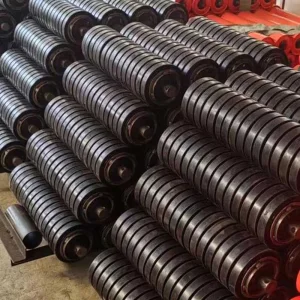
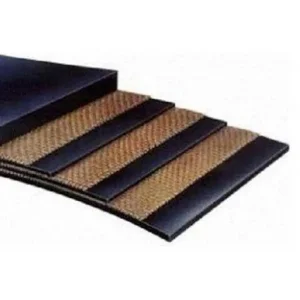
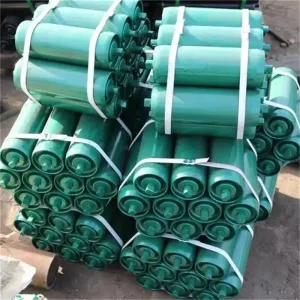
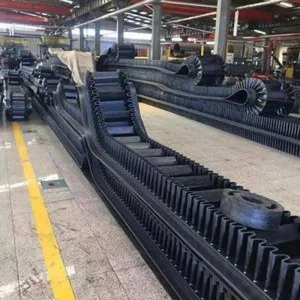
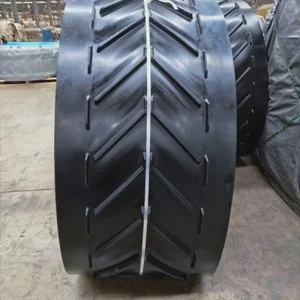
Browse our complete product range, including heavy-duty steel wire belts, heat-resistant belts, high-inclination profiles, and precision idlers.
 Boao Rubber