 Boao Rubber
1 / 2
| Cotton Canvas Core | CC-56 |
| Nylon Fabric Core | NN100, NN150, NN200, NN300, NN400, NN500 |
| Polyester Fabric Core | EP100, EP150, EP200, EP300, EP400, EP500 |
| Wire Rope Core | ST1000 – ST5400 |
| Edge Height (mm) | S80, S100, S120, S160, S200, S240, S300, S400, S500 |
| Partition Height (mm) | TC75, TC90, TC110, TC140, TC180, TC220, TC280, TC380, TC480 |
| General Writing Style | e.g. B800 × 6 (3+3+1.5) × 110 meters |
| Example Code | S120-120 | TC110-252-460 |
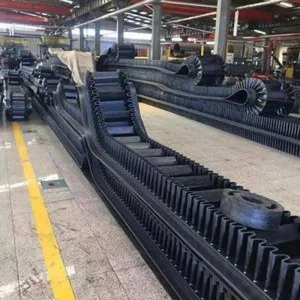
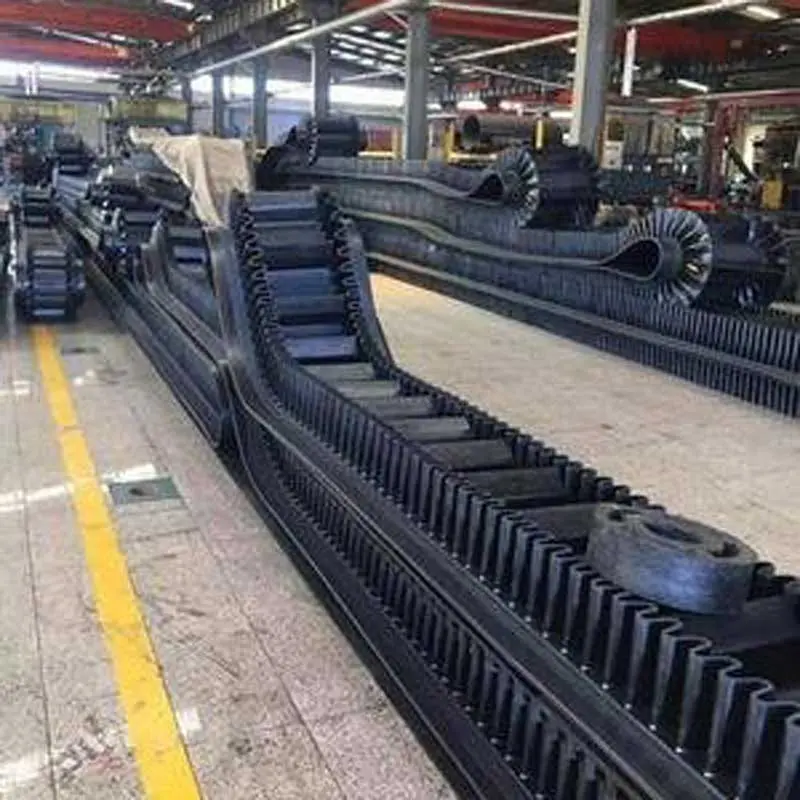
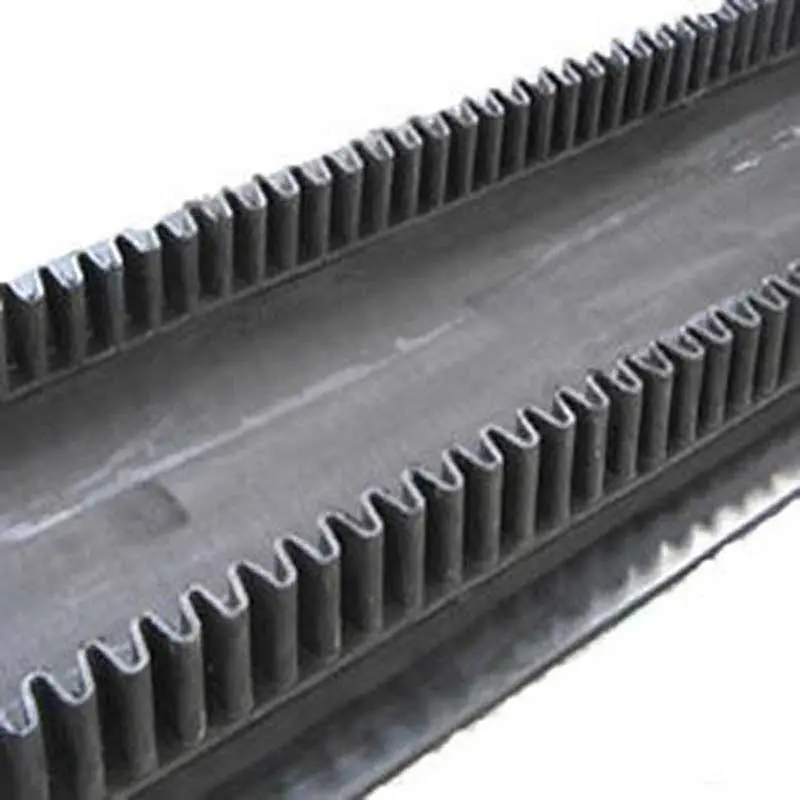
The load-bearing capacity of the edge conveyor belt is improved, and the lateral bending deformation of the edge conveyor belt is minimized after being loaded. Therefore, improving the lateral rigidity of the edge conveyor belt is the key to reducing the lateral load-bearing deformation of the belt and increasing its load-bearing capacity.
The lateral rigidity value of the edge blocking conveyor belt body refers to the ratio of the bending weight of the belt body caused by the self weight of the edge blocking conveyor belt body to the width value of the belt body on both sides of the freely supported belt body in the transverse vertical section of the belt body.
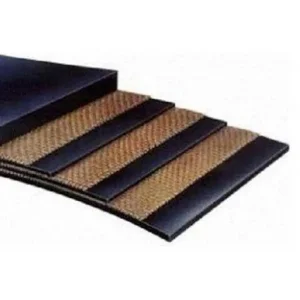
An effective measure to improve the lateral rigidity of large heavy-duty conveyor belts is to set up a special composite adhesive layer made of polyester short fibers that have been specially mixed and rolled between the multi-layer tensile canvas layers of the flat base belt. The polyester short fibers are embedded in the adhesive layer along the transverse direction of the belt in a single direction.
The use of this specialized composite adhesive layer that enhances the lateral bending resistance of the edge conveyor belt can increase the lateral rigidity value of the belt body by 2.5 times compared to ordinary structured edge conveyor belts — improving the lateral rigidity value from 0.09 to 0.036.