 Boao Rubber
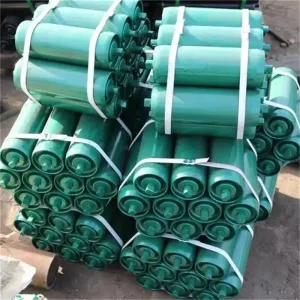
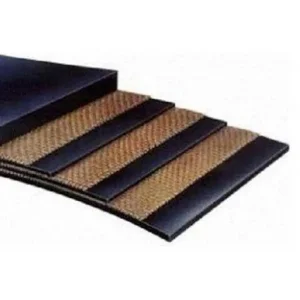
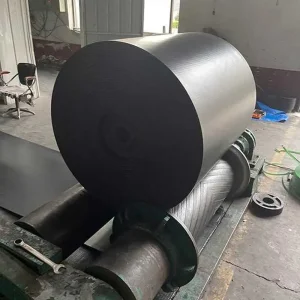
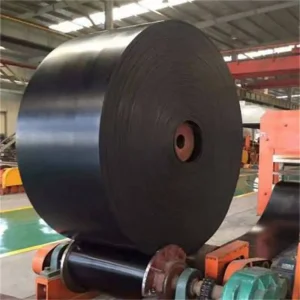
In the rapidly accelerating landscape of heavy manufacturing and infrastructure, South Korea has positioned itself as an absolute powerhouse. From the colossal steel mills of Pohang and Gwangyang to the bustling logistics gateways of Busan and Incheon, continuous material flow forms the critical backbone of industrial operations. High-capacity conveyor systems are the veins of these operations, transporting millions of tons of steel, iron ore, coal, cement, and chemical commodities yearly.
Hebei Boao Rubber Technology Co., Ltd. (operating under the renowned brand "Jinao") stands as a strategic partner to Korean industrial buyers. Operating since 2004 from Boye Rubber Industrial Park, Baoding, China, we combine the engineering precision of global manufacturing standards with the unmatched supply-chain efficiency of Chinese production pipelines. This whitepaper details our capabilities to support Korean projects with custom-tailored bulk handling components.
South Korea's geography, industrial concentration, and climate present unique operational challenges for bulk material transport. To construct an efficient supply chain, local enterprises must evaluate environmental factors alongside structural configurations. Below, we break down these demands into core sectors:
Pohang and Gwangyang house some of the largest integrated steelworks globally. Transporting iron ore, sinter, and burning coke demands conveyor belts with specialized heat resistance (often up to 250°C and transient temperatures of 400°C). Standard rubber belts degrade rapidly under these conditions, causing carcass separation and catastrophic system failures.
Korea's domestic resource extraction and extensive underground infrastructure expansion require flame-retardant (FR) rubber compounds. Mining environments carry risk of friction-induced combustion. Sourcing flame-retardant belts compliant with ISO 340, MSHA, or KS M 6533 certifications is critical to maintaining regulatory compliance.
Port hubs handle a high volume of salt-laden moisture and volatile minerals. Saltwater spray accelerates the corrosion of steel frames and conveyor carcasses. Belts operating in Busan or Incheon require robust ozone protection, chemical barrier structures, and sealed, low-resistance troughing rollers that prevent ingress of dust and water.
Modern bulk handling facilities are shifting away from high-power, high-emission, short-span layouts toward unified, long-distance continuous lines. This optimization is driven by two main factors:
While South Korea boasts domestic manufacturing options, importing conveyor belts and rollers from established Chinese suppliers like Hebei Boao Rubber Technology offers distinct economic and logistical benefits:
Located in Boye County, Baoding, Hebei Boao resides at the epicenter of China's rubber processing industrial cluster. We source raw polymers, high-modulus polyester (EP) textiles, steel wire ropes, and compounding agents at scale. By avoiding fragmented domestic markups, we secure high-grade inputs (such as natural rubber from Southeast Asia) at competitive baseline rates.
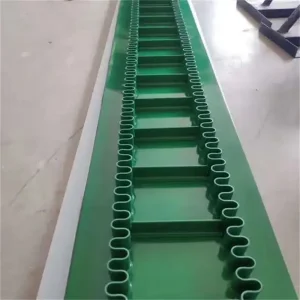
Our multi-axis continuous vulcanization presses (rotocure and plate vulcanization lines) handle custom widths, thicknesses, and specialized patterns (herringbone, chevron, high-angle wavy walls). Whether Korean machinery requires standard DIN 22102 grades or specialized formulations (such as high ozone resistance or cold resistance down to -40°C), our laboratory designs and tests compounds to match those specific operating environments.
Our facility operates an independent chemical analysis room and physical testing laboratory. Every batch of rubber undergoes rheological, tensile, abrasion, and aging analysis before release. We enforce strict gatekeeping: raw materials must pass verification before processing, and finished products undergo testing prior to packaging and dispatch.
Our engineered solutions are developed to match the operating parameters of major Korean industrial facilities:
The Scenario: Expanding subway lines and underground expressways in metropolitan Seoul requires vertical and high-inclination transport of damp soil and fractured bedrock.
The Solution: Our high-inclination wavy edge (sidewall) rubber conveyor belts and chevron-patterned belts enable steep incline transport, optimizing spatial footprint and preventing cargo rollback.
The Scenario: Handling corrosive, high-moisture imported steaming coal and raw sulfur at coastal transshipment docks.
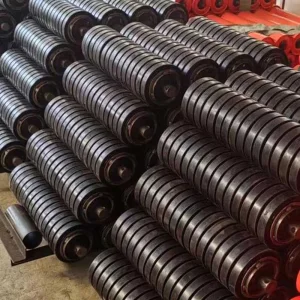
The Solution: Cold-resistant, acid-alkali resistant rubber belts paired with corrosion-resistant ceramic or rubber-coated impact rollers to absorb shock and shed sticky materials.
The Scenario: Carrying direct-reduced iron pellets, hot sinter, and steel slag from blast furnaces to storage silos.
The Solution: Multi-ply EPDM conveyor belts configured to resist high temperatures and cracking, paired with heat-stabilized mechanical fasteners.
Founded in 2004, Hebei Boao Rubber Technology Co., Ltd. is a dedicated manufacturer of industrial conveyor belts and conveying components. Located in the Boye County Industrial Hub, China, our campus spans over 30 acres and houses state-of-the-art rolling, compounding, molding, and vulcanizing lines.
Our products, sold under the registered brand name "Jinao", are deployed across mining, metallurgy, cement, thermal power generation, and port logistics. Our facilities operate under certified international quality management systems, allowing us to align production output with national and international regulatory standards.
To ensure operational safety, our products undergo regular audits and comply with major quality standards.
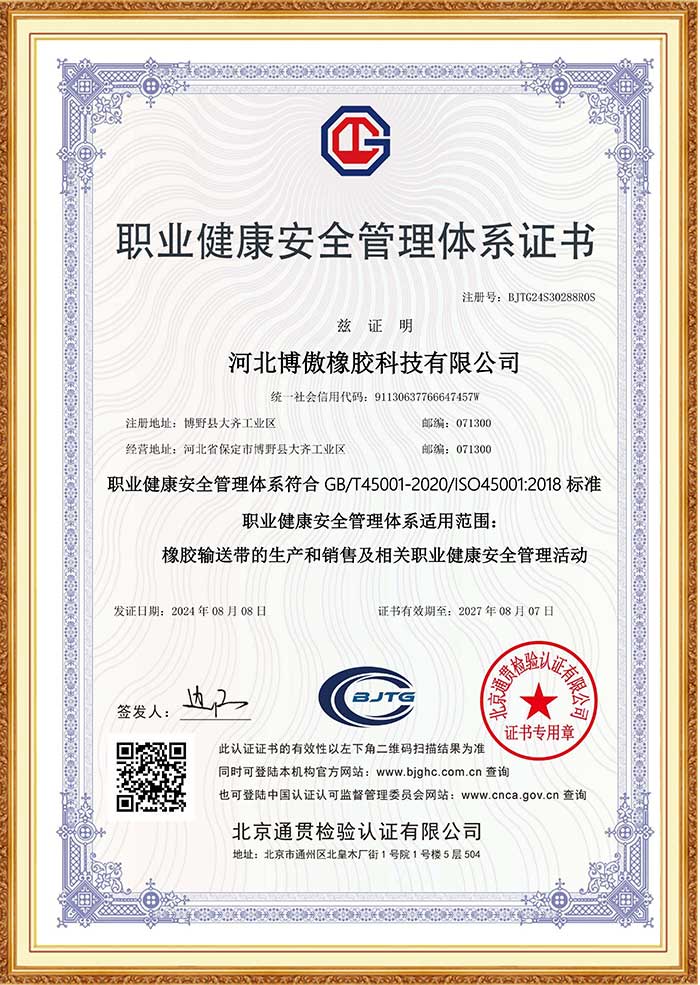
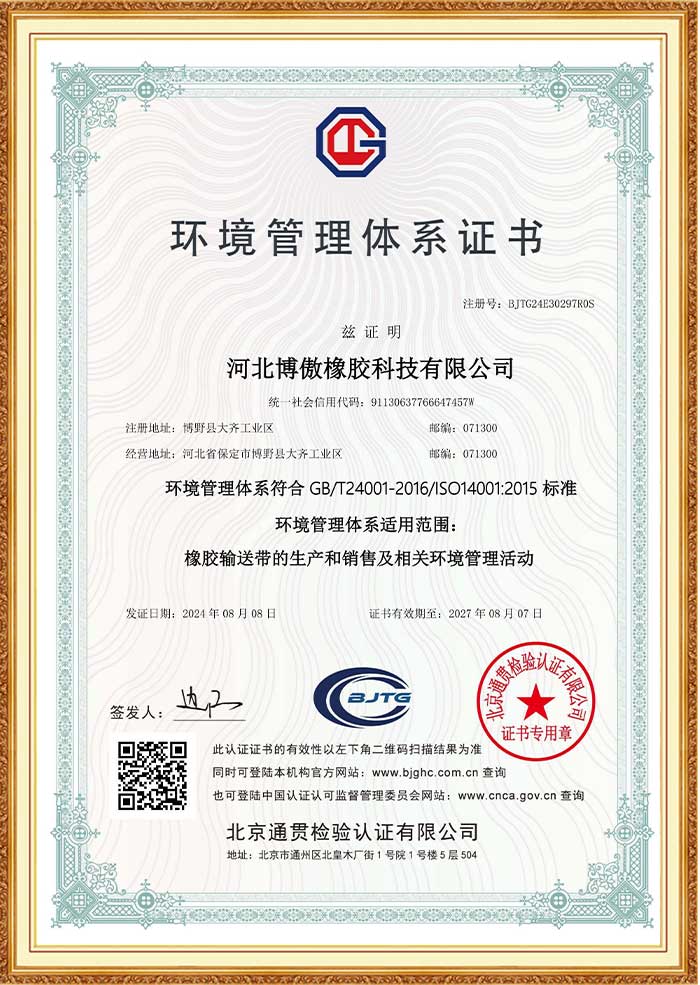
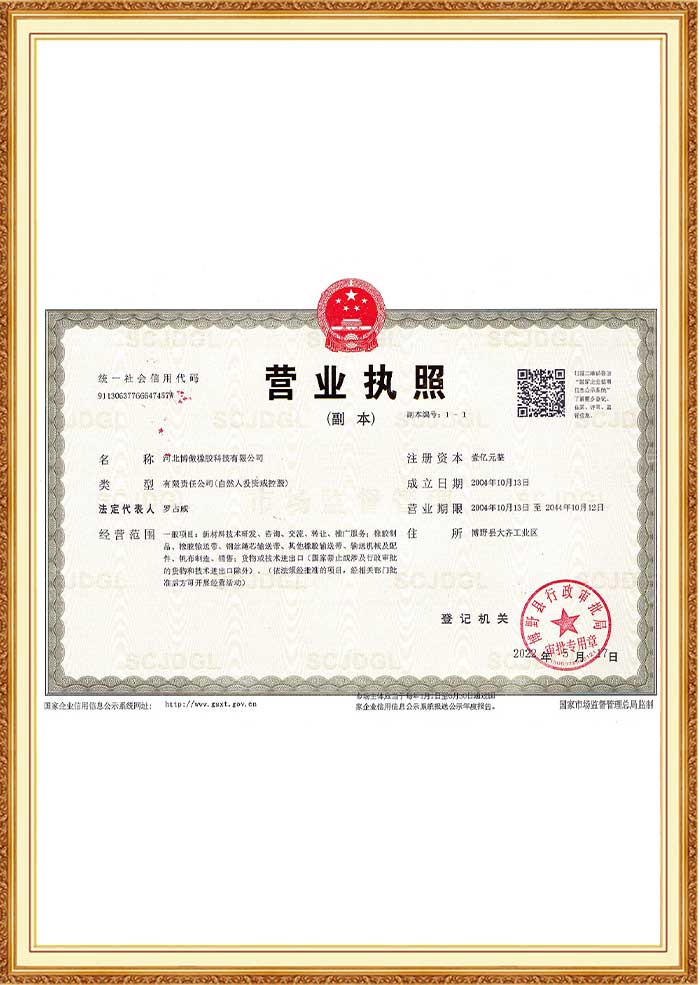
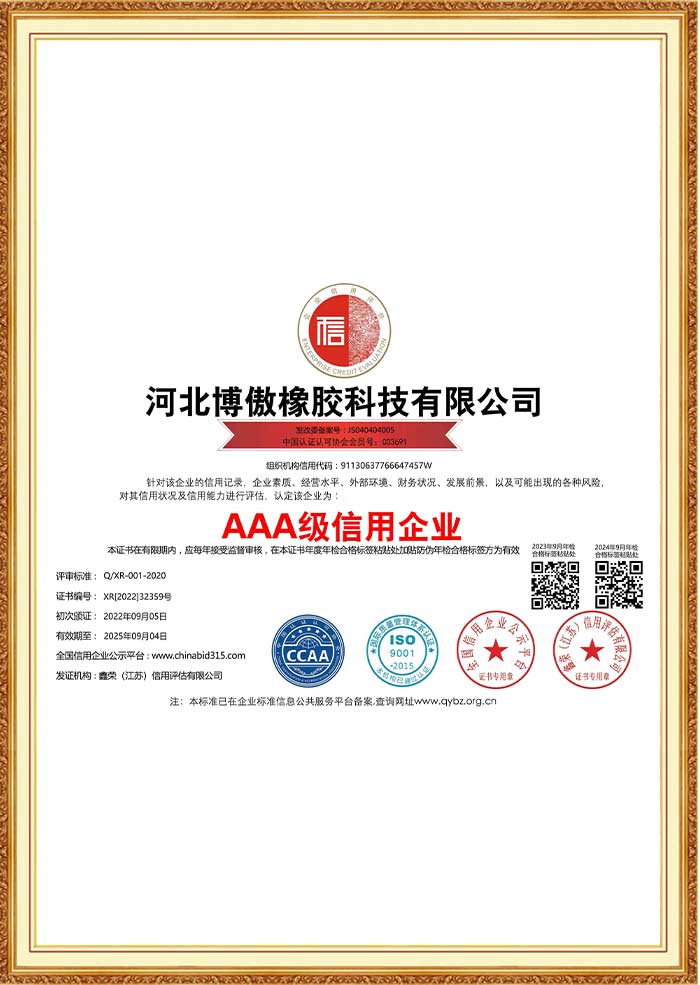
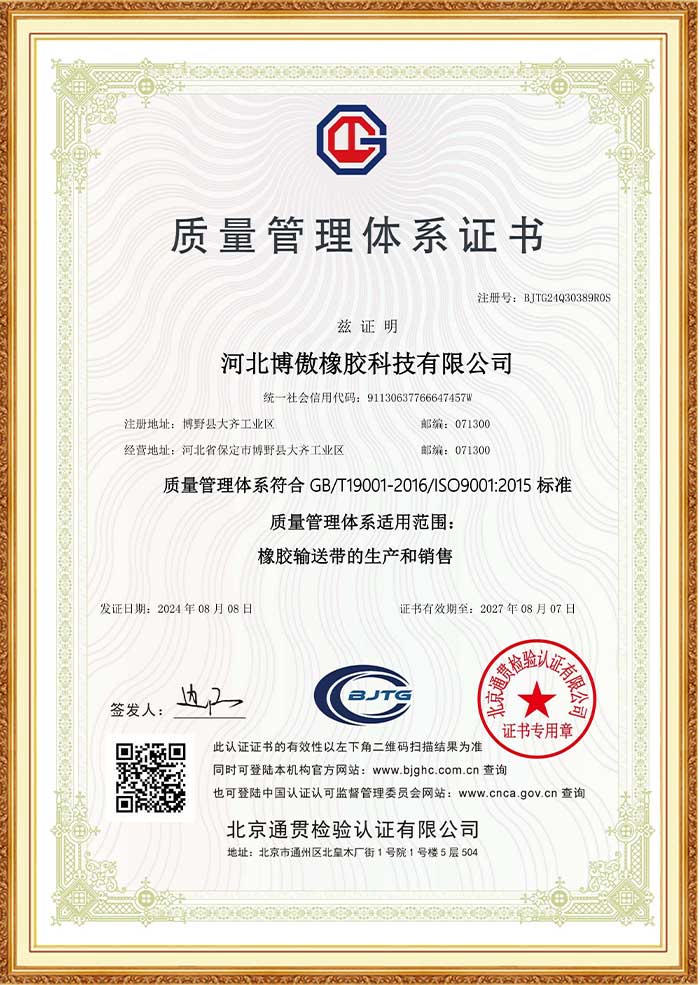
Our conveyor components are deployed in high-load material handling facilities worldwide.
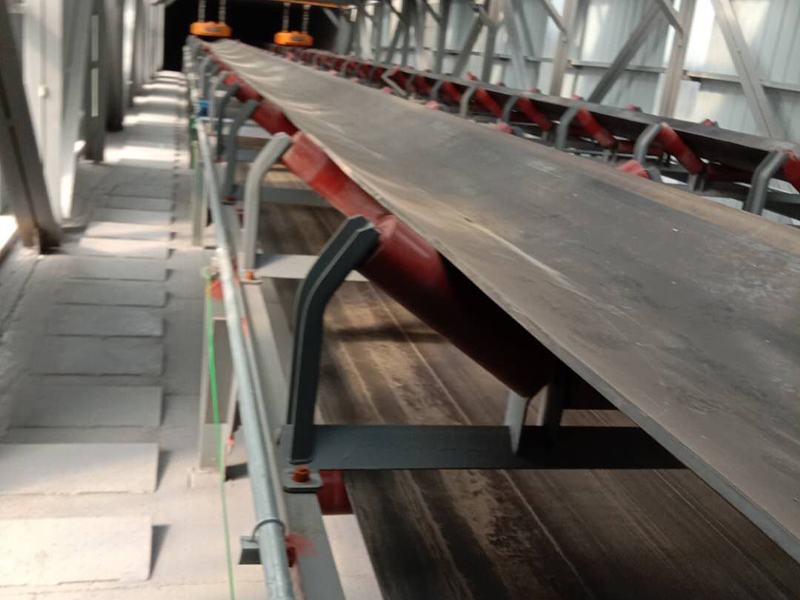
Korean Integrated Steel Plant Projects
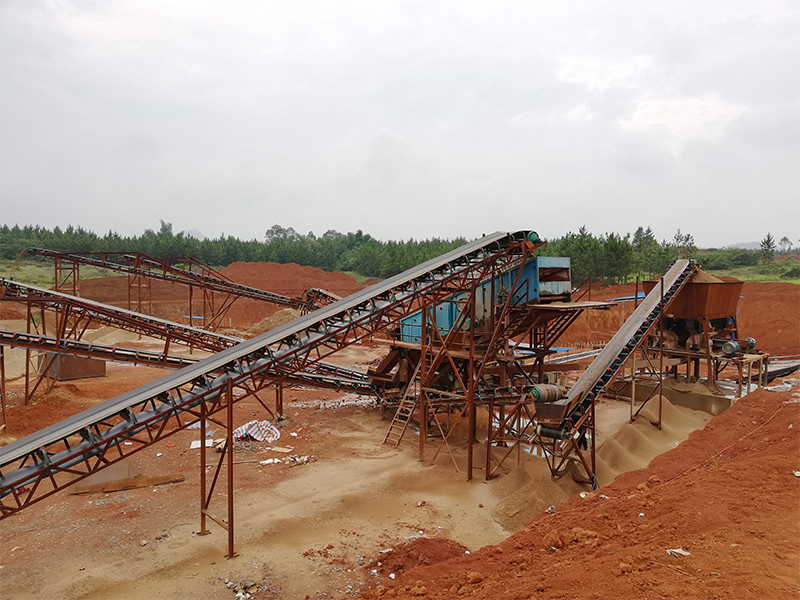
Hyundai Steel Raw Ore Handling
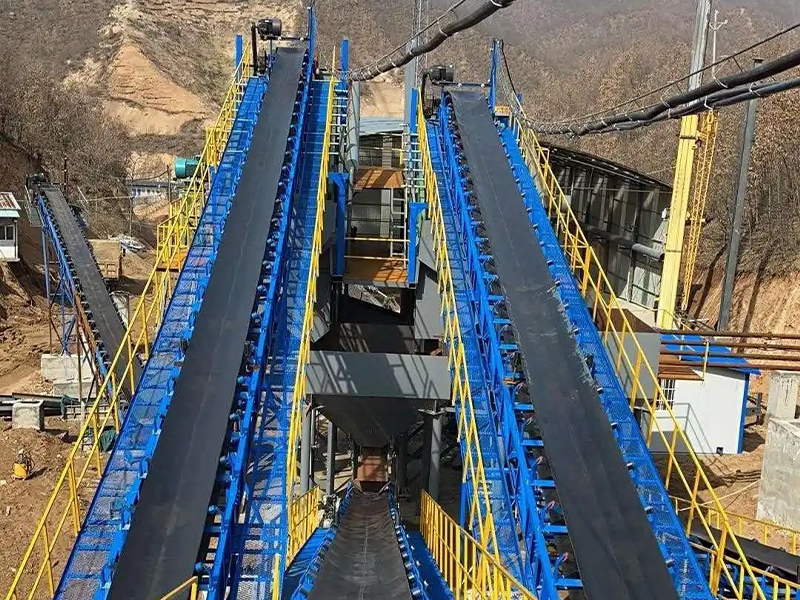
Zijin Mining Bulk Infrastructure
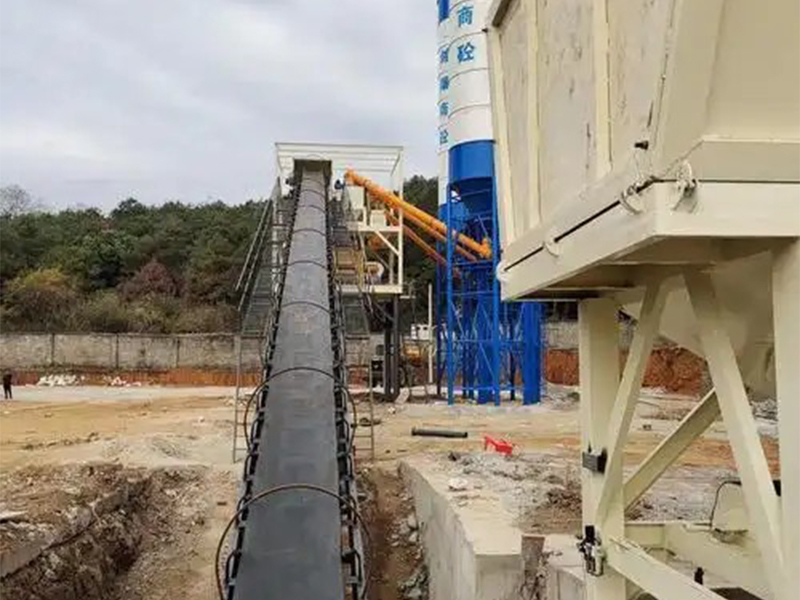
Korea Infrastructure Aggregate Mix Plants
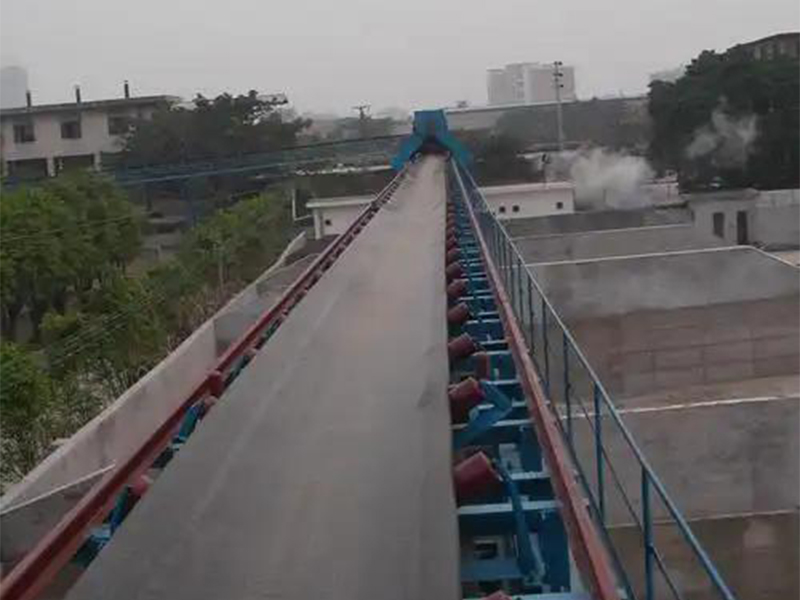
Conch Cement Overland Conveyors
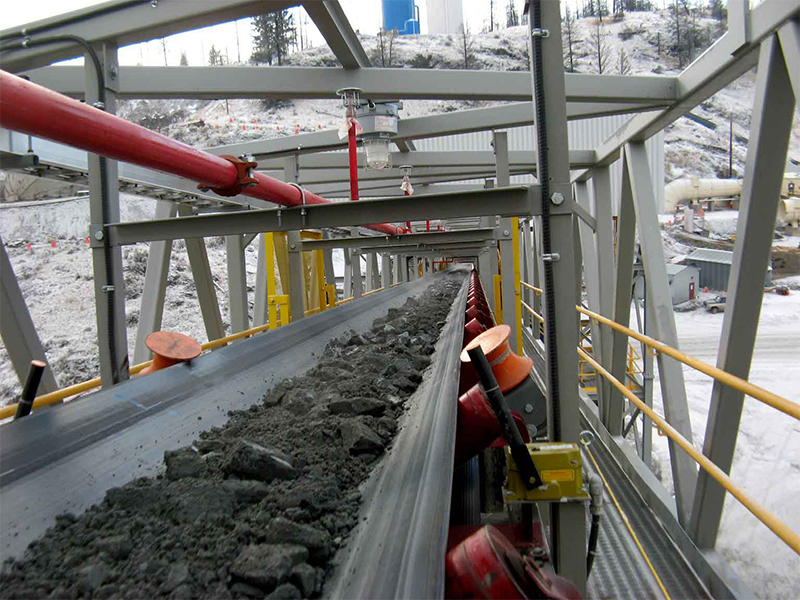
Datong Underground Extraction Systems
Replacing conveyor components represents only a fraction of maintenance costs; minimizing unscheduled downtime is key to operational efficiency. Hebei Boao provides tailored support programs to maximize the service life of our products:
We coordinate with Korean logistics hubs to maintain backup stock for critical belt widths, matching customized dimensional specifications to enable prompt replacement.
We supply matching splice kits, tie-gum rubber, and vulcanization instructions to ensure joint strength reaches up to 90% of the parent belt's tensile rating.
We provide wear diagnostic templates, roller load-limit tables, and alignment guides to prevent structural damage due to belt drift.
Technical details and ordering information for engineering and procurement managers sourcing for the Korean market.
Our products are formulated to match or exceed KS M 6533 (Korean Industrial Standards for rubber conveyor belts). We select synthetic rubber bases, high-purity carbon black, and anti-aging agents to satisfy required tensile strength, elongation at break, and abrasion resistance. Prior to shipping, we can provide DIN 22102, ISO, or JIS test reports from our laboratory to verify compliance.
Our factory is located in Hebei Province, close to Tianjin (Xingang) Port. Standard production cycles range from 15 to 25 days depending on the volume and specifications. Maritime transit from Tianjin Port to Busan Port typically requires 2 to 4 days, enabling efficient lead times for large-scale industrial projects.
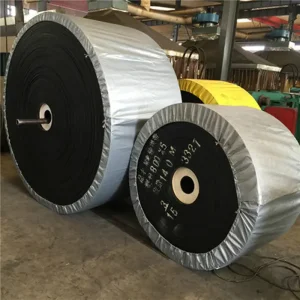
For high-capacity, heavy-duty applications (such as iron ore mining or limestone quarries), we recommend Steel Wire Rope Core Conveyor Belts (ST series). Steel cord construction provides high tensile strength, minimal elongation under load, and high resistance to impact damage. For mid-range distances, EP (Polyester-Polyamide) multi-ply belts offer cost-efficient elasticity and moisture resistance.
Our cold-resistant conveyor belts combine natural rubber (NR) and butadiene rubber (BR). This composition retains material flexibility at low temperatures, helping prevent micro-cracks and cover hardening down to -40°C or -50°C. These characteristics suit outdoor and coastal installations in northern parts of South Korea.
Yes. We produce high-angle wavy edge (sidewall) belts and chevron patterned conveyor belts. Sidewall heights can be configured up to 400mm, with fabric-reinforced cleats to handle inclines up to 90 degrees. This design maximizes vertical transfer rates within tight spatial footprints in processing plants.
Select from our standard or specialized products to view dimensional drawings and material specifications:
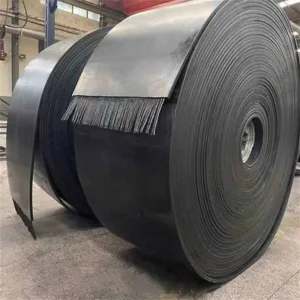
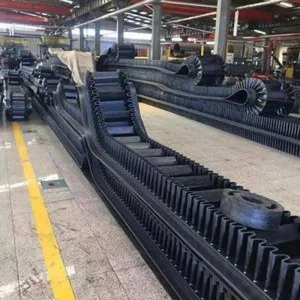
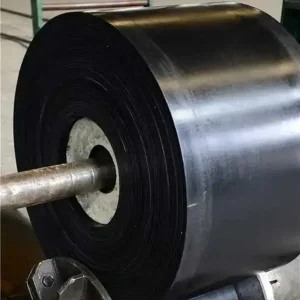
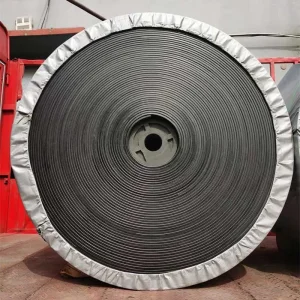
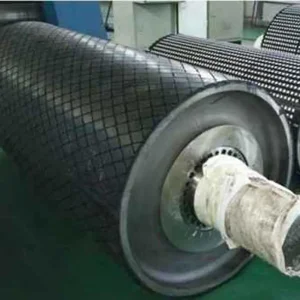
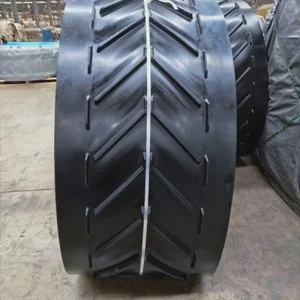
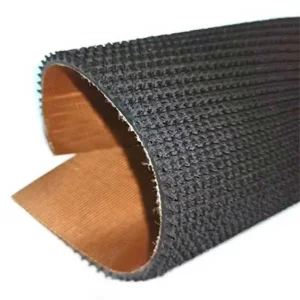
We compile detailed comparative specifications to assist engineers in selecting the correct rubber cover grade and carcass type for their operational requirements:
Our cover rubbers conform to DIN 22102, ISO 10247, and KS M 6533 standards. Cover grade selections correspond to the following operating conditions:
Choosing the right carcass type depends on system length, tension, and material size:
Additional heavy-duty products designed for high-stress conveyor systems:
Get in touch with our technical sales team for engineering support, customized material formulations, or wholesale pricing tailored for South Korea.