Home >
Hot Products >
China High Angle Wavy Edge Conveyor Belt - China Suppliers & Factory for Enhanced Material Handling Solutions Manufacturers, Supplier
1 / 2
China High Angle Wavy Edge Conveyor Belt - China Suppliers & Factory for Enhanced Material Handling Solutions Manufacturers, Supplier
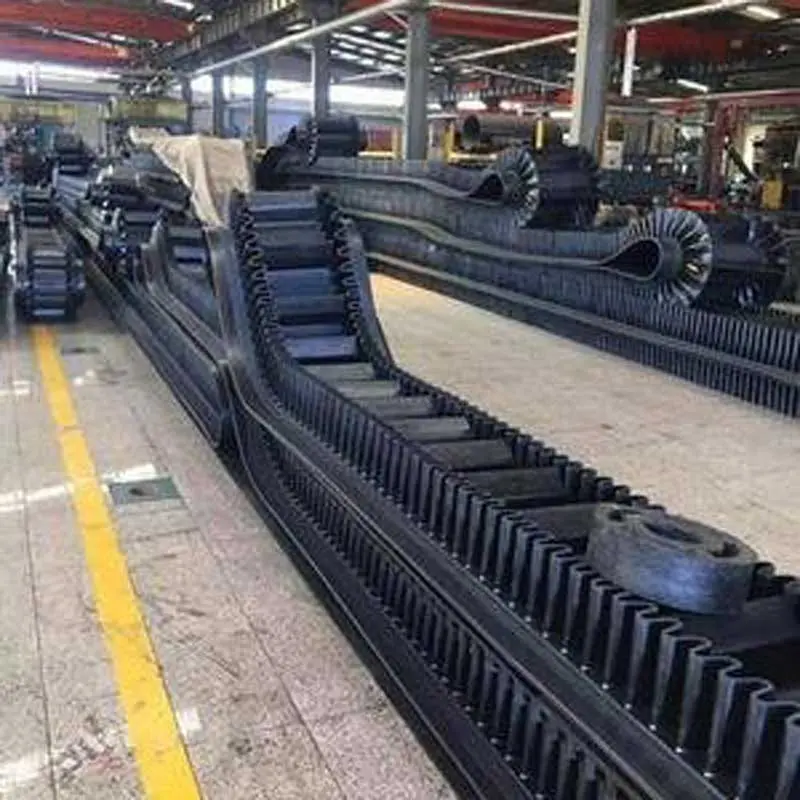
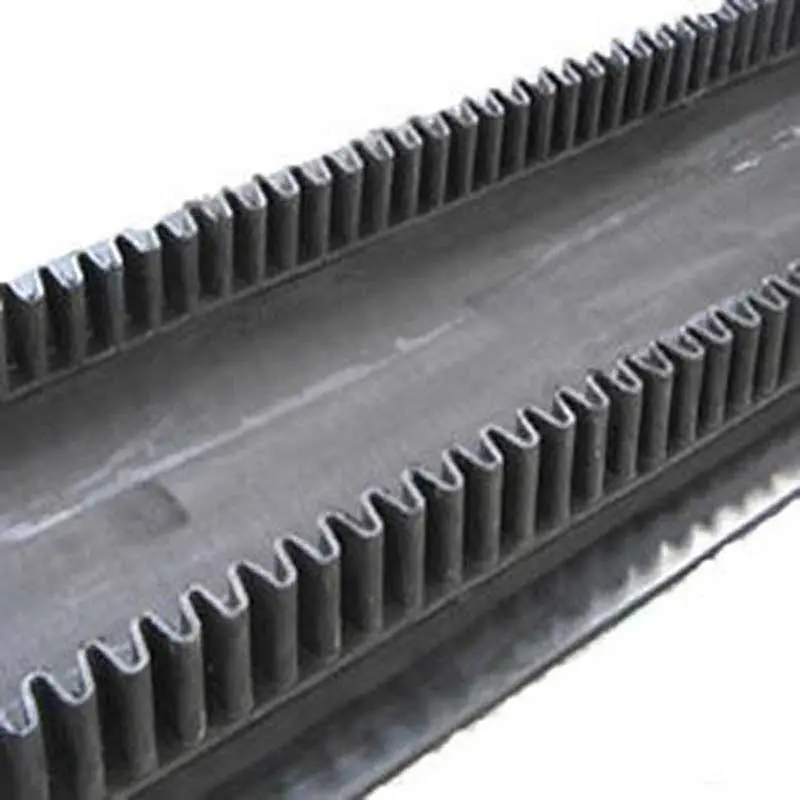
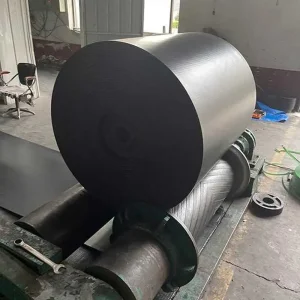
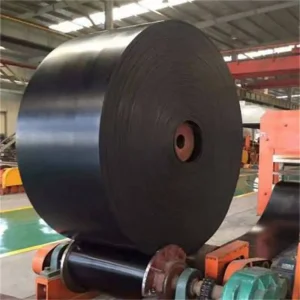
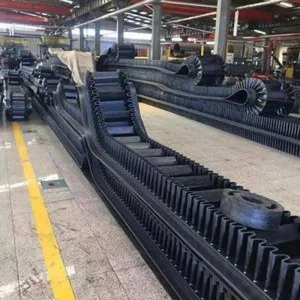
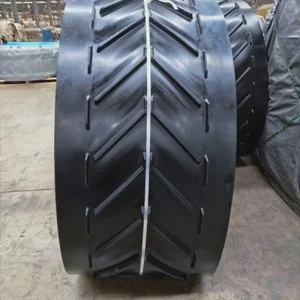
The high angle wavy edge conveyor belt is an innovative solution designed for efficient material handling. This conveyor belt consists of three essential components: the base band, the edge band, and a transverse partition. The edge band effectively prevents materials from slipping and falling during transport, ensuring safety and reliability. Its unique corrugated design allows for smooth bypassing of the drum, while the T-shaped TC type transverse partition provides additional support for the material, enabling large angle conveying, As a leading China supplier and factory of conveyor belts, we offer a variety of wave-shaped edge conveyor belts tailored to meet specific needs. Our product line includes ordinary types, as well as specialized versions such as heat-resistant, flame-retardant, cold-resistant, acid-alkali resistant, and oil-resistant belts. Each type is manufactured using high-quality covering adhesives for optimal performance in diverse environments. Trust our expertise in the industry to deliver durable and effective solutions for your material handling requirements
Large conveying capacity and higher lifting height.
Smooth transition from horizontal to inclined (or vertical).
Suitable for conveying powdery, granular, small, pasty, and liquid materials that are prone to scattering.
Low energy consumption, simple structure, high tape strength, and long service life.
Product Description
Improving the lateral rigidity of the edge conveyor belt is the key to reducing lateral load-bearing deformation and increasing its overall load-bearing capacity.
0.05
Max. Technical Standard Lateral Rigidity Value
0.036
Achieved Lateral Rigidity Detection Value
15–20%
Increase in Bearing Capacity
2.5×
Lateral Rigidity Improvement vs. Ordinary Structure
The load-bearing capacity of the edge conveyor belt is improved, and the lateral bending deformation of the edge conveyor belt is minimized after being loaded. Therefore, improving the lateral rigidity of the edge conveyor belt is the key to reducing the lateral load-bearing deformation of the belt and increasing its load-bearing capacity.
The lateral rigidity value of the edge blocking conveyor belt body refers to the ratio of the bending weight of the belt body caused by the self weight of the edge blocking conveyor belt body to the width value of the belt body on both sides of the freely supported belt body in the transverse vertical section of the belt body.
The technical standard requirement for the lateral rigidity value of a high lateral rigidity edge conveyor belt is not greater than 0.05. After optimizing and improving the structure of the edge conveyor belt, the lateral rigidity detection value is 0.036 after adding a lateral rigidity reinforcement layer. The lateral deformation of the belt body is reduced after bearing, which can increase the bearing capacity by 15% to 20%.
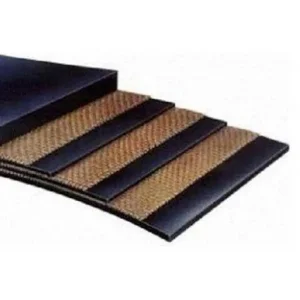
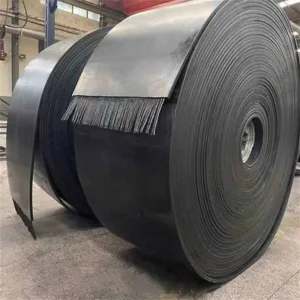
An effective measure to improve the lateral rigidity of large heavy-duty conveyor belts is to set up a special composite adhesive layer made of polyester short fibers that have been specially mixed and rolled between the multi-layer tensile canvas layers of the flat base belt. That is, the polyester short fibers are embedded in the adhesive layer along the transverse direction of the belt in a single direction.
The use of this specialized composite adhesive layer that enhances the lateral bending resistance of the edge conveyor belt can increase the lateral rigidity value of the belt body by 2.5 times compared to ordinary structured edge conveyor belts, even if its lateral rigidity value increases from 0.09 to 0.036.
Frequently Asked Questions (FAQ)
Q
What conveying angles can wave shaped edge conveyor belts handle?
Wave shaped edge conveyor belts are designed to handle conveying angles ranging from 30 to 90 degrees. This wide angle range makes them highly versatile for applications where standard flat conveyor belts cannot achieve the required incline.
Q
What types of core materials are available for edge conveyor belts?
Edge conveyor belts are available with a variety of core materials, including cotton canvas core (CC-56), nylon fabric cores (NN100–NN500), polyester fabric cores (EP100–EP500), and wire rope cores (ST1000–ST5400), allowing selection based on load requirements and operating conditions.
Q
What is the significance of lateral rigidity in edge conveyor belts?
Lateral rigidity is critical because it determines how much the belt deforms sideways when loaded. A higher lateral rigidity value reduces deformation, directly increasing the belt's load-bearing capacity. The technical standard requires a lateral rigidity value of no greater than 0.05, and optimized designs can achieve values as low as 0.036.
Q
How does the polyester short fiber composite adhesive layer improve belt performance?
The specialized composite adhesive layer is made of polyester short fibers mixed and embedded transversely within the multi-layer tensile canvas layers. This reinforcement increases the lateral rigidity value of the belt by up to 2.5 times compared to ordinary structured belts, improving both durability and load capacity significantly.
Q
What types of materials are suitable for transport using edge conveyor belts?
Edge conveyor belts are well-suited for transporting a wide range of materials including powdery, granular, small-sized, pasty, and liquid materials that are prone to scattering or spillage — making them ideal for industries such as mining, chemical processing, food production, and construction.
Q
What are the standard bandwidth and layer specifications for edge conveyor belts?
Standard wave shaped edge conveyor belts are available in bandwidths ranging from 100mm to 2400mm, with fabric layers from 2 to 10 layers. Cover adhesive thickness ranges from 1.5mm to 8mm on the working surface and 0mm to 4.5mm on the non-working surface, offering flexibility to match various operational demands.
 Boao Rubber