Explore our foundational range of heavy-duty conveyor belts, idlers, and support components optimized for extreme conditions.
Located dynamically in the state-of-the-art Rubber Industrial Park of Boye County, Baoding, Hebei Province, Hebei Boao Rubber Technology Co., Ltd. stands as an elite benchmark in the rubber compounding and industrial vulcanization sector. Founded in 2004, our manufacturing campus stretches across a vast footprint of over 30 acres. Leveraging our internationally recognized premium brand "Jinao", we operate as a centralized hub in China integrating raw materials analysis, custom rubber formula synthesis, heavy-duty vulcanization design, and full-cycle after-sales system diagnostics for conveyor belt systems and structural conveyor components.
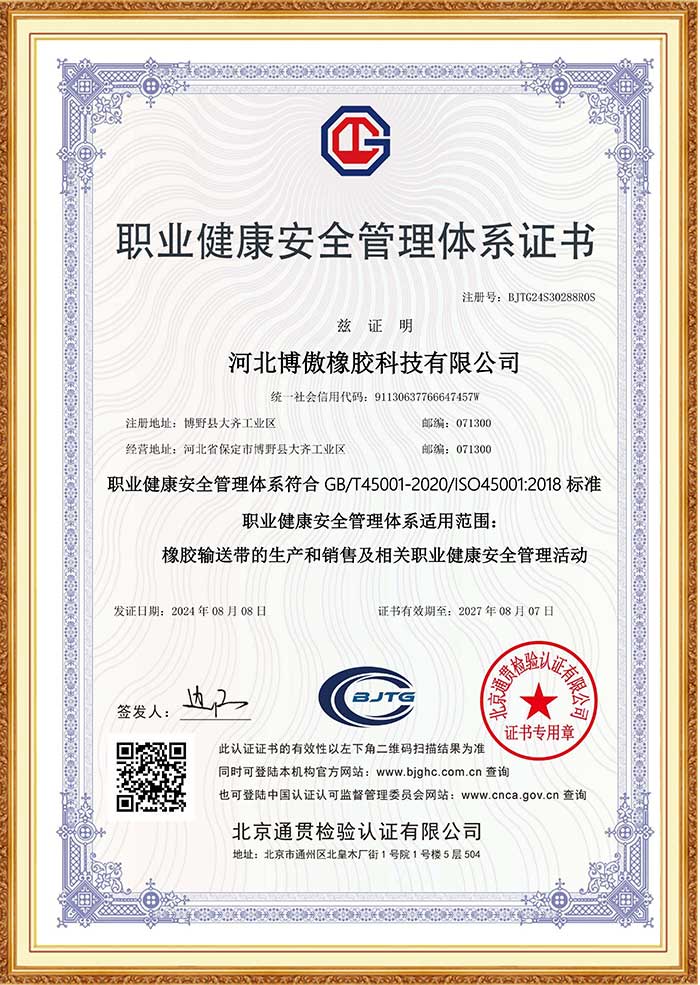
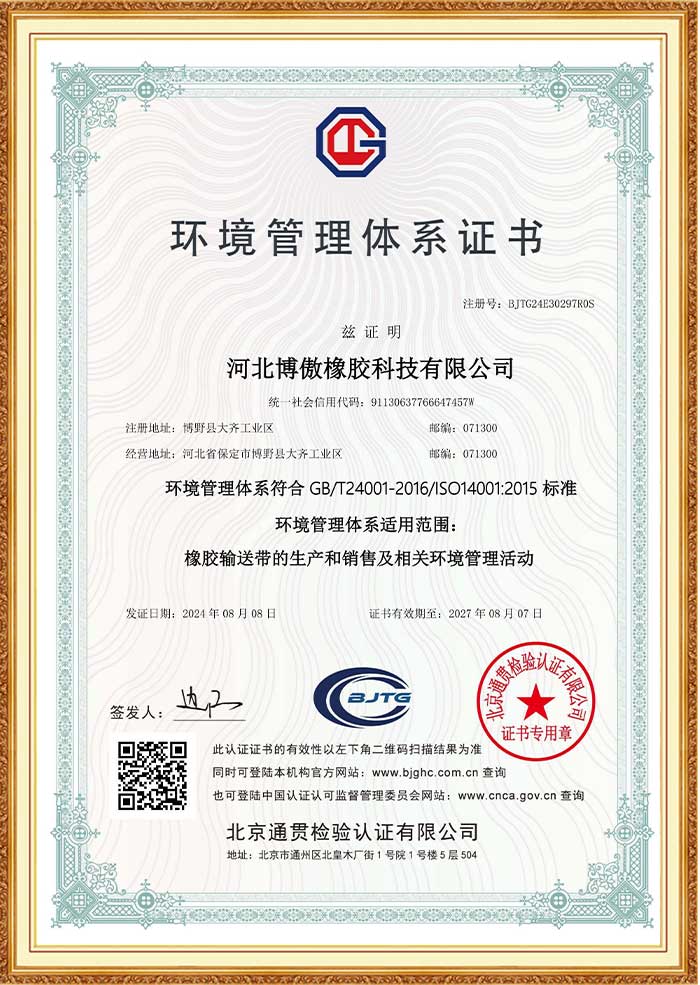
Our commitment to quality assurance is validated by our immediate compliance and certification under the international ISO quality management system. Hebei Boao maintains multi-million dollar rolling, high-precision forming, uniform tension vulcanization, and advanced mechanical testing lines. By maintaining total supply chain sovereignty—from pure synthetic polymer inspection to the dynamic fatigue analysis of final multi-ply belts—we guarantee absolute material performance consistency for steel mills, coal processing centers, mineral shipping terminals, and chemical infrastructure worldwide.
A technical overview of modern elastomer engineering, textile reinforcements, and the transition toward smart, flame-retardant, and wear-resistant polymer composites.
Standard conveyor belts are shifting rapidly from basic Natural Rubber (NR) blends toward highly specialized, synthetic Styrene-Butadiene Rubber (SBR), Ethylene Propylene Diene Monomer (EPDM), and Nitrile (NBR) matrices. SBR excels in abrasion and general mechanical stress resistance, making it perfect for heavy mining, whereas EPDM provides an unparalleled thermal envelope up to 250°C, crucial for cement clinker and metallurgy applications.
High-tension applications demand structural reinforcers that mitigate risk. Nylon (NN) and Polyester (EP) fabrics remain the global standard for moderate tension applications due to elasticity and shock absorption. However, for extreme distances, high-tensile Steel Wire Rope Cores act as the internal skeleton, augmented by transverse rip-stop steel cords or aramid high-modulus breakers to instantly prevent catastrophic belt slitting from foreign metal objects.
Modern sustainability targets (such as RoHS and European REACH regulations) are reshaping chemical compounding. The industry is actively shifting away from heavy metal accelerators and hazardous plasticizers. Manufacturers must utilize low-emission, non-toxic crosslinking agents that reduce volatile organic compound (VOC) release during processing while maintaining long-term physical properties like high tensile strength and elongation at break.
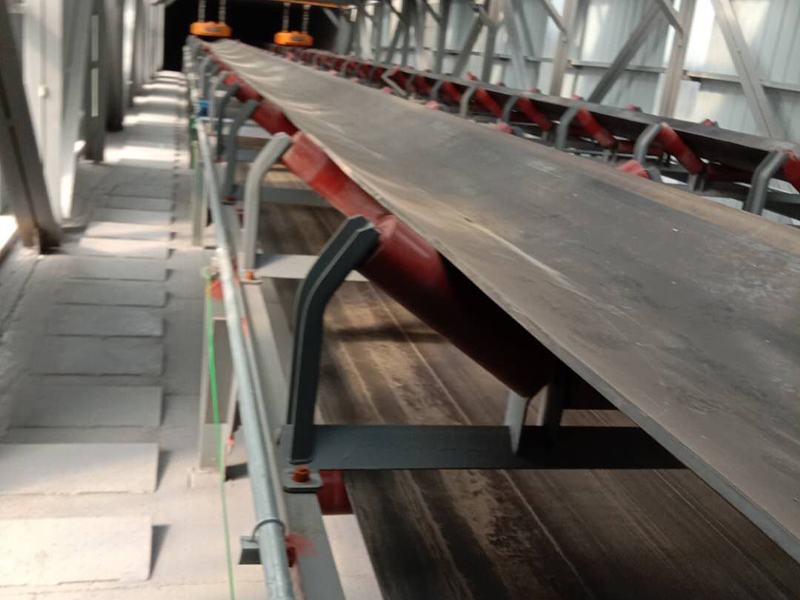
From custom elastomeric compounding to heavy-duty mechanical conveyor accessories, the Jinao brand encompasses total solutions.
Our production floor is optimized for a diverse array of operational challenges, including:
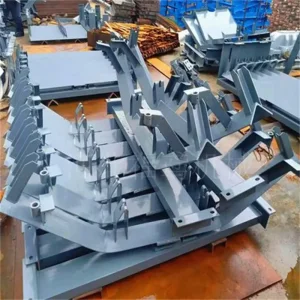
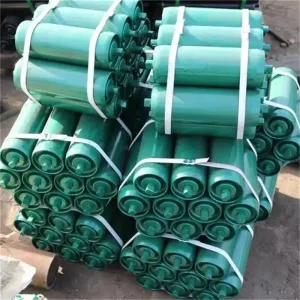
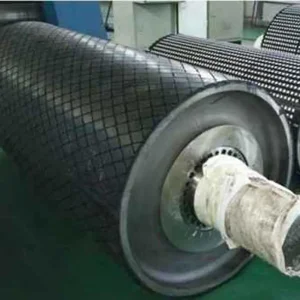
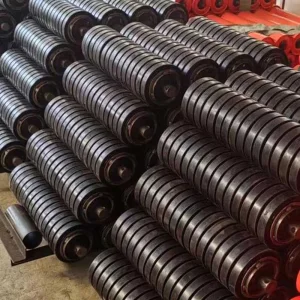
Maximize conveyor efficiency and run-time with Boao's integrated performance accessories:
Boao acts as a full-service technical partner, providing a structured mechanical operation matrix:
Analyzing key procurement pain points in heavy industries and how Hebei Boao optimizes Total Cost of Ownership (TCO).
For corporate purchasing directors and chief operating engineers in heavy sectors like mining, steel manufacturing, and ports, acquiring industrial conveyor belts represents a highly critical operational risk decision. Belts are not commodity products; a single runtime failure can cost upwards of $50,000 per hour in lost productivity. Through years of partnerships with enterprise clients, we have identified and addressed the three main procurement challenges:
Many low-cost suppliers cut costs by using excessive inorganic fillers (like calcium carbonate) in their rubber blends. This drastically reduces the elastomer's elastic recovery, leading to premature cracking under material impact. Boao utilizes high-grade virgin SBR and NR polymers coupled with premium carbon blacks, ensuring superior abrasion resistance (exceeding DIN 22102 standards of 120mm³ or less loss).
High-tension belts running over long distances experience continuous cyclic bending. Poor chemical bonding between the textile ply (EP/NN fabric) and the skim rubber results in internal ply delamination. Our state-of-the-art multi-day calendering and high-pressure vulcanization lines ensure dynamic adhesion values exceeding 6.0 N/mm, eliminating internal ply separation.
International operations in underground mining or chemical processing face strict regulatory standards regarding fire prevention and static dissipation. Boao's flame-retardant rubber conveyor belts are engineered with premium antimony trioxide and chlorinated paraffin agents, complying fully with MSHA, DIN EN 14973, and ISO 340 safety standards.
Our "Jinao" branded conveyor systems are customized to deliver specific results across distinct industrial verticals:
Hebei Boao products have been field-tested by some of the world's most demanding industrial conglomerates.
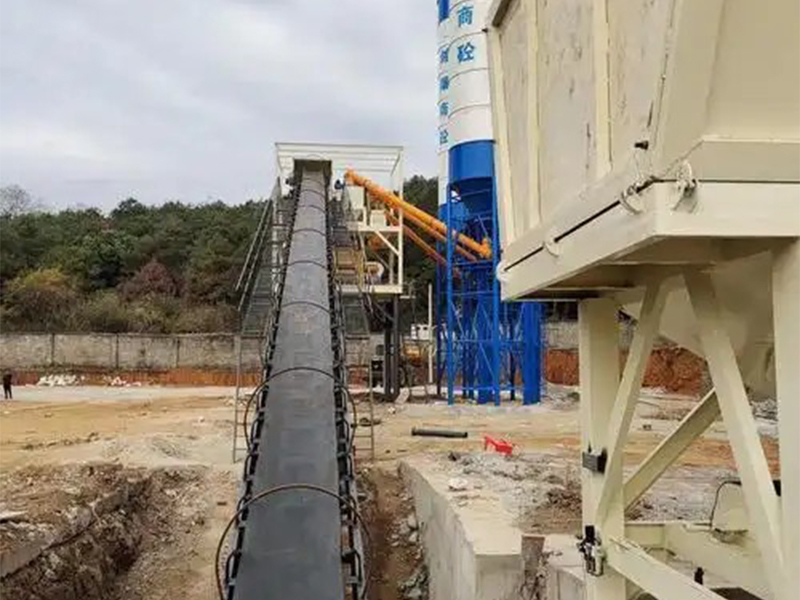
China Railway Group Mixing Plant
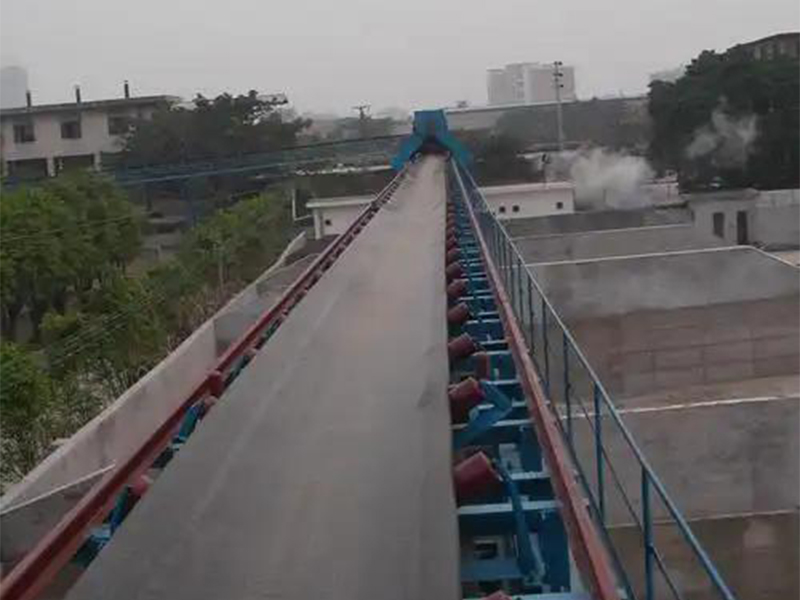
Conch Cement
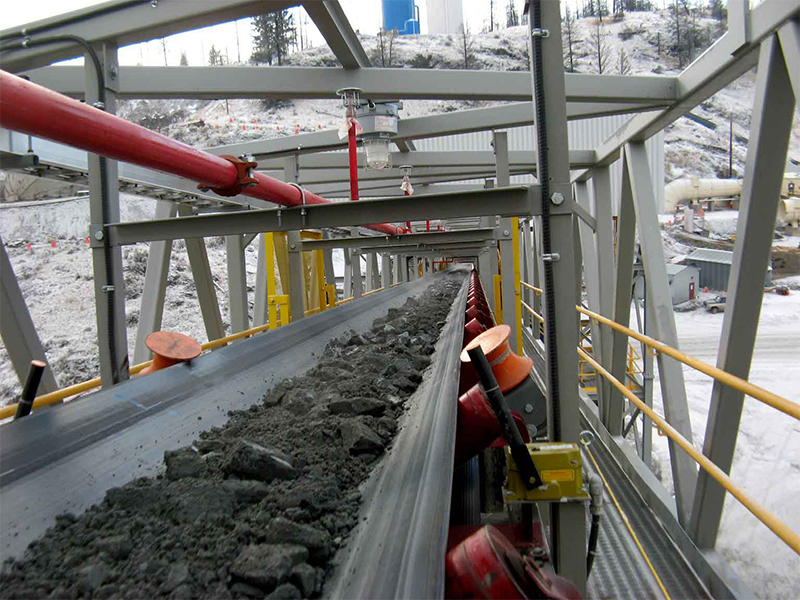
Datong Coal Group
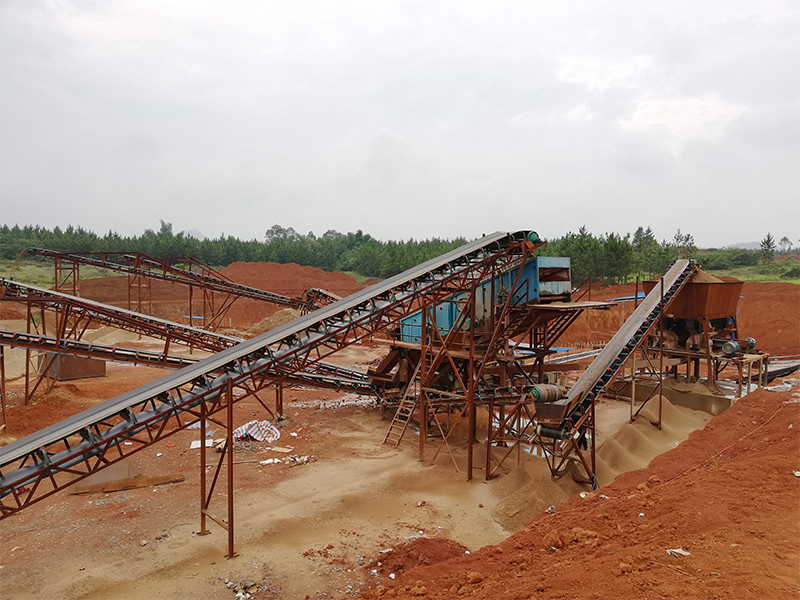
Tsingshan Group
Taihang Steel
Our integration with key industry leaders like Conch Cement (energy-efficient clinker conveyor setups), Datong Coal Group (high-safety underground transportation networks), and Tsingshan Group (nickel ore extraction transport) demonstrates our ability to deliver highly custom, high-reliability rubber belting formulations that meet strict performance requirements.
Engineering the next generation of conveyor intelligence, high-angle material transport, and energy conservation.
The industrial conveyor industry is undergoing a significant transformation driven by automation, material tracking, and decarbonization. Hebei Boao Rubber Technology is at the forefront of this evolution, investing heavily in research and development to bring advanced capabilities to our enterprise customers:
Modern logistics terminals and long-haul mines cannot rely on manual inspections alone. Our future technical roadmap features RFID tracking tags and copper sensor loops vulcanized directly into the belt layers. When paired with electromagnetic scanning arrays, these sensors provide early warning of belt punctures, cord damage, and slice separation, helping operators schedule maintenance before a failure occurs.
Up to 60% of a long-distance conveyor system's energy consumption is spent overcoming the indentation rolling resistance of the belt pressing over idlers. We are developing customized SBR/NR formulations optimized for low viscoelastic indentation loss. By reducing this resistance, operators can lower power consumption on long conveyors by 12% to 20%.
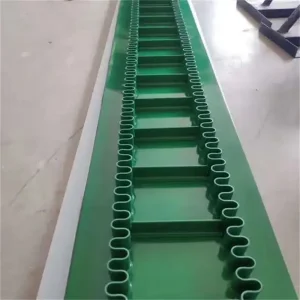
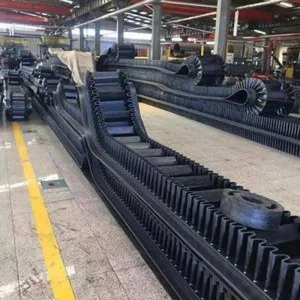
Modern factories require space-saving vertical designs. Our corrugated sidewall (wavy edge) rubber conveyor belts allow bulk materials to be lifted at steep angles of 30° to 90°. By eliminating standard transfer points, these space-saving vertical solutions prevent material spillage and optimize floor layouts.
Underpinning our manufacturing with rigorous third-party auditing and state-of-the-art testing equipment.
To ensure consistent quality, our dedicated QC department monitors every stage of production from raw material arrival to final packaging. Our physical testing and chemical laboratories analyze rubber compounds for compound density, tensile strength, hardness, aging stability, and abrasion resistance.
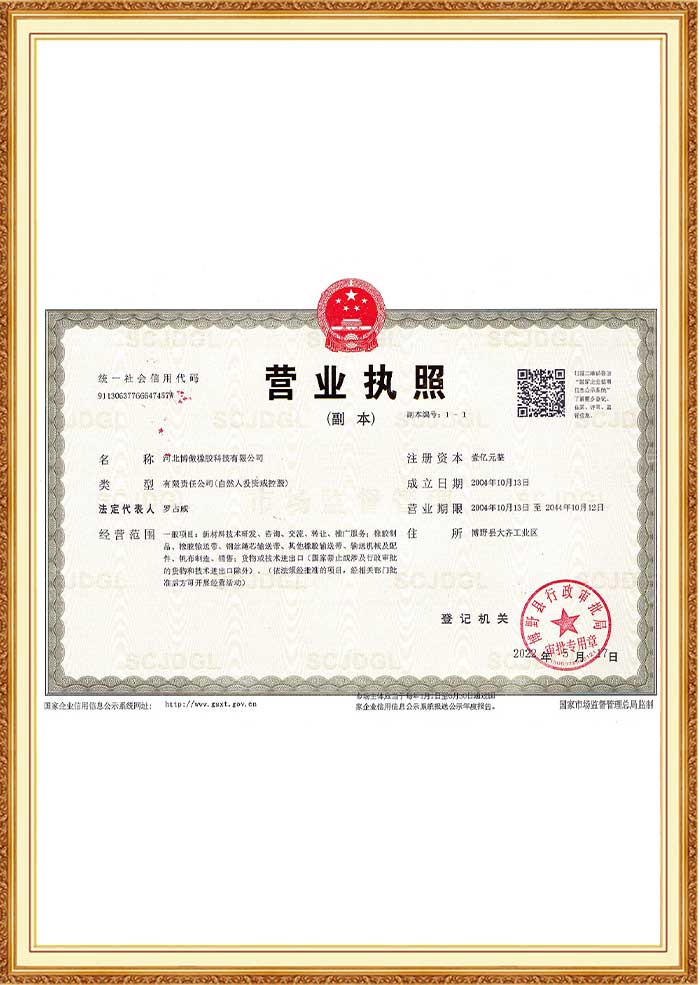
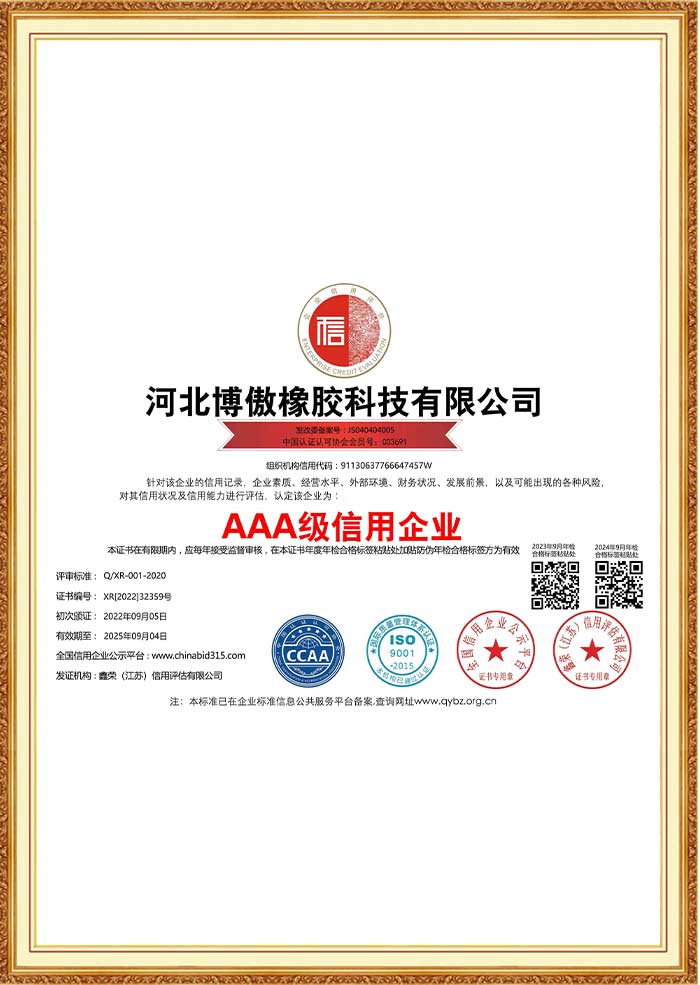
Every product batch is issued an official inspection certificate, ensuring compliance with global industrial standards. This transparent process has helped Hebei Boao Rubber Technology build long-term partnerships with customers in more than 30 countries.
Providing expert answers to common engineering and procurement questions regarding conveyor belts.
Polyester (EP) conveyor belts use polyester fibers for warp and nylon fibers for weft. They feature low elongation under load, high thermal stability, and good water-retention resistance, making them ideal for long-distance, high-speed conveying. Nylon (NN) belts use nylon fibers for both warp and weft. They offer high elasticity, excellent flex fatigue resistance, and superior impact resistance, making them better suited for heavy-duty material handling at shorter distances.
Our flame-retardant rubber conveyor belts are formulated with specialized flame-inhibiting compounds (such as antimony trioxide, aluminum hydroxide, and chlorinated paraffins) in the base elastomer. This formulation creates a protective carbonaceous layer when exposed to heat, preventing combustion. Our belts are tested in accordance with international safety standards like ISO 340 and MSHA, verifying that they will self-extinguish within seconds after the burner flame is removed.
Edge damage is typically caused by system misalignment, worn return idler brackets, or dynamic impact off-center. If a belt runs off-center, it rubs against structural steel components, leading to edge fraying and moisture penetration. This can be prevented by installing our centering self-aligning brackets, adjusting impact bed setups, and inspecting return rollers regularly to ensure proper tracking.
The choice of cover grade depends on your material profile and operating environment. Heavy, abrasive ores require a high abrasion-resistant grade (like DIN-X or DIN-W). High-temperature applications (such as cement clinker) require EPDM heat-resistant formulations. Chemical fertilizers call for acid and alkali resistant compounds, while oily materials require nitrile (NBR) or neoprene (CR) bases to prevent cover swelling.
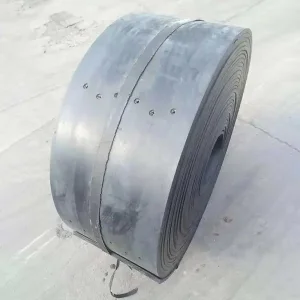
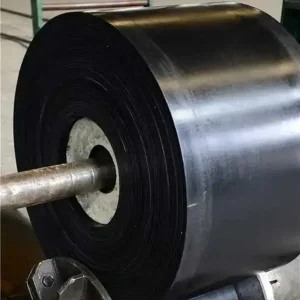
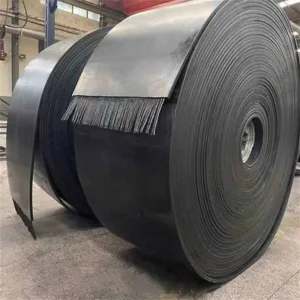
Our complete range of specialty rubber conveyor belts, high-strength wire rope cores, and impact-resistant idlers.
 Boao Rubber