 Boao Rubber
The Technical Evolution of Rubber Conveyor Belts in Heavy-Duty Material Handling
In modern industrial logistics, the selection of the correct rubber conveyor belt type represents a vital decision that directly influences plant uptime, operational safety, and overall lifecycle cost. Standard applications can rely on standard fabrics, but bulk-handling industries operating under abrasive, high-temperature, or toxic chemical conditions require carefully engineered vulcanized carcasses. Hebei Boao Rubber Technology Co., Ltd. has stood at the forefront of this manufacturing transition, innovating specialized compound matrices designed to mitigate mechanical wear and catastrophic structural failures.
Understanding Structural Integrity: EP vs. NN vs. Steel Cord Carcass
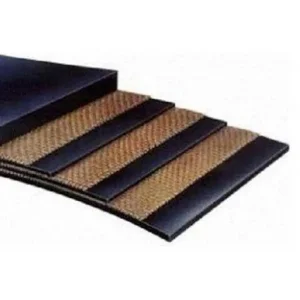
The core tensile load of any industrial conveyor belt is borne by its internal carcass. Selecting between polyester-nylon (EP), nylon-nylon (NN), and steel wire rope core structures determines the elongation properties and maximum operating tension of your conveyor line:
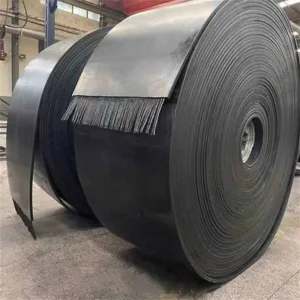
- EP (Polyester/Nylon) Layered Conveyor Belts: Combining a polyester warp with a polyamide (nylon) fill, EP belts present low longitudinal stretch, excellent water and rot resistance, and outstanding dimensional stability. They serve as the default baseline for medium to long-distance systems.
- NN (Nylon/Nylon) High-Strength Belts: Featuring nylon fabrics in both directions, NN belts deliver superior elasticity, high impact absorption, and excellent fatigue resistance. They are highly flexible and ideal for heavy-duty systems subjected to sudden impact loads and severe transitions.
- Steel Wire Rope Core Conveyor Belts: Designed for extreme tensile loads and ultra-long-distance transport. Using high-tensile steel cords embedded in a premium rubber core, these belts yield virtually zero elongation, keeping take-up strokes short and belt tracking highly predictable.
Comprehensive Rubber Conveyor Belt Selection Matrix
To assist procurement managers and system design engineers, our R&D team has compiled this technical reference guide highlighting application parameters for various belt types:
| Belt Class Type | Carcass Composition | Max Working Temp | Primary Industrial Use Cases |
|---|---|---|---|
| Heat-Resistant (HR) | EP / Steel Cord | Up to 200°C (392°F) | Sinter plants, cement clinker transport, chemical processing |
| Nylon (NN) Series | Polyamide Fabric | -20°C to 80°C | Quarrying, aggregate handling, mineral processing plants |
| Steel Wire Rope Core | High-Tensile Steel | -30°C to 80°C | Deep-shaft coal mining, overland cross-country transport |
| Cold-Resistant | Specialized NBR/SBR | Down to -50°C (-58°F) | Arctic mining operations, outdoor storage ports |
| Flame Retardant | Self-extinguishing PVC/EP | -20°C to 70°C | Underground coal mines, grain silos, power generation stations |
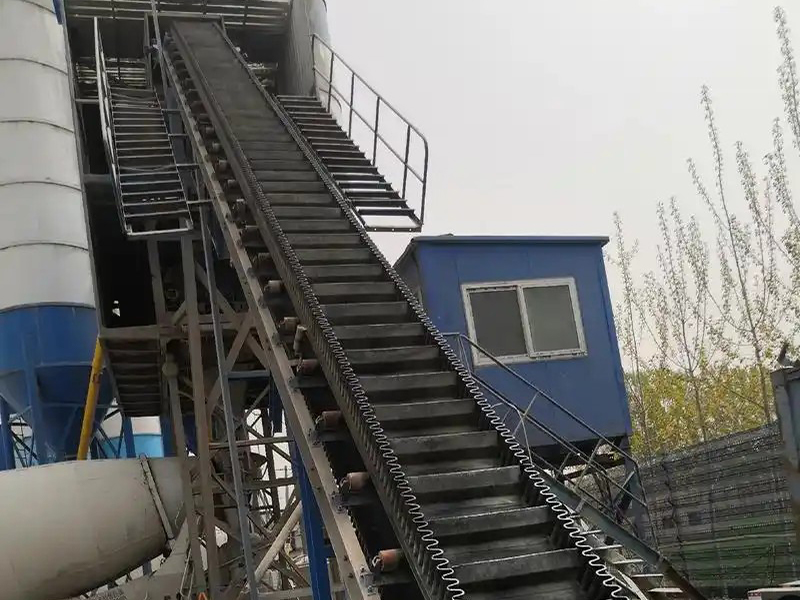
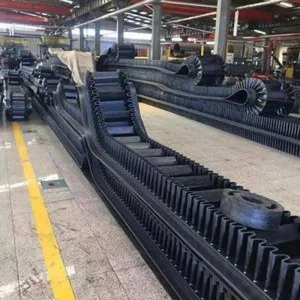
| Wavy Edge / Sidewall | Cross-Stabilized Base | Up to 120°C | High-angle vertical lifting, space-restricted industrial plants |
Global Procurement Trends & Strategic Sourcing Checklist
Today's global procurement environment demands more than just low-cost unit pricing. Industrial organizations prioritize operational resilience, supply chain safety, and proven compliance with international standards (such as DIN 22102, ISO, AS1332, and MSHA). As modern materials-handling systems run at higher speeds and wider belt spans, procurement managers must evaluate several technical dimensions:
1. Cover Grade Specifications: Matching the rubber cover compound to the material being moved is essential. For highly abrasive ores, specify high-abrasion resistance (e.g., DIN X or Y grades). For handling grain or coal, choose static-conductive and flame-retardant covers to prevent dangerous dust explosions.
2. Edge Construction: Molded edges are vital for wet or corrosive conditions as they seal the carcass from moisture ingress. Cut-edge belts are acceptable for dry, non-corrosive environments but can lead to ply separation if exposed to oil or acid.
3. Splicing & Maintenance Compatibility: High-tensile steel cord and multi-ply EP systems require premium vulcanization kits and expert splicing. A factory that provides matching splice kits and comprehensive site installation guidelines ensures long-term system integrity.
Macro Industrial Solutions: Tailoring Systems for Global Heavy Industry
Different industrial processes impose unique stresses on conveyor components. Here is how Hebei Boao Rubber Technology designs specialized solutions for key sectors:
1. Steel & Metallurgy: Sinter and Clinker Transport
Handling hot materials like iron ore sinter, coke, and cement clinker requires superior thermodynamic resistance. Standard rubber belts quickly harden, crack, and fail when exposed to hot materials. Our heat-resistant conveyor belts use high-grade EPDM and specialized anti-aging compounds to prevent cover degradation, extending operational lifespans under continuous thermal exposure.
2. Coal Mining & Underground Operations
Underground operations prioritize fire safety above all else. Our flame-retardant rubber conveyor belts comply with strict underground safety standards. The self-extinguishing covers prevent flame spread along the belt line, while anti-static additives prevent electrostatic discharge in dust-heavy environments.
3. Ports & Overland Bulk Terminals
Overland transport over long distances requires high speeds, high tension, and low energy consumption. Our low-rolling-resistance steel cord belts reduce energy consumption by minimizing indentation losses as the belt passes over idlers. This saves significant power on long, high-capacity systems.