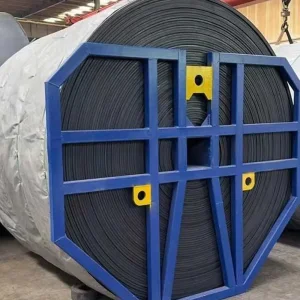
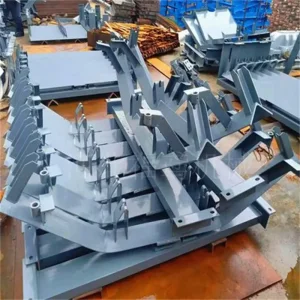
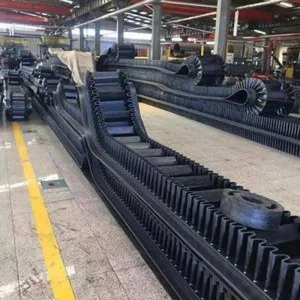
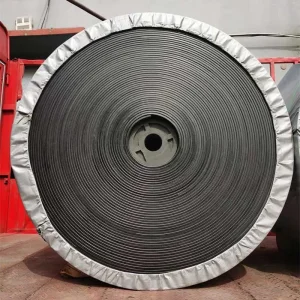
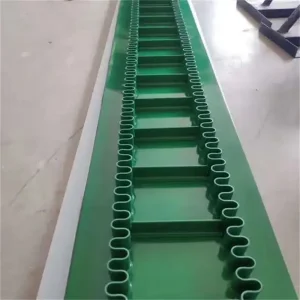
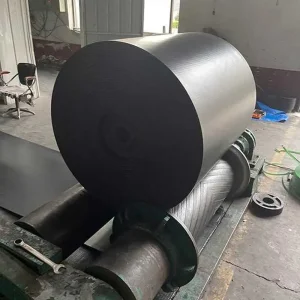
High-performance idlers, structural brackets, and specialized industrial conveyor belts direct from our advanced manufacturing facility.
An in-depth engineering review of material spillage, particulate containment, and transfer point friction dynamics.
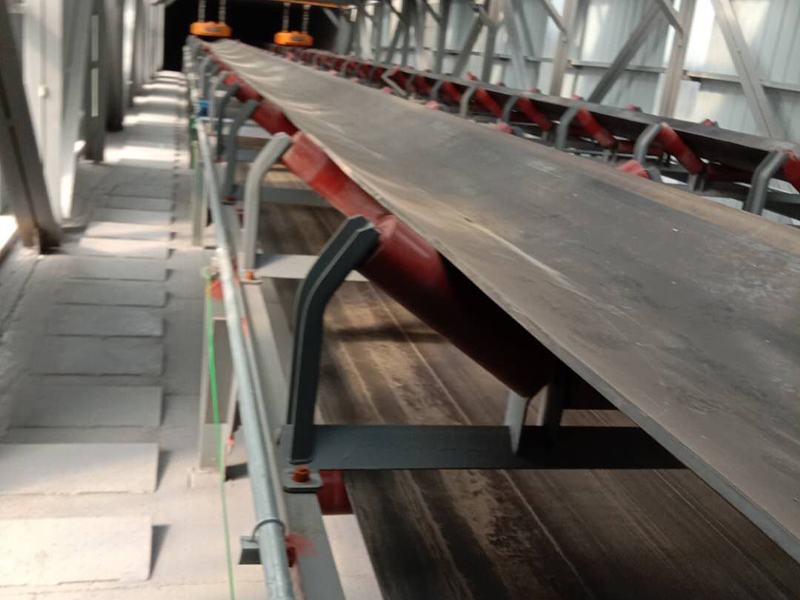
In heavy-duty bulk handling operations, the transfer point is the most vulnerable zone for material loss and component wear. As heavy materials fall from feeders onto a receiving conveyor, air pressure changes generate significant dust clouds, while kinetic impact prompts material bounce and side-spillage. Conveyor Belt Skirting Rubber serves as the primary physical barrier containing these materials in the loading zone.
A poorly selected skirt causes two major issues: excessive abrasive wear on the conveyor belt surface, or premature skirt failure leading to product spillage. Our dual-seal skirting rubber systems are designed to balance sealing efficiency and friction. The primary seal is thick and rigid to block heavy material escape, while the secondary outrigger seal remains highly flexible, gently laying flat on the belt to capture fine dust particles. By utilizing a tailored elastomer with optimized Shore A hardness (typically 60° for the main body and 50° for the sealing lip), we reduce structural friction coefficients, minimizing premature belt cover wear while maintaining absolute containment.
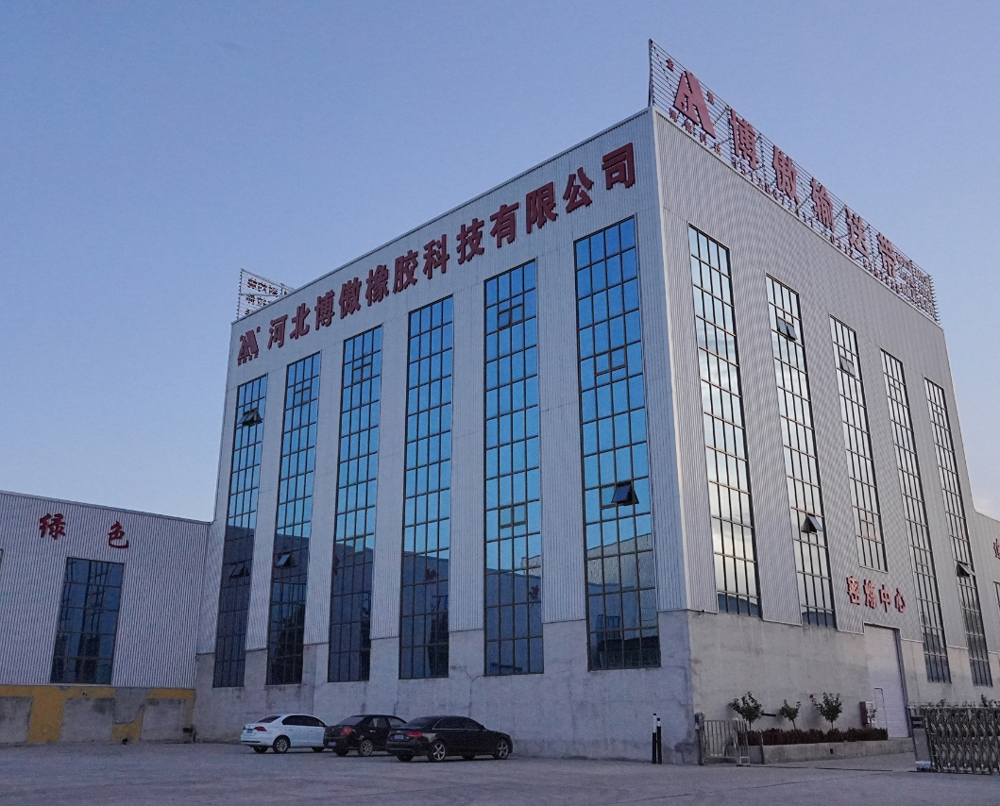
Hebei Boao Rubber Technology Co., Ltd. – Trusted globally for advanced rubber formulations and manufacturing integrity.
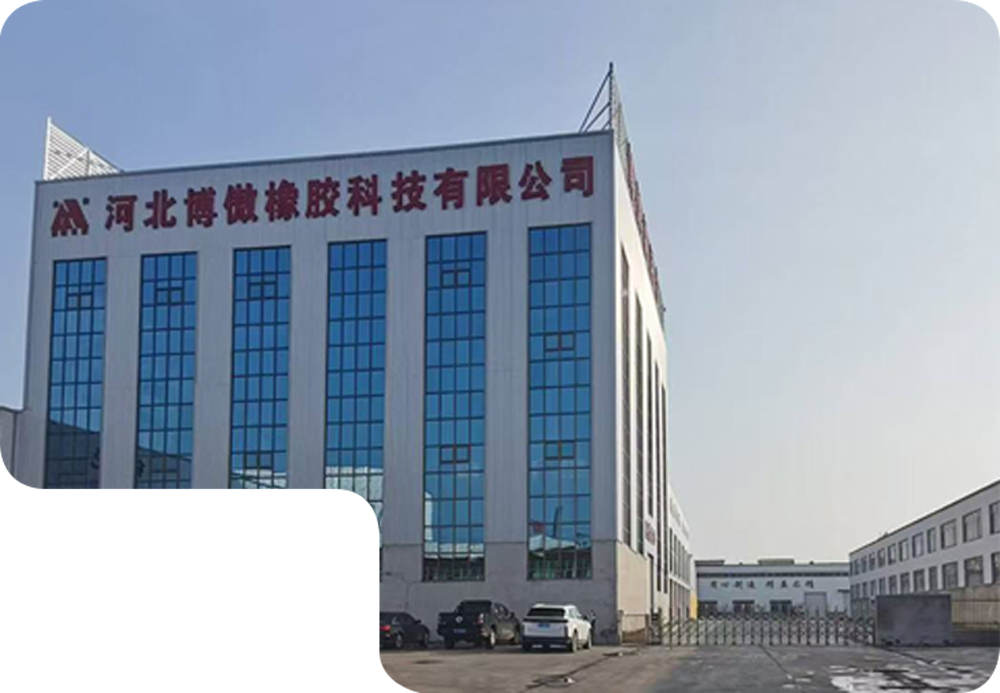
Est. 2004 | Boye County Industrial Park, Hebei Province
For more than two decades, Boao Rubber Technology has stood as a pioneer in developing high-performance bulk handling components. Covering an expansive footprint of over 30 acres, our factory combines cutting-edge rolling, forming, and vulcanization lines with independent chemical testing laboratories to monitor every stage of production from raw polymers to packaged goods.
Our commitment is simple: unqualified raw materials do not enter our gates, and products that fail our physics and chemical standards never leave our floor. Through continuous reinvestment in automated compounding and state-of-the-art testing equipment, we guarantee consistent dimensional stability and outstanding wear properties across all skirting and belt support lines.

Harnessing advanced automation, continuous curing lines, and material efficiency to deliver quality at scale.
Continuous drum vulcanizing presses (ROTOCURE) eliminate lap joint seams, ensuring uniform thickness, structural integrity, and smooth finishes on all skirting rubber products.
Our dedicated chemical dosing systems feed heavy-duty internal mixers, delivering accurate carbon black dispersion and polymer distribution for repeatable, top-tier performance.
By positioning our manufacturing hub in Hebei's dense industrial corridor, we secure reliable access to premium local and imported synthetic polymers, guaranteeing production stability.
Anticipating the demands of tomorrow's ultra-capacity conveyor networks with advanced material technologies.

To align with global sustainability initiatives and automated operations, Boao's R&D department is executing a multi-year technology road map focusing on three primary innovations:
Integrating co-extruded colored layers inside the rubber matrix. When the red core layer becomes visible, maintenance crews receive a clear visual signal to adjust or replace the skirting before spillage occurs.
Combining the flexible base resilience of natural rubber with a bonded, high-density polyurethane contact tip. This achieves a 4x increase in service life compared to traditional rubber skirts.
Redesigning curing cycles to reduce volatile organic compound emissions by 40%, meeting strict RoHS and REACH environmental guidelines without sacrificing physical strength.
Customized material formulations designed to excel under challenging operating conditions.
Demands flame-retardant and anti-static (FRAS) formulations complying with MSHA and international safety regulations. Our skirts self-extinguish within seconds to minimize fire hazards in enclosed entries.
Searing ambient heat and hot sinter return belts require heat-resistant EPDM compounds that resist thermal cracking and hardening at continuous exposures up to 180°C.
Fine, highly abrasive clinker dust escapes traditional seals. We utilize high-density polyurethane edges with a dual-lip seal to ensure clean operation and prevent dust leakage.
Salty, high-humidity environments accelerate structural degradation. Our skirts feature UV-stabilized neoprene and marine-grade stainless steel clamp assemblies for enduring service.
Technical details and dimensional configurations to help purchasing teams choose the right components.
| Parameter | Natural Rubber Skirting | Polyurethane Skirting | Dual Compound (Rubber-PU) |
|---|---|---|---|
| Hardness (Shore A) | 60° ± 5° | 85° - 90° | 60° (Base) / 80° (Lip) |
| Tensile Strength | ≥ 12 MPa | ≥ 35 MPa | ≥ 15 MPa |
| Elongation at Break | ≥ 400% | ≥ 500% | ≥ 450% |
| Abrasion Loss (DIN 53516) | ≤ 120 mm³ | ≤ 40 mm³ | ≤ 80 mm³ |
| Available Widths | 100mm to 400mm | 100mm to 300mm | 100mm to 300mm |
| Recommended Thickness | 8mm - 25mm | 8mm - 20mm | 12mm - 20mm |
See how Jinao brand components deliver reliable service for leading industrial groups.
Securing sinter plant transfer points with heat-resistant skirting, maintaining performance under continuous material drop temperatures of 150°C.
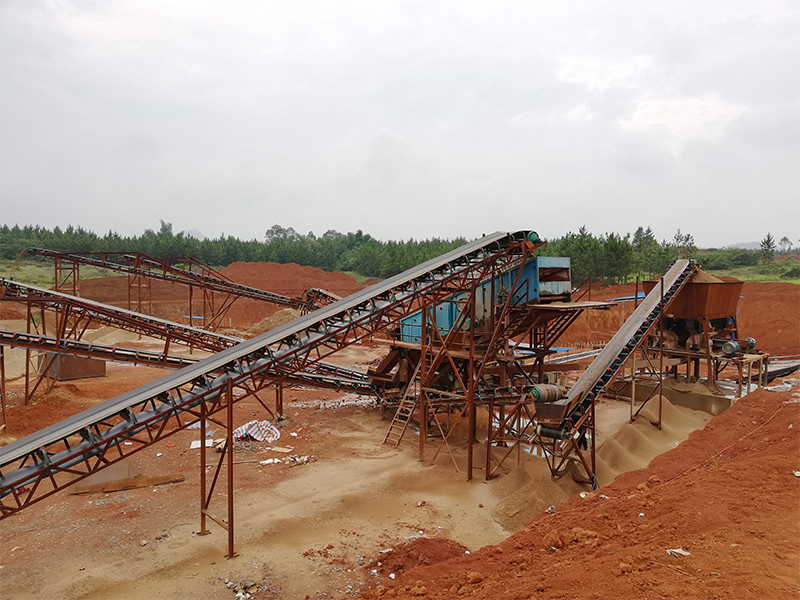
Implementing dual-lip polyurethane skirting systems at nickel ore crushing terminals to eliminate dust emissions and protect critical bearings.
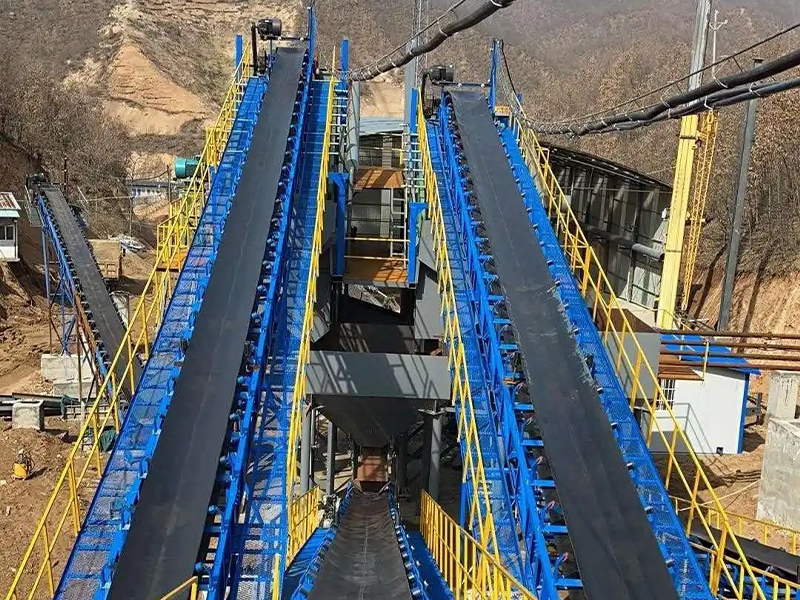
Deploying high-impact rubber skirting systems in copper processing mills, resisting extreme physical wear from high-tonnage ore flow.
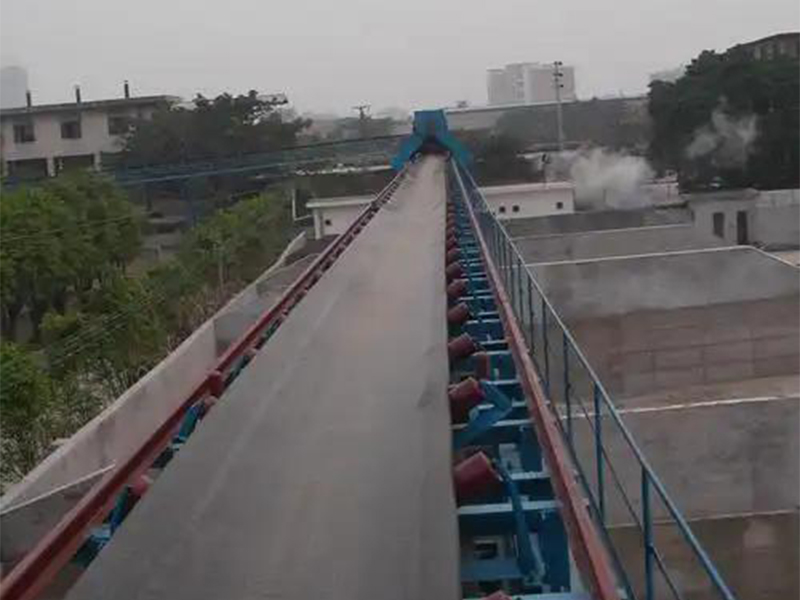
Equipping primary limestone raw material conveyors with custom polyurethane skirting, cutting localized dust emissions by 85%.
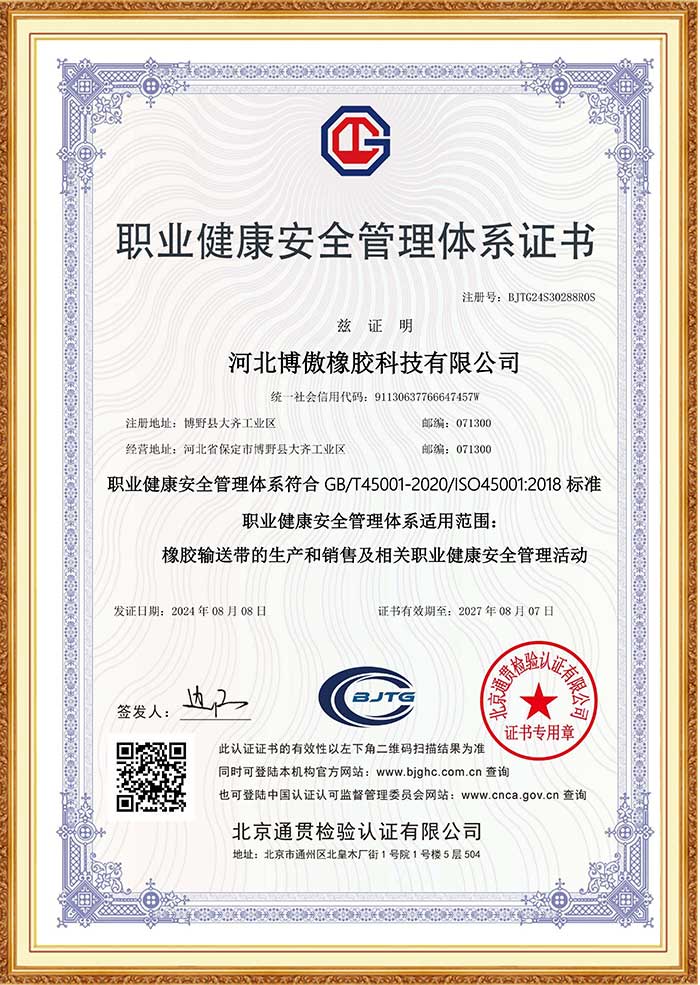
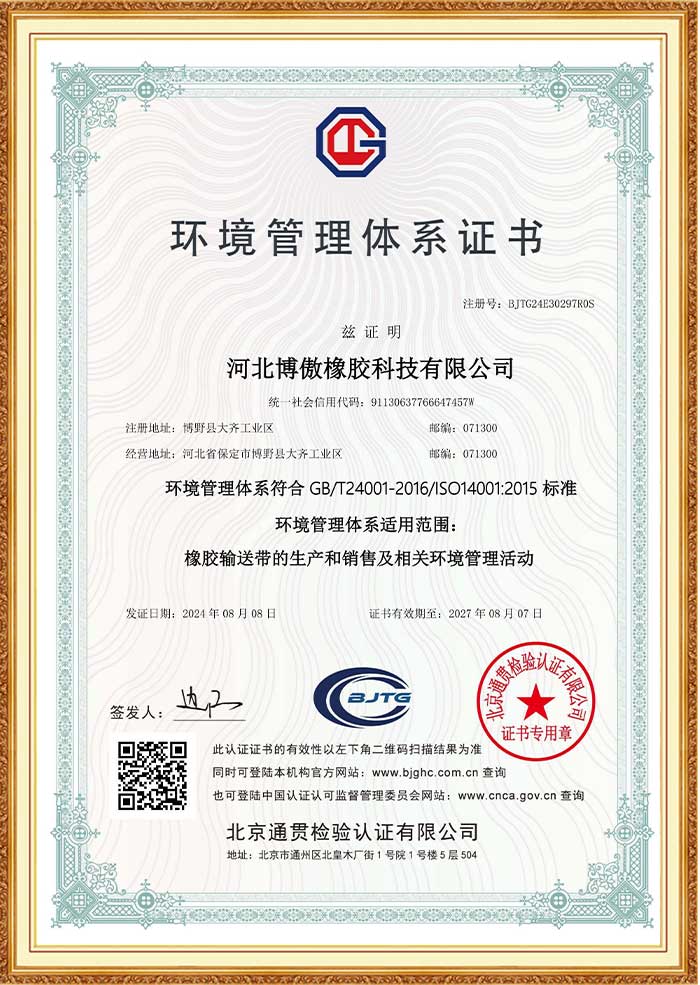
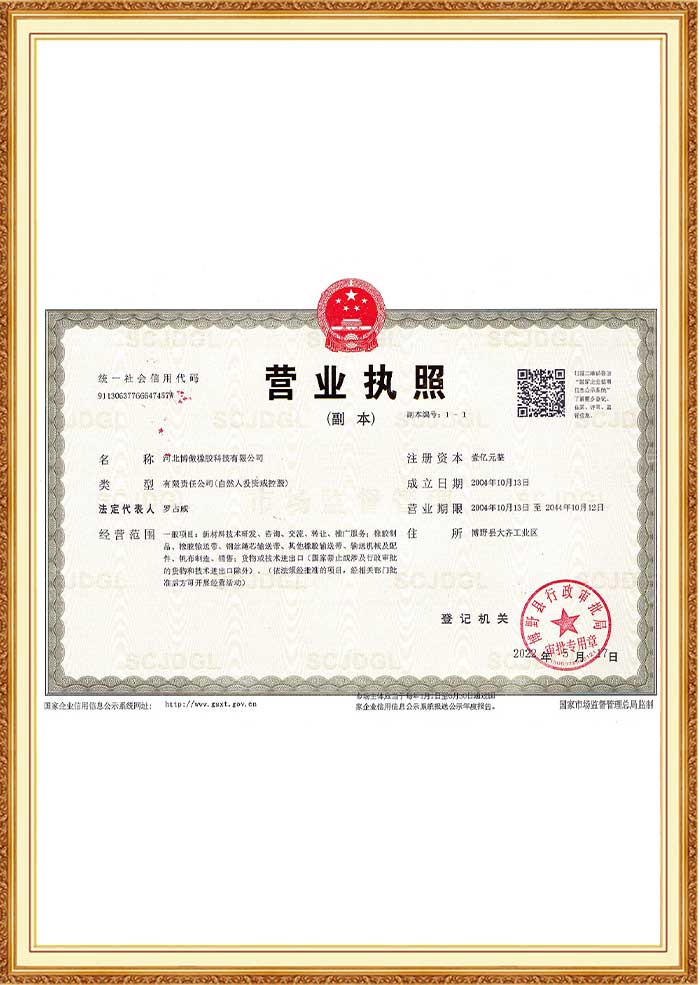
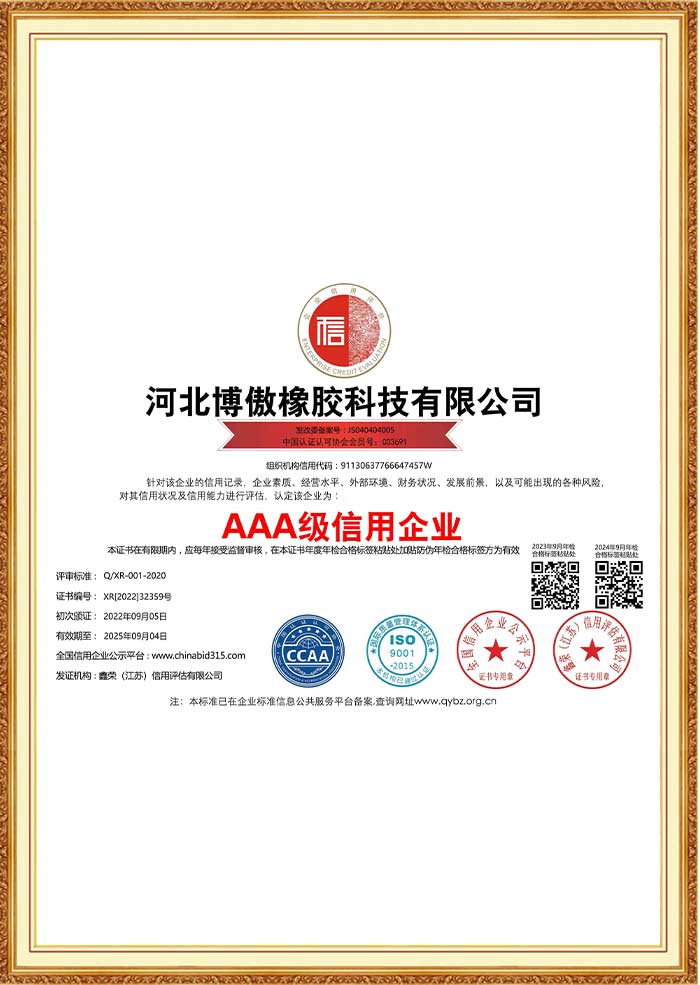
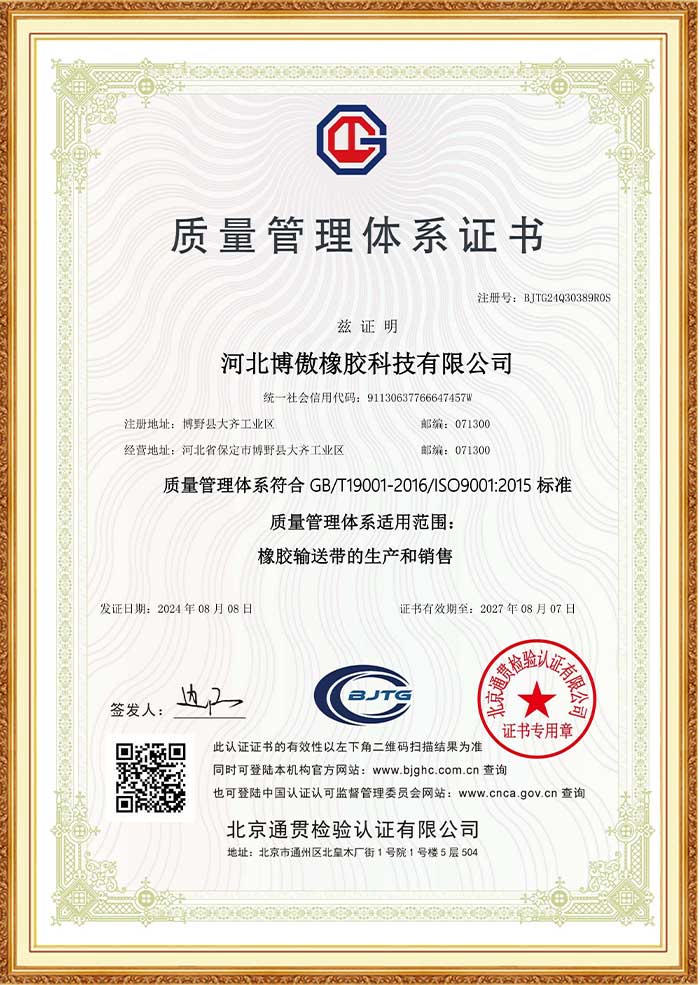
Ensuring reliable safety standards and material compliance for peace of mind in every shipment.
Ensuring efficient global distribution and on-site support for international operations.
Maintaining high plant uptime requires prompt technical assistance and reliable component supply. Boao Rubber Technology backs its global sales network with technical service programs designed to simplify system integration and upkeep.
Our global services include: Planned Replacement Schedules to ensure spare parts arrive before wear limits are reached; Critical Safety Stock Buffers held in region-specific warehouses to protect against supply disruptions; and direct access to Technical Application Engineers who assist you in specifying the correct compound density and clamp systems for your bulk material profiles.
Direct answers to the most common questions raised by material handling engineers and procurement managers.
Heavy-duty steel cord belts, lightweight PVC/PU options, and specialized safety components ready for international shipment.
 Boao Rubber