Engineered for maximum tensile strength, extreme heat tolerance, and impact dissipation.
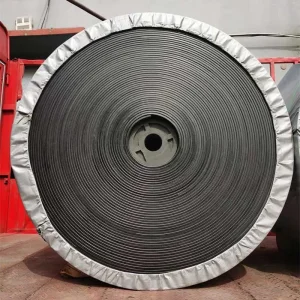
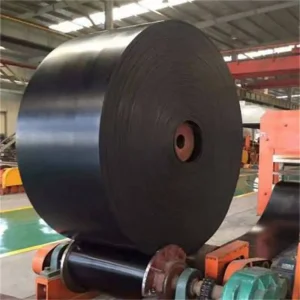
Across heavy industrial operations, the efficiency of material transport system determines overall plant output and profitability. Continuous processing sectors—such as coal mining, power generation, steel metallurgy, grain storage, cement production, and deep-sea ports—rely heavily on robust industrial conveyor belt systems. Without highly resilient rubber formulations and custom-engineered internal reinforcements, logistics bottlenecks would cripple downstream operations.
Globally, commercial and infrastructure trends demonstrate that the demands placed on conveyor systems are reaching unprecedented levels. Bulk materials must be transported over longer distances, up steeper inclines, and through harsher ambient environments. These rigorous parameters mean standard conveyor belts are no longer sufficient. Modern procurement requires deep integration with advanced material engineering to achieve high resistance against tearing, impact, abrasive friction, flame combustion, and severe chemical degradation.
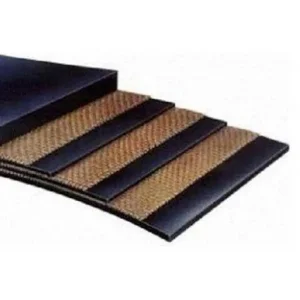
Industrial conveyor belts have evolved from elementary cotton-ply designs into composite systems engineered to withstand thousands of hours under massive loads. Historically, cotton fabrics served as the primary load-bearing carcass. However, cotton’s low tensile strength, susceptibility to rot from moisture, and limited elongation properties led to the development of synthetic woven fabrics.
Today, Nylon (NN) and Polyester-Nylon (EP) fabrics dominate the multi-ply conveyor belt sector. Nylon-reinforced belts offer exceptional flexibility and impact resistance, making them ideal for heavy impact zones. Polyester (EP) fabrics, featuring low-stretch polyester in the warp direction and flexible nylon in the weft, offer high dimensional stability under high tensions. For high-capacity, long-distance lines, Steel Wire Rope Core Conveyor Belts provide minimal elongation, allowing conveyor designs to extend over multiple kilometers without intermediate transfer stations.
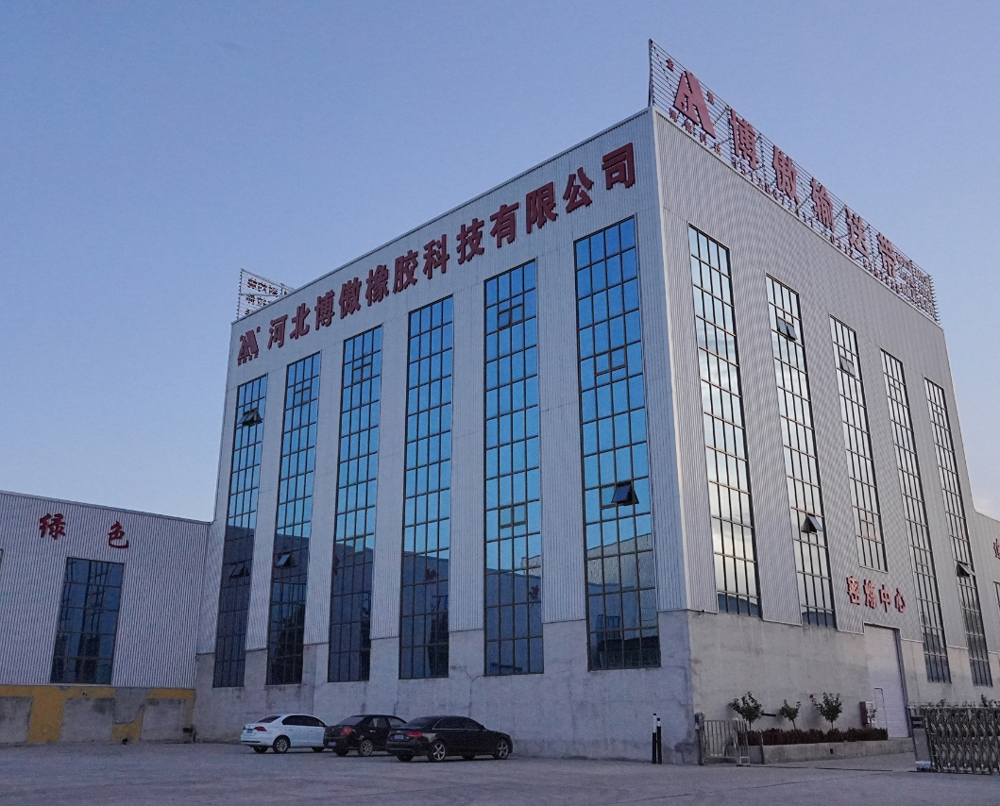
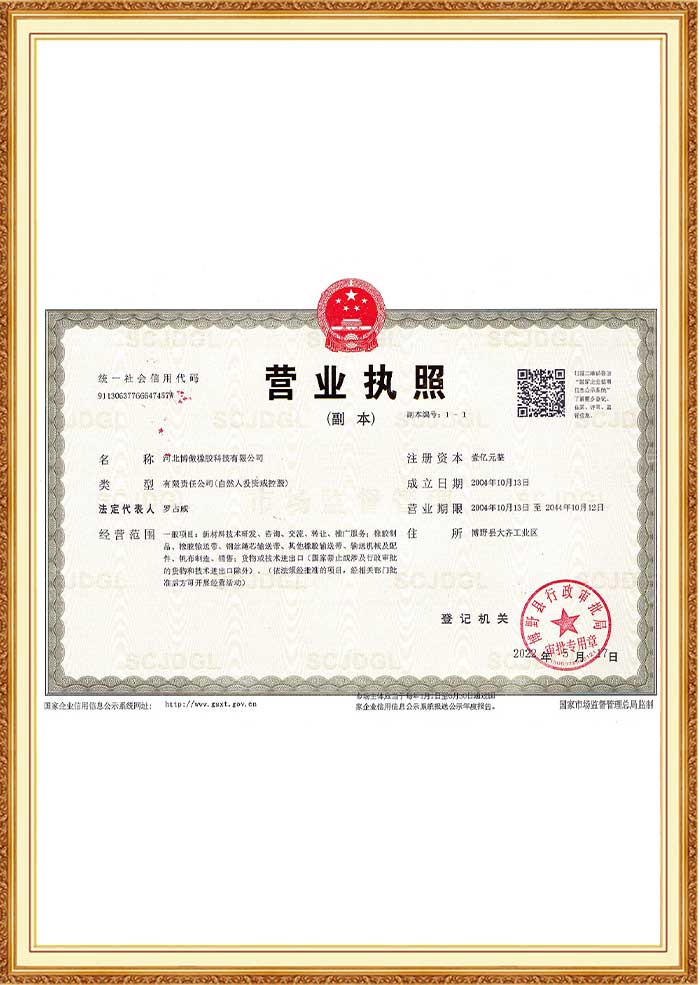
The global manufacturing landscape has shifted towards China's specialized industrial clusters, such as the Boye County Rubber Industrial Park in Baoding, Hebei Province. This region hosts Hebei Boao Rubber Technology Co., Ltd. Founded in 2004, the facility spans over 30 acres, integrating automated rubber compounding, rolling, vulcanizing, and testing equipment.
China's Industry 4.0 evolution combines raw material supply chains with advanced automated production lines. Continuous vulcanization systems, laser-guided width trimmers, and real-time thickness sensors ensure dimensional consistency across belt lengths. This dense supply chain ecosystem allows Chinese manufacturers to offer customized belt profiles—varying in ply counts, cover grades, and width parameters—with short lead times, giving global procurement managers a clear competitive advantage.
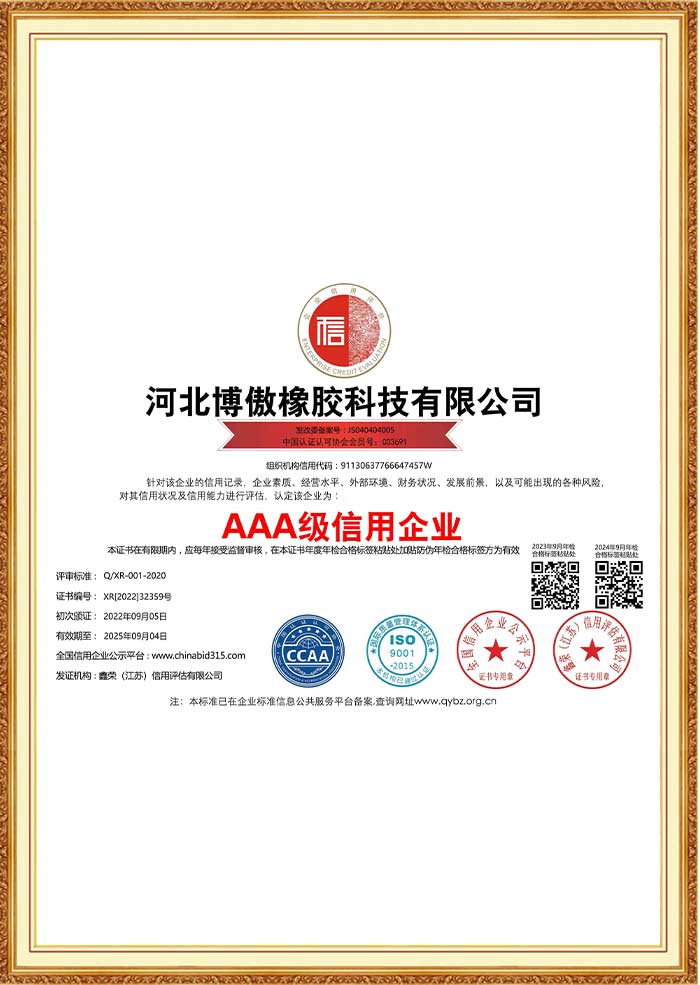
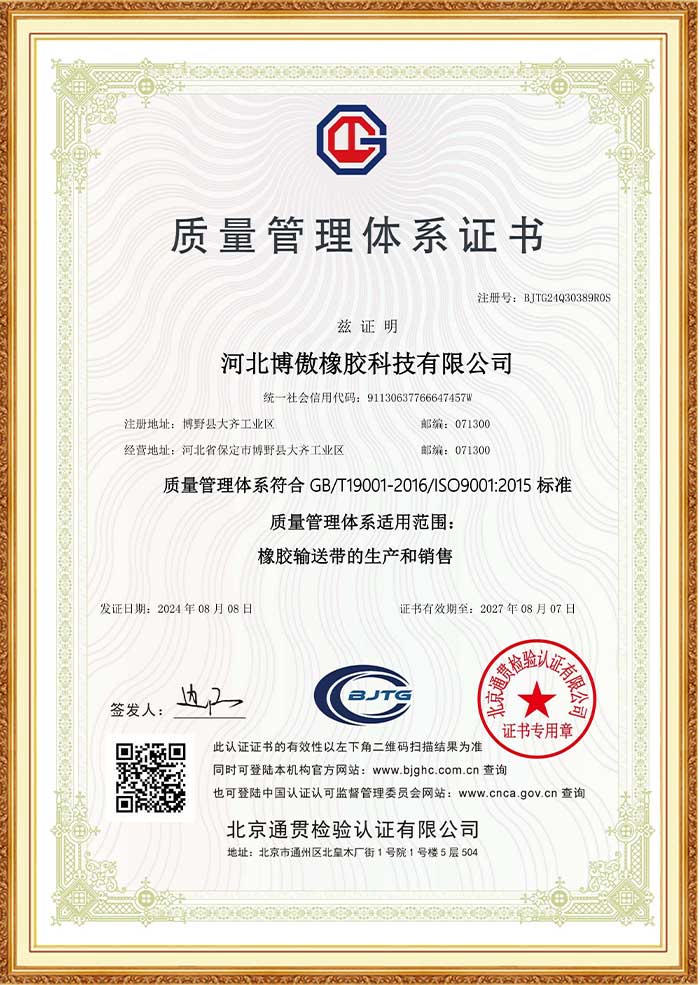
E-E-A-T (Experience, Expertise, Authoritativeness, and Trustworthiness) standards demand that manufacturer claims are backed by empirical test data. Reliable rubber conveyor belt manufacturers maintain independent chemical analysis and physical testing laboratories. Every phase of production, from raw rubber polymer verification to finished belt inspection, undergoes strict testing.
Critical tests include:
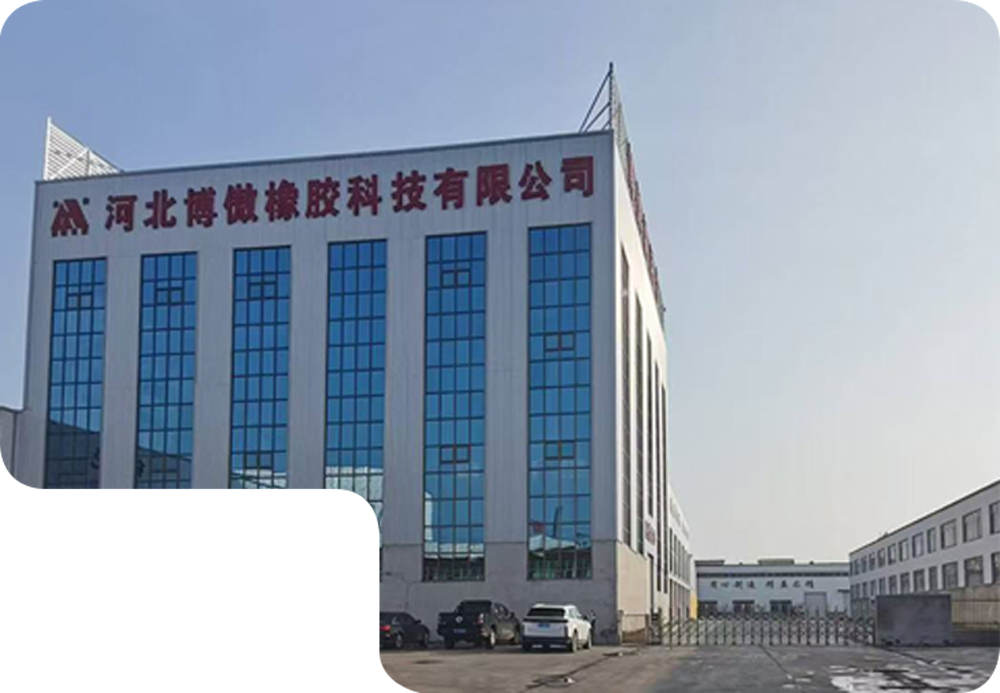
Hebei Boao Rubber Technology Co., Ltd. is located in the Rubber Industrial Park of Boye County, Baoding, Hebei Province. Founded in 2004, the facility covers an area of over 30 acres. Under the "Jinao" brand, the company integrates design, development, and manufacturing of high-performance conveyor belts and supporting accessories.
Take a closer look at our Boye County manufacturing infrastructure and vulcanization facilities.

Our testing setups monitor parameters from incoming raw rubber polymer grading to final belt width calibration.
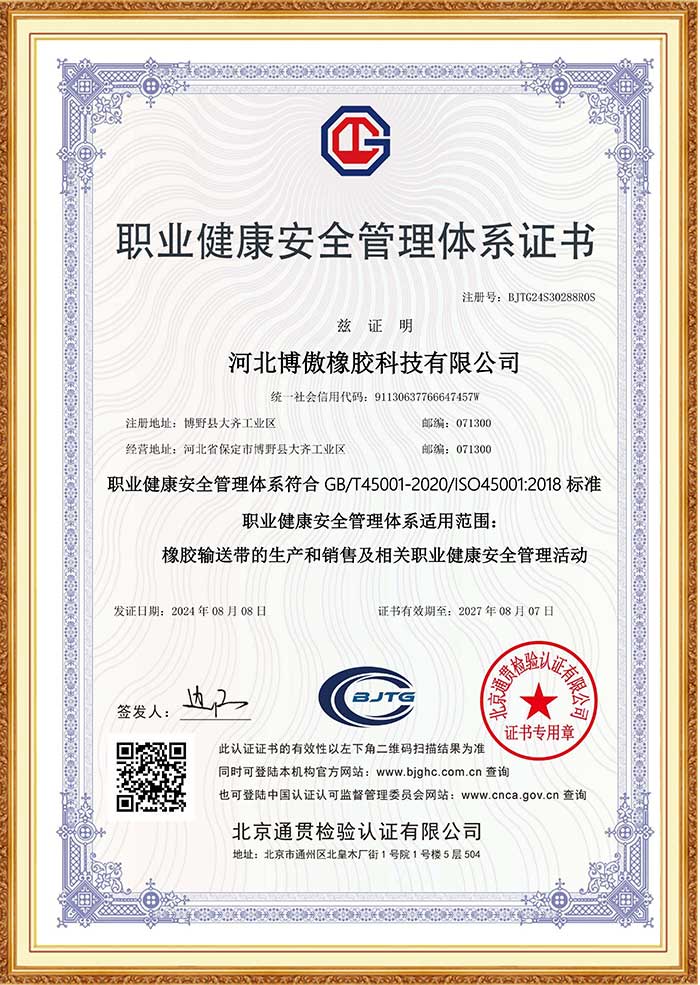
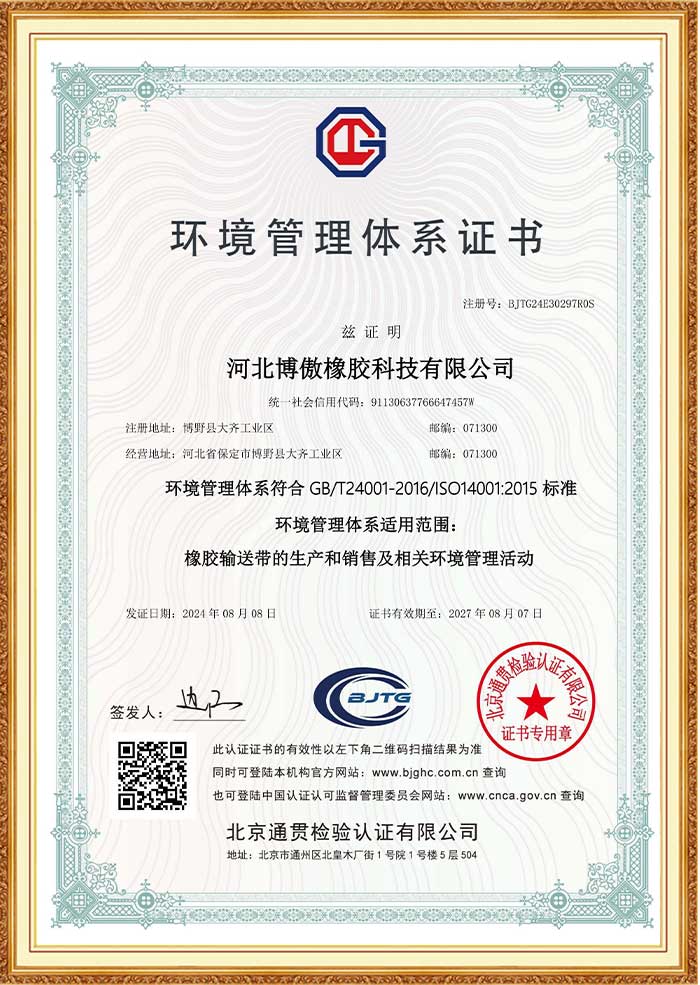
Procuring industrial rubber conveyor belts involves more than buying rolls of vulcanized rubber. System operators need complete technical plans that cover the entire lifecycle of the belt. Global sites benefit from technical services that include preventive maintenance, planned replacements, belt splicing, and emergency repair options.
Establishing local safety stock levels for emergency splicing compound, cold vulcanizing cements, and mechanical fasteners is critical. Hebei Boao Rubber Technology works with clients to build custom technical service programs. These help operators monitor wear rates, plan structural replacements during scheduled shutdowns, and prevent unplanned downtime.
Selecting the right internal reinforcing matrix (carcass) is crucial for conveyor belt performance. The table below compares the performance profiles of the three major carcass types:
| Parameters | Polyester-Nylon (EP) | Nylon-Nylon (NN) | Steel Wire Rope Core |
|---|---|---|---|
| Tensile Strength Range | 100 to 630 N/mm per ply | 100 to 630 N/mm per ply | Up to 8,000 N/mm |
| Elongation at Work Load | Very Low (approx. 1.5%) | Moderate (approx. 2.5%) | Extremely Low (<0.25%) |
| Troughability Index | Good | Excellent | Superior |
| Impact Resistance | High | Very High | Exceptional |
| Best Applications | Medium-long span handling | Heavy-duty impact zones | Overland, high-tonnage mining |
The outer rubber cover protects the internal carcass from environmental wear and damage. Standard systems define covers based on DIN 22102 grades:
Custom-engineered rubber conveyor systems for heavy-duty commercial applications.
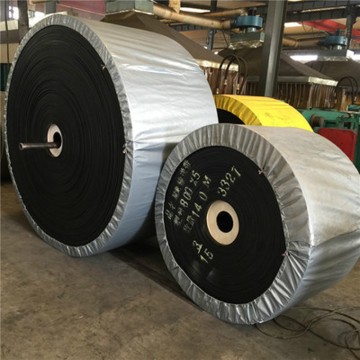
Formulated with EPDM rubbers to withstand materials up to 200°C. Ideal for cement clinker, slag, and sintering plants.
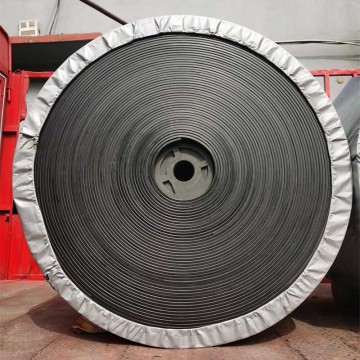
Engineered to maintain elasticity and prevent cover cracking in sub-zero mining environments down to -50°C.
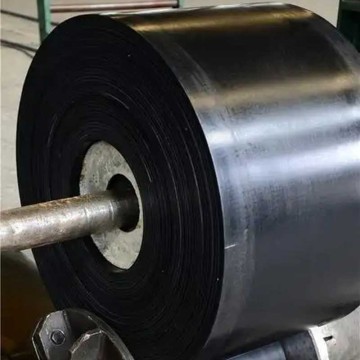
Compounded with specialized inert elastomers to resist chemical corrosion in fertilizer and chemical plants.
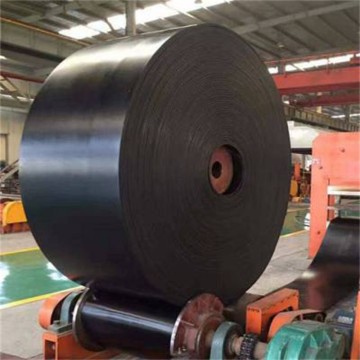
Utilizes multi-ply nylon carcass to deliver excellent flexibility, impact resistance, and long flex life.
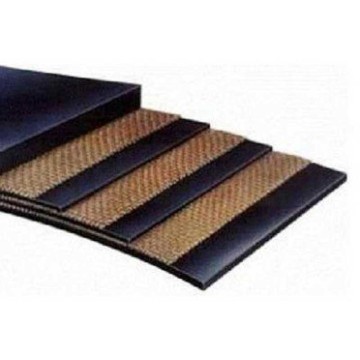
Reliable multi-ply EP/NN belt for aggregate, sand, grain, and non-corrosive bulk material transport.
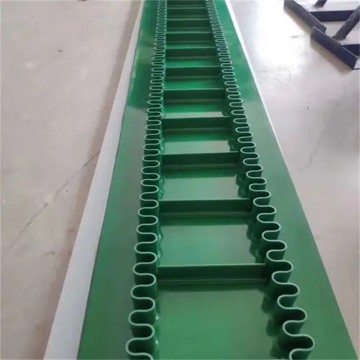
Non-toxic formulations for light industrial processing, packaging, and clean factory setups.
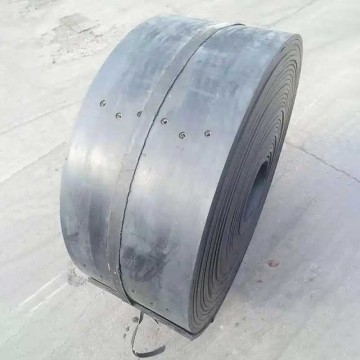
High-tensile vertical bucket elevator belts, designed to prevent bolt pull-out under heavy vertical loads.
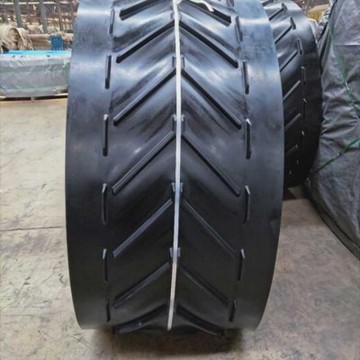
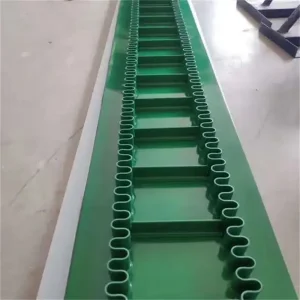
Chevron, herringbone, or pocketed designs to prevent material slip-back on steep inclines up to 40°.
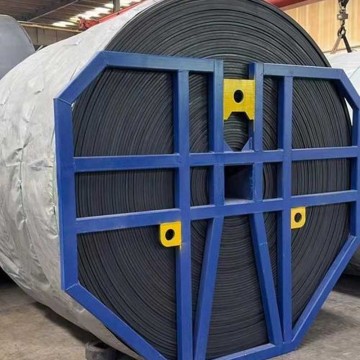
Equipped with transverse steel breakers to halt longitudinal tears and withstand heavy bulk materials.
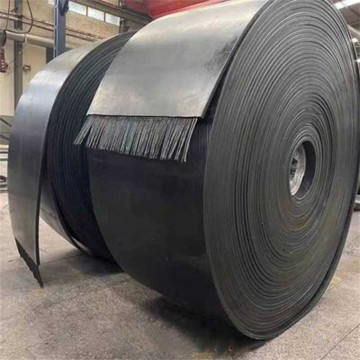
High strength, low elongation, and long lifetime. Best suited for high capacity, long distance mining routes.
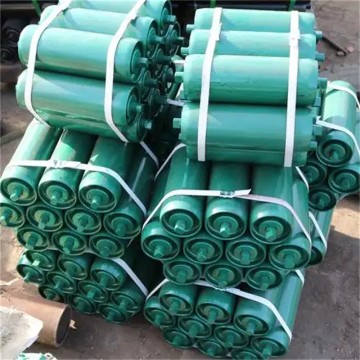
Engineered idlers with optimized bearings to guide belts smoothly and reduce overall power consumption.
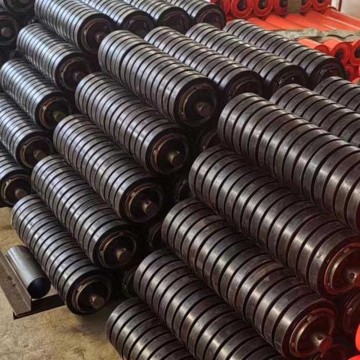
Installed at loading points. Features rubber rings to absorb impact energy and protect the belt carcass.
Our belts are used in demanding applications by major industry organizations.
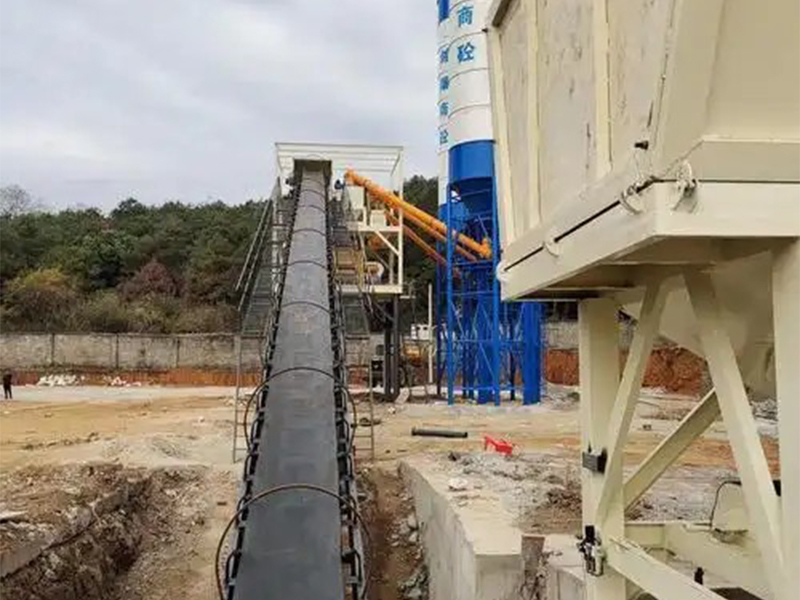
China Railway Group Mixing Plant
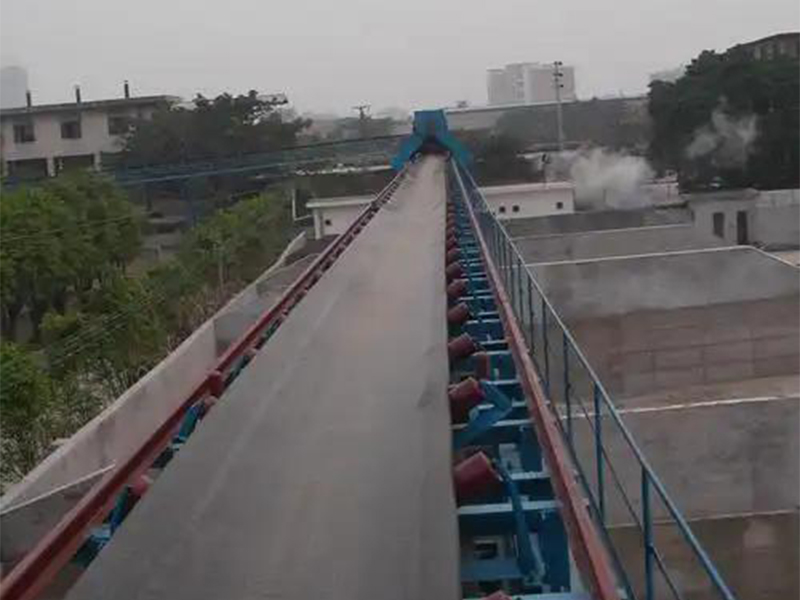
Conch Cement
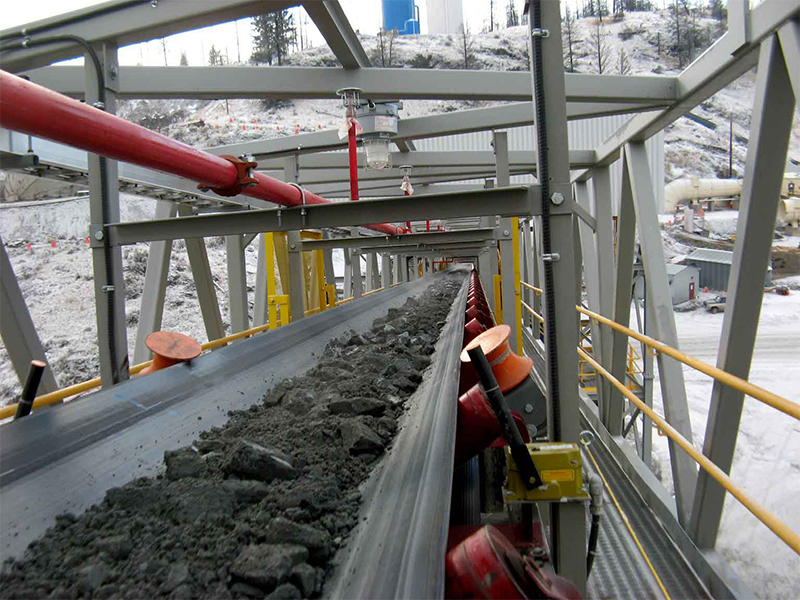
Datong Coal Group
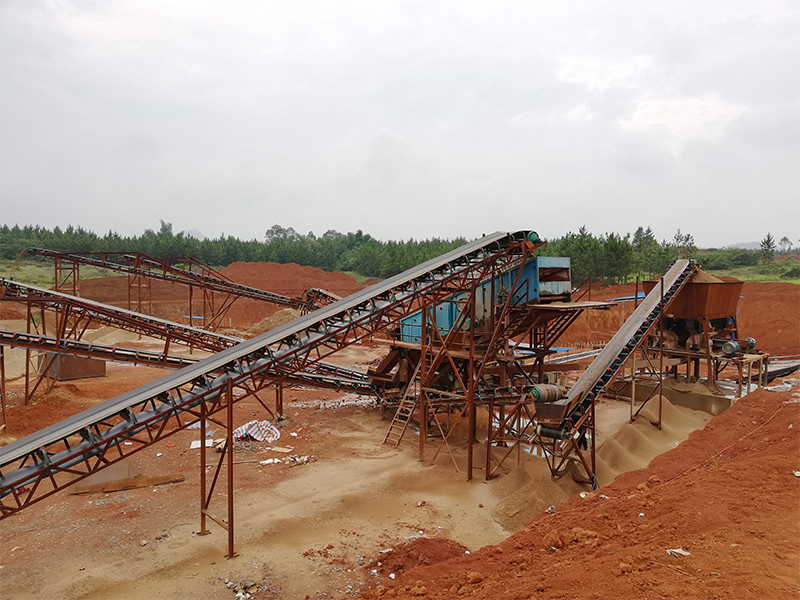
Tsingshan Group
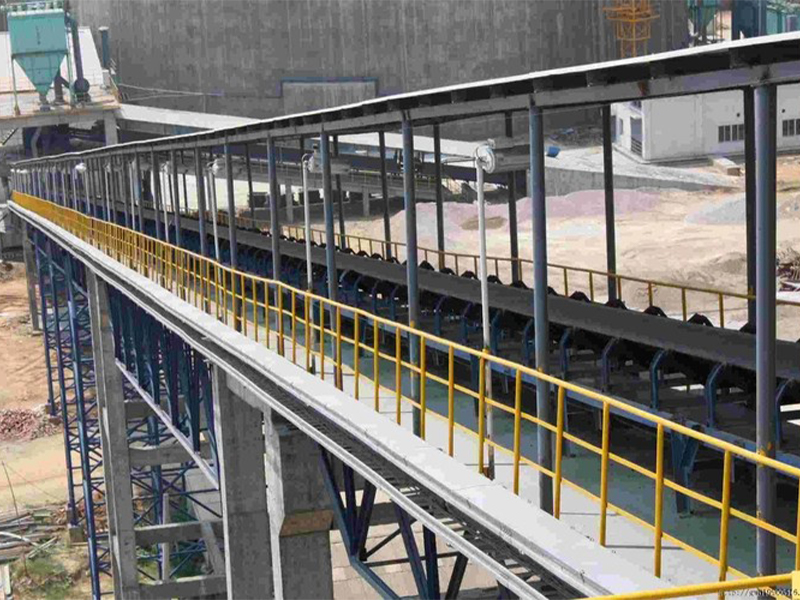
Jidong Cement Group
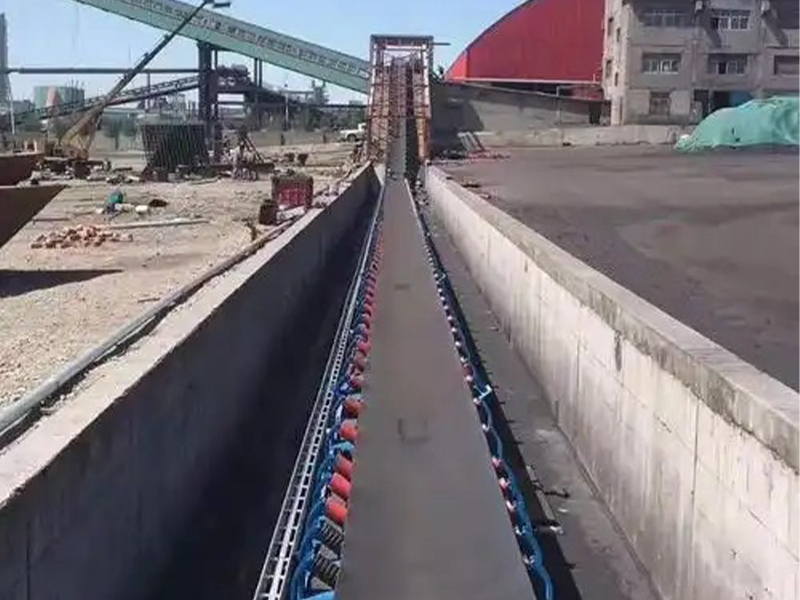
Jinmei Group Coal Conveying Line
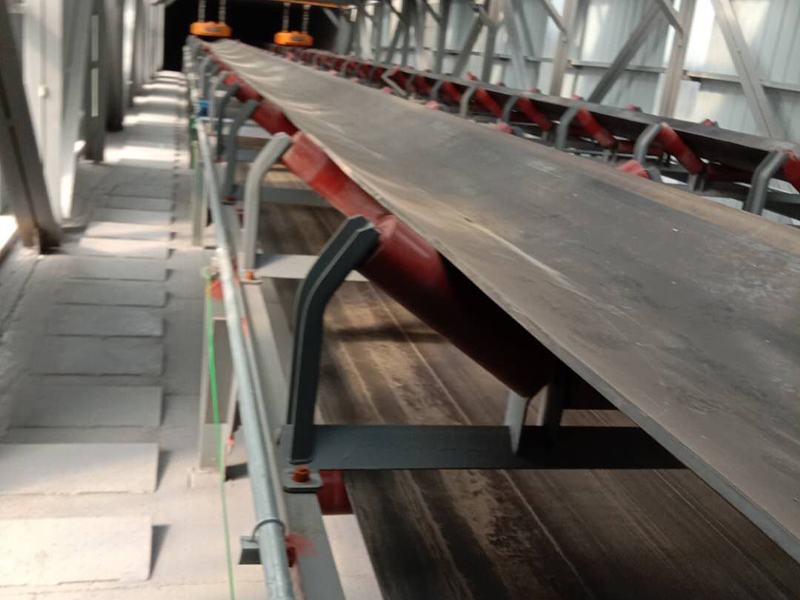
Taihang Steel
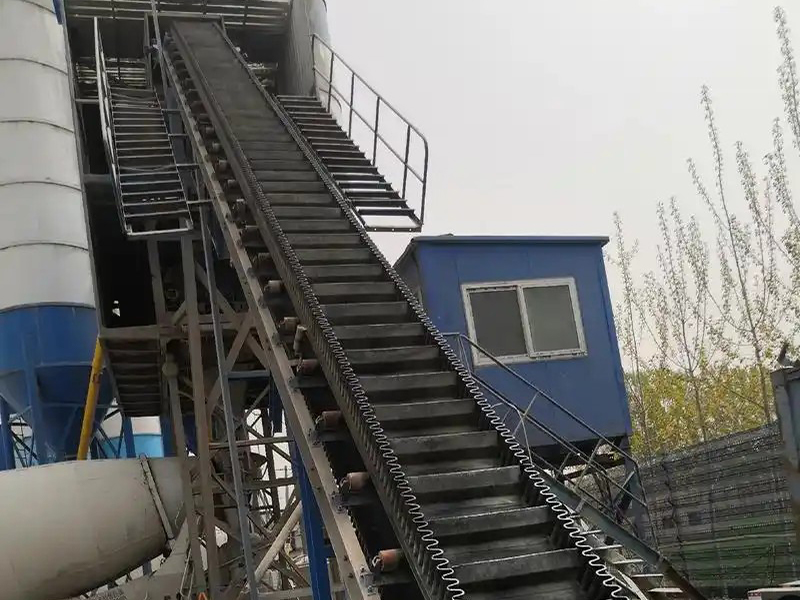
Puyang Steel Group
Heavy-duty conveyor lines often run in challenging conditions. The engineering design must account for variables like minimum pulley diameters to avoid cover separation, optimal troughing angles to prevent edge wear, and proper counterweight tensioning to maintain traction.
In cold storage or sub-zero environments, standard rubber covers can harden and crack under tension. Cold-resistant belts solve this by adding synthetic polymers that lower the glass transition temperature. Conversely, hot material handling (such as cement clinker at 150°C to 200°C) uses EPDM polymers. This prevents thermal aging and oxidation, which can otherwise cause the cover rubber to harden and crack.
Longitudinal tears caused by foreign objects, like tramp iron, present a major risk to conveyor systems. Once a tear begins, it can split a belt along its entire length within minutes. Steel wire rope belts address this with transverse reinforcing systems, placing flexible steel cables perpendicular to the tension cables. This creates an anti-tear barrier that stops tears from spreading.
Proper rubber compounding also ensures high adhesion between carcass plies. Delamination—the separation of plies under high tension—can cause complete belt failure. High adhesion rubber compounds create strong chemical bonds during vulcanization, keeping the multi-ply EP/NN matrix intact under heavy cyclic loading.
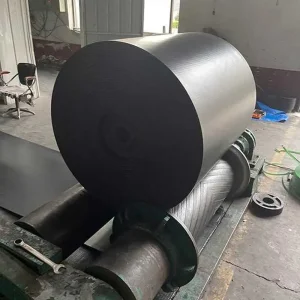
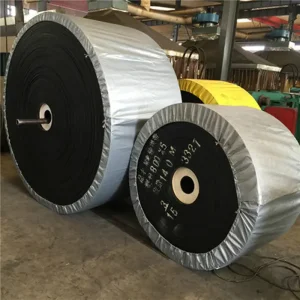
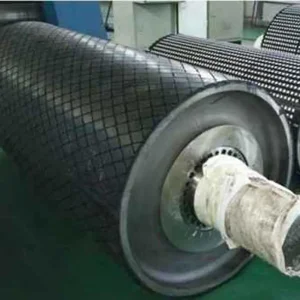
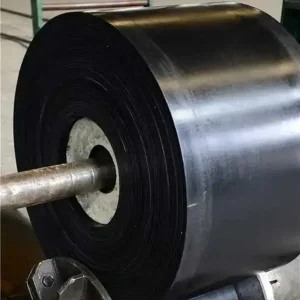
Explore our targeted product categories for specialized mining, industrial, and transport requirements.
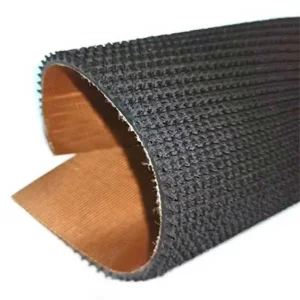
Detailed technical answers for procurement directors, project engineers, and operation managers.
A: EP fabrics utilize polyester in the warp (longitudinal) direction and nylon in the weft (transverse) direction. This gives EP belts low longitudinal elongation (around 1.5% at working load), reducing take-up stroke requirements. NN belts use nylon in both warp and weft directions, providing higher elasticity, excellent impact absorption, and resistance to fatigue from repeated flexing.
A: Cover thickness depends on material size, density, drop height, and cycle frequency. For heavy primary crushing zones with large material drops, thicker top covers (e.g., 8mm to 10mm top cover, 3mm to 4mm bottom cover) are recommended. Standard applications typically use a 4:2 ratio (4mm top, 2mm bottom) or a 6:2 ratio for abrasive bulk handling.
A: Anti-tear systems protect high-investment lines by adding transverse steel cord breakers or high-tensile fabric breaker strips above the carcass. If a sharp piece of foreign material pierces the top cover, the transverse cords resist the tearing force, tripping safety switches to stop the conveyor drive before major damage occurs.
A: Flame-retardant belts must meet strict national and international standards. These include MT 914 in China, MSHA in the USA, and EN 12882/ISO 340 in Europe. Testing evaluates drum friction safety, burner flame self-extinguishing times, and electrical surface resistance to prevent spark risks in underground environments.
A: Standard natural and SBR rubbers degrade and crack when exposed to temperatures above 100°C. EPDM (Ethylene Propylene Diene Monomer) rubbers offer excellent resistance to heat, ozone, and oxidation. Formulated EPDM compounds remain flexible and resist cracking at constant material temperatures of up to 200°C and peak temperatures of 250°C.
A: Rubber buffer idlers feature resilient rubber rings fitted onto a steel core. Installed directly beneath loading chutes, they absorb the kinetic impact of falling materials, protecting both the conveyor belt cover and the internal carcass from impact damage.
A: Extreme cold makes standard rubber hard and brittle. Under tension, this leads to cover cracking and delamination. Cold-resistant belts use specialized polymer formulations that maintain flexibility and tensile properties in temperatures down to -50°C, ensuring stable operation in arctic mining locations.
A: Pulley slippage typically results from insufficient belt tension, water or dust ingress, or worn pulley surfaces. Solutions include adjusting the gravity take-up system, installing rubber or ceramic lagging on the drive pulley to increase friction, and ensuring scrapers clean the belt surface effectively.
A: Smooth-surface belts are generally limited to incline angles of 15° to 18° before bulk materials begin to roll back. Patterned or chevron covers feature molded profiles (e.g., herringbone, concave, or convex designs) that hold loose materials, allowing transport up steep inclines of up to 35° or 40°.
A: Compounding rubber requires precise ratios of polymers, carbon black, vulcanizing agents, and plasticizers. A dedicated chemical lab tests incoming raw materials and compound batches using rheometers to verify curing curves. This ensures that every production run meets the specific mechanical and environmental requirements of the application.
We are committed to providing you with the highest quality products and excellent services. If you have any questions or need assistance with our products, please feel free to contact us and we will be happy to help.
Get Technical Support & Pricing Boao Rubber