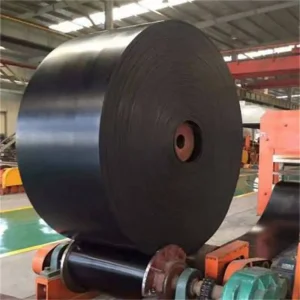
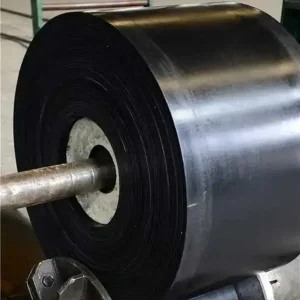
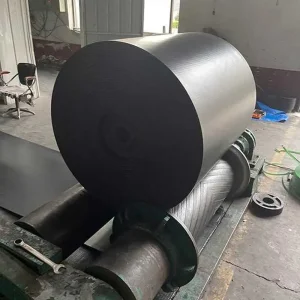
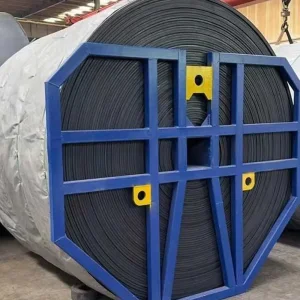
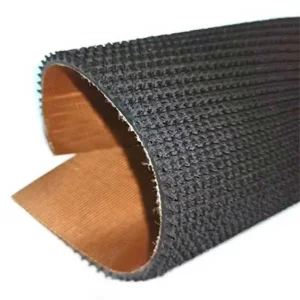
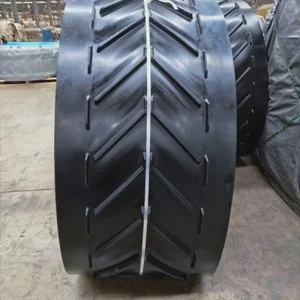
In modern heavy-duty bulk logistics, the movement of high-tonnage materials over vast distances demands conveyor structures that go beyond the tensile limitations of synthetic fabrics. Over the last three decades, steel cord conveyor belt construction has evolved from basic steel wire reinforcing structures into highly engineered, composite materials designed to withstand immense dynamic stress, cyclic fatigue, and violent impacts.
Historically, mining and port infrastructures relied heavily on multi-ply textile belts (such as nylon NN or polyester EP). However, as modern extraction depths increased, overland transit paths extended, and production capacities scaled, system designers reached the structural ceiling of synthetic polymers: excessive elastic elongation, low tensile capacity at extreme widths, and joint vulnerability.
Modern construction focuses on optimizing the cohesion between the rubber compound and the steel cord. This interface is critical. If the rubber fails to adhere permanently to the galvanized zinc coating of the steel cords, internal moisture migration can cause rust propagation, leading to sudden, catastrophic core failures. Modern advancements address this through specialized adhesive rubber systems (such as high-cobalt salt coupling agents in core compounds) and optimized zinc plating processes on the steel wires.
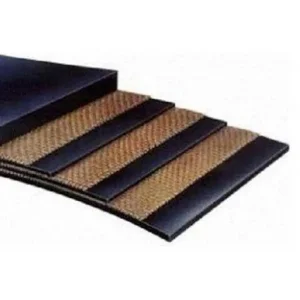
Understanding the internal anatomy of a steel cord belt is essential for matching structural properties to specific field challenges. A standard steel wire rope core belt consists of several functional layers, each performing a distinct mechanical role:
The load-bearing core, consisting of alternating left and right-lay galvanized steel wire ropes. This arrangement ensures the belt runs straight without twisting under tension. Cords are open-structured to facilitate rubber penetration.
A specialized compounding system designed to maximize rubber-to-metal bonding. This compound penetrates the voids inside the steel wire rope structures, creating a mechanical and chemical lock that resists corrosion and shear stresses.
Customizable protective sheets designed to shield the inner core from wear, impact, chemicals, heat, or fire. Standard cover grades are formulated based on DIN, ISO, or AS standards to match local operating conditions.
To prevent localized tearing from tramp iron or sharp rock impacts, high-performance designs incorporate transverse reinforcement layers above or below the steel cords. This "anti-tear" grid—either high-strength nylon-polyester fabric or cross-laid steel cords—functions as an armor shield, deflecting vertical impacts and preventing puncture propagation.
Global industrial operators are shifting from capital expenditure (CAPEX) centered sourcing models to operational expenditure (OPEX) and Total Cost of Ownership (TCO) optimization models. When sourcing steel wire rope conveyor belts, procurement executives consider several variables:
| Parameters | Standard Specifications | Performance Target |
|---|---|---|
| Tensile Strength | ST500 to ST5400 N/mm | Extreme tension capacity for long-distance transport |
| Cord Adhesion Strength | > 80 N/mm (DIN 22131) | Resists core delamination under heavy dynamic flexing |
| Elastic Elongation | < 0.2% at working load | Shortens take-up system strokes and design profiles |
| Cover Rubber Grades | DIN X, Y, W, Z / ISO H, D, L | Optimized for high wear resistance, cuts, and gouges |
| Flame Retardancy | ISO 340 / MSHA / EN 12882 | Self-extinguishing rubber matrix for safety in underground tunnels |
Operating conditions dictate the selection of cover materials. A belt carrying dry sinter ore at 150°C requires a heat-resistant rubber compound (such as EPDM) designed to resist cracking, whereas a belt operating in high-latitude copper mines requires cold-resistant natural rubber formulations that retain flexibility down to -40°C.
For coal mines, fire safety is critical. Hebei Boao Rubber's flame-retardant steel wire rope core belts are designed to comply with fire suppression standards, ensuring the rubber self-extinguishes if subjected to friction or open flame inside underground roadways.
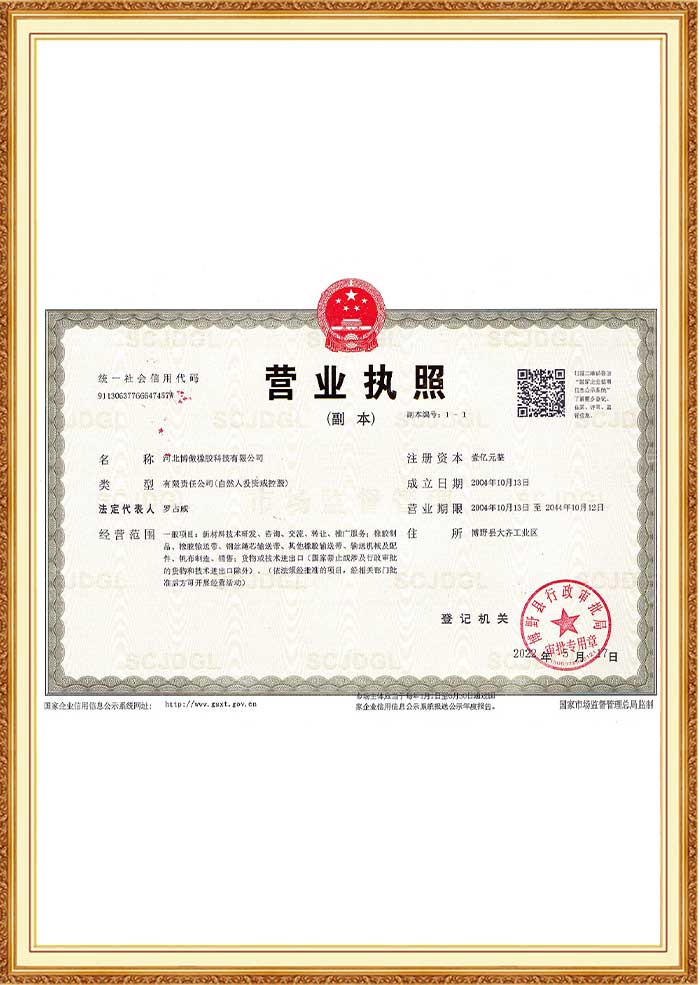
Established in 2004, Hebei Boao Rubber Technology Co., Ltd. (located in the Boye County Rubber Industrial Park, Baoding, Hebei Province, China) has grown into a modern manufacturer of high-end conveyor belts and supporting accessories under the registered brand "Jinao". Spanning an area of over 30 acres, our operation integrates manufacturing, testing, and engineering support.
To verify E-E-A-T (Experience, Expertise, Authoritativeness, and Trustworthiness) standards, our facilities feature an independent chemical analysis lab and physical testing laboratory. These allow us to monitor and inspect materials at each stage of production. From raw steel wire tensile tests and rubber compound rheometer checks to dynamic adhesion and tensile testing of the vulcanized belt, our quality control process enforces a strict standard: unqualified raw materials are rejected, and non-conforming finished products do not leave the factory.
Our manufacturing processes feature advanced multi-roll calendering systems and modern vulcanizing presses. These systems maintain uniform pressure, temperature, and tension controls across the belt width, producing reliable steel cord spacing and consistent cover thickness.
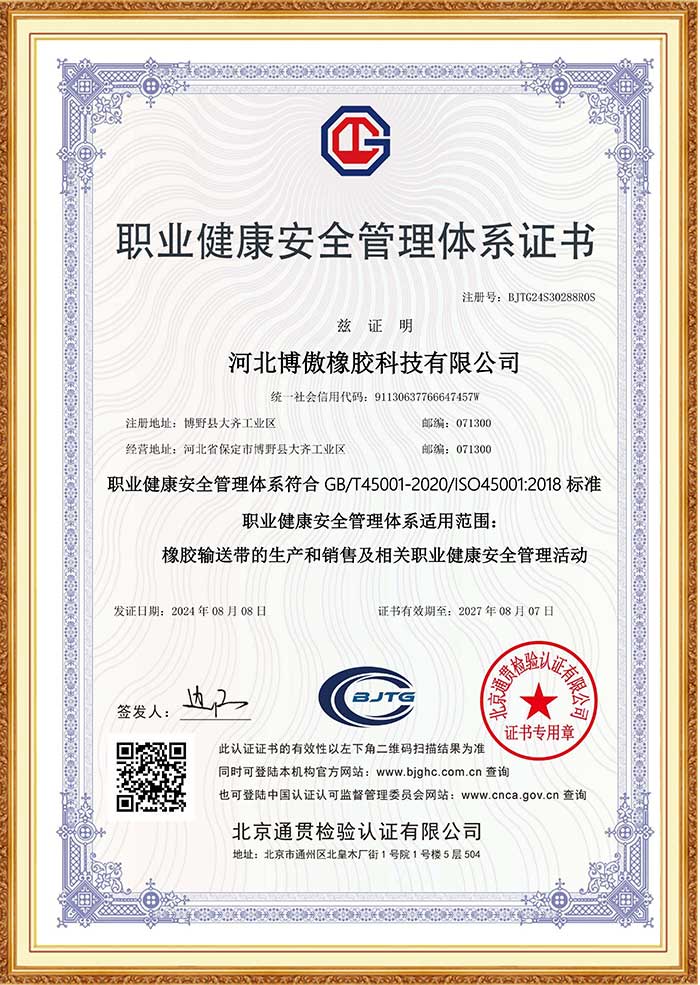
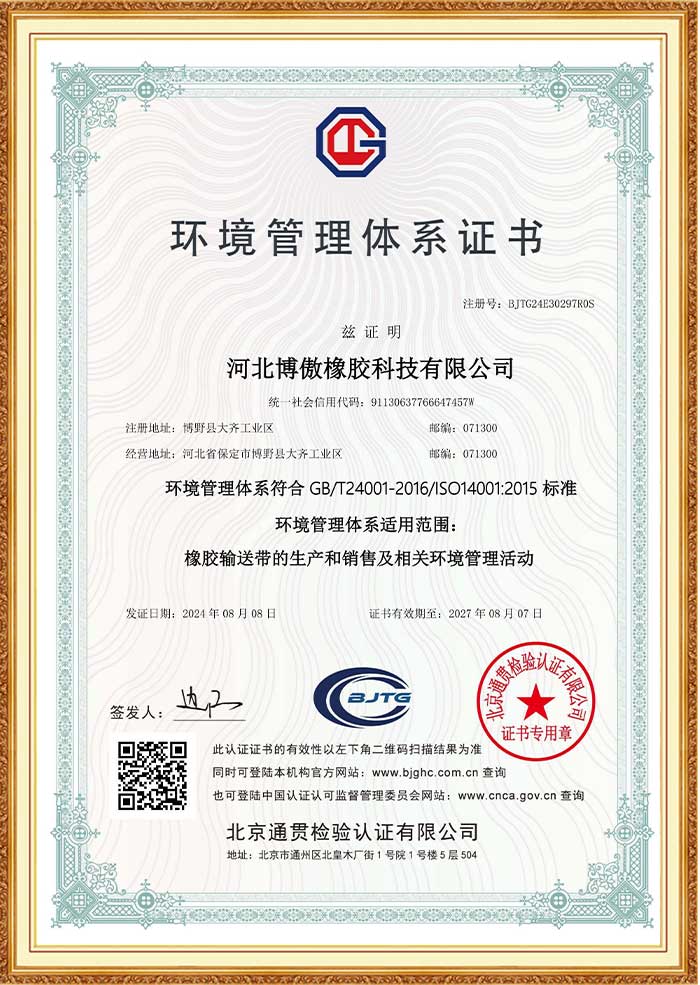
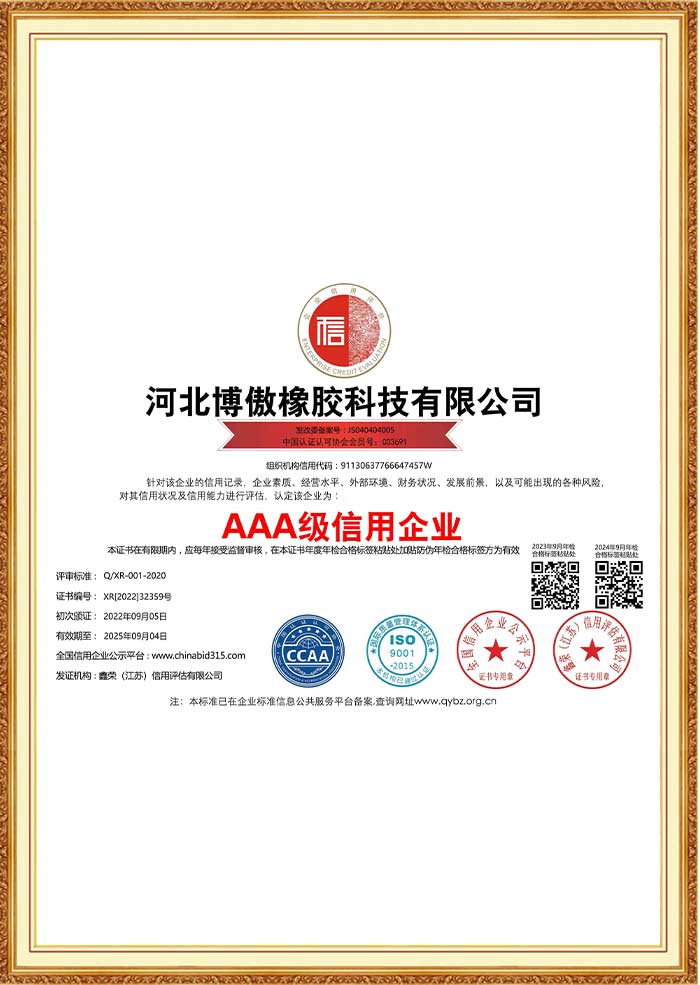
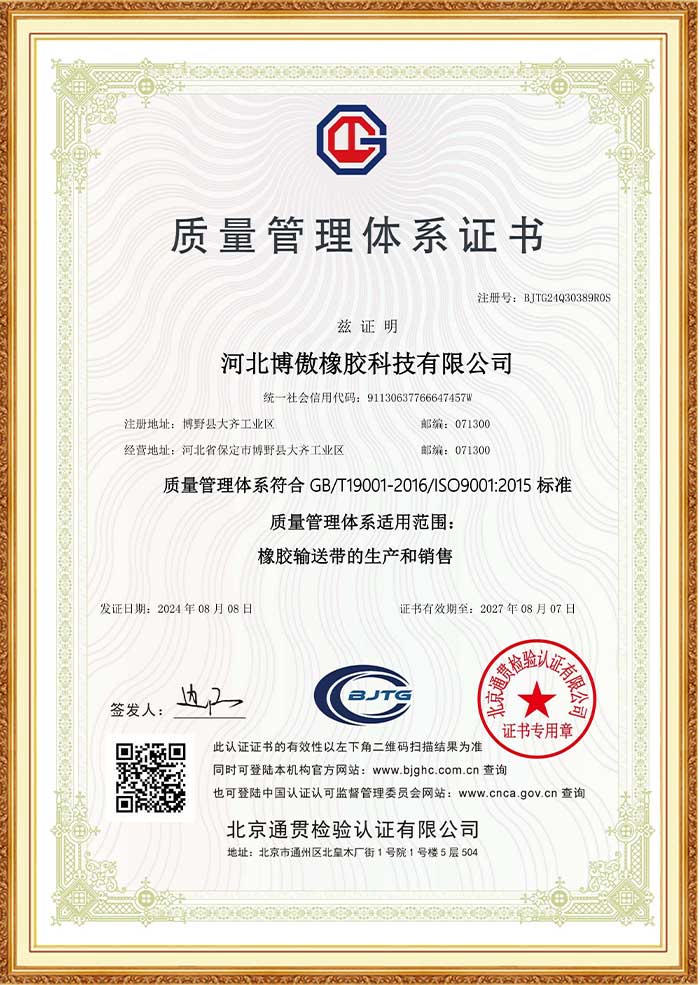
Our ISO9001 certified manufacturing plant utilizes standardized workflows to ensure reliable, high-volume production outputs.
Galvanized steel wire ropes are unspooled from a tension-controlled creel stand. Tension control is critical: even slight variations in cord tension will cause the conveyor belt to mistrack once under load.
We blend internal mixer compounds to formulate the core adhesive rubber and heavy-duty covers. The core rubber is calendered directly onto and between the steel cord grid, encapsulating every wire.
Using long-platen vulcanizing presses, the composite layers are bonded under high temperature (up to 160°C) and uniform hydraulic pressure. This triggers cross-linking in the rubber molecules, securing the steel wire core.
Each production run undergoes non-destructive X-ray scanning to check steel cord spacing and alignment. Finished sections undergo mechanical adhesion tests and cover abrasion testing prior to packaging.
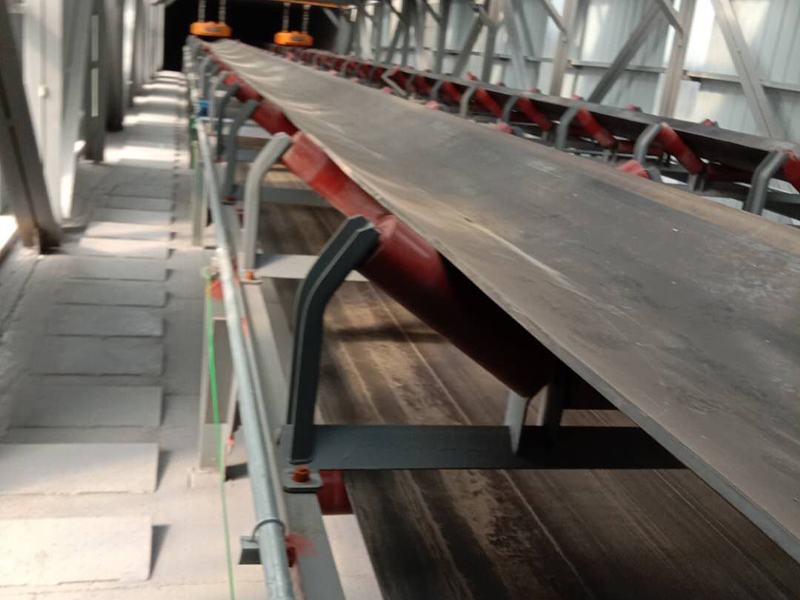
Supplied high-temperature resistant sinter conveyor systems designed to withstand continuous operating temperatures of 150°C to 180°C.
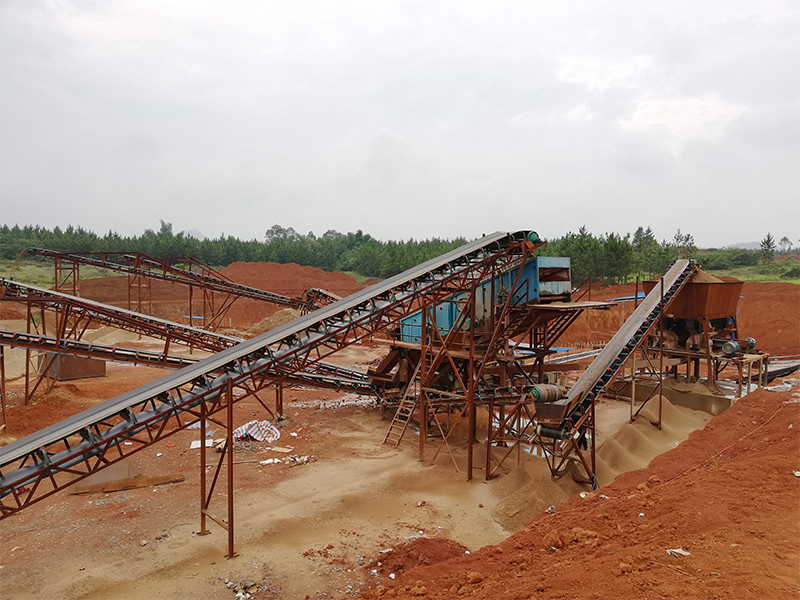
Delivered high-strength steel cord belts to handle raw nickel ore extraction, offering tear-resistant performance in high-impact operations.
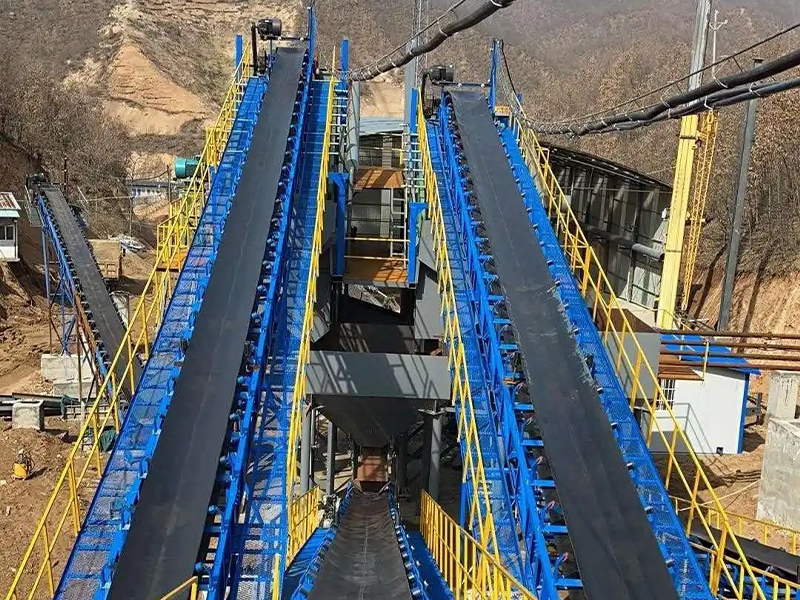
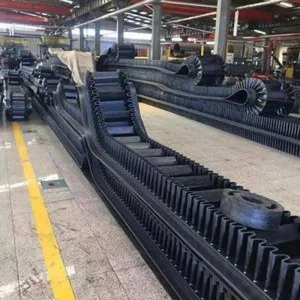
Supplied high-tension ST3150 steel cord belts to support vertical mineral transport systems with deep troughing angles.
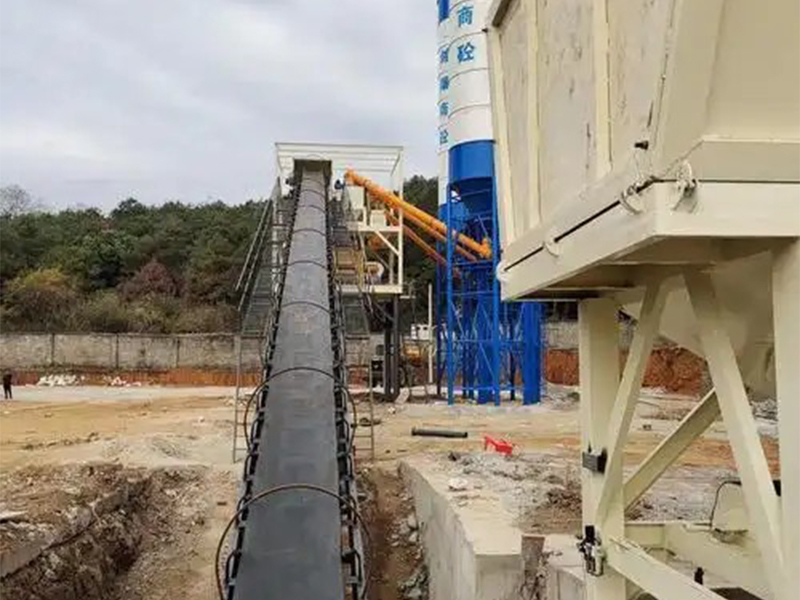
Configured quick-feed aggregate conveyor belts to support continuous concrete batching plants for high-speed rail projects.
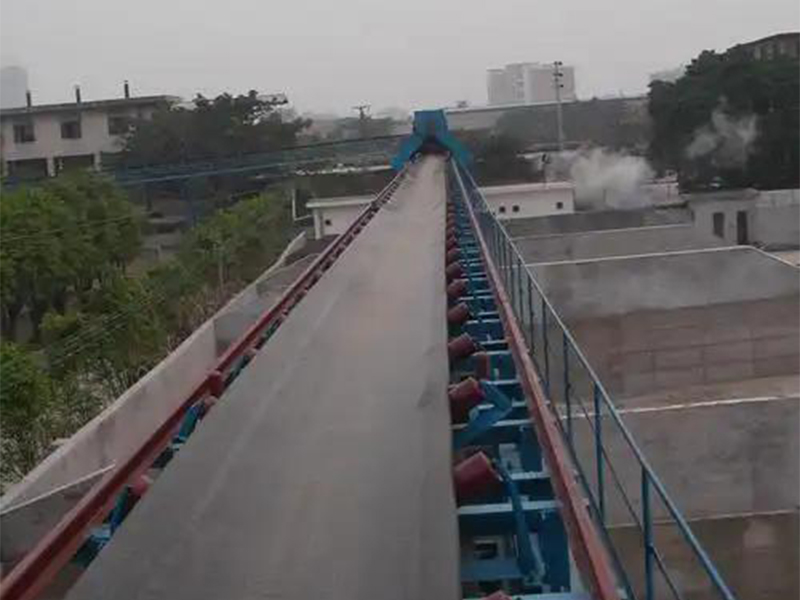
Constructed a multi-kilometer overland conveyor system to transport raw limestone from quarries over rough terrain.
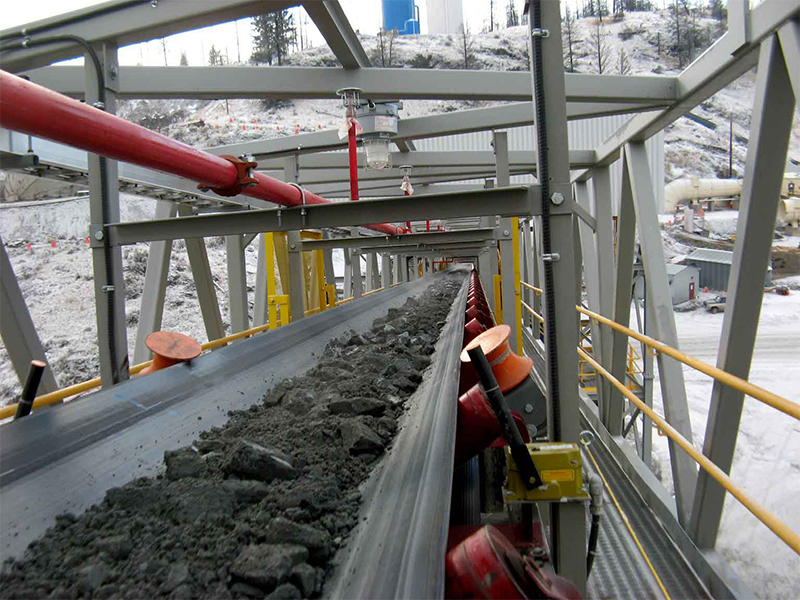
Engineered and installed flame-retardant, anti-static steel cord conveyor belts for underground coal mining and sorting tunnels.
Hebei Boao Rubber provides engineering support throughout the belt's operating lifecycle—from planning and installation to routine maintenance.
We provide planned replacement, repair, inspections, maintenance, and emergency response services for conveyor belts. Our engineering teams assist with mechanical calculations, tension limits, and structural planning.
Supply of conveyor belts and auxiliary materials, maintenance of backup stock, storage management, hot vulcanized splice bonding, cover repair, and regular belt inspection tours.
Our goal is to improve conveyor operational efficiency, reduce belt wear, and help extend overall service life. We implement structured maintenance procedures to reduce unplanned downtime.
 Boao Rubber