Premium high-performance industrial components designed to optimize bulk handling throughput in dry desert environments and extreme load conditions.
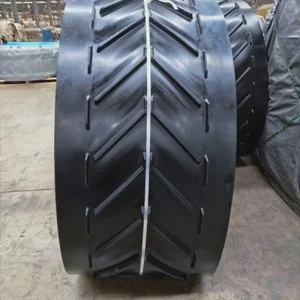
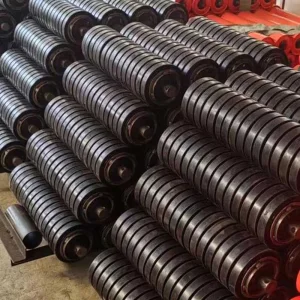
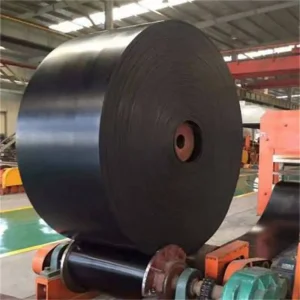
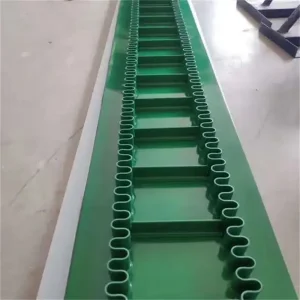
Egypt stands as a critical industrial powerhouse bridging Africa and the Middle East. With major projects expanding along the Suez Canal Economic Zone (SCZONE) and massive mineral processing developments in the Eastern Desert and Sinai, the demand for high-capacity material handling systems has skyrocketed. Key heavy sectors, including phosphate mining, steel manufacturing, cement production, and major agricultural reclamation corridors, rely heavily on continuous bulk handling technologies. To achieve peak efficiency, operations require specialized components capable of managing material rollback and extreme operational heat.
Egypt's climate presents significant material challenges, including ambient heat exceeding 45°C in southern mine sites, intense UV radiation, and highly abrasive quartz sands. Ordinary smooth conveyor belts face severe limitations in these environments: slipping, material rollback on steep inclines, accelerated cover wear, and premature belt degradation. Patterned conveyor belts—specifically chevron and herringbone designs—solve these issues by providing mechanical grip that allows materials like sand, ore, gravel, and agricultural grains to be conveyed at angles ranging from 20° to over 40°.
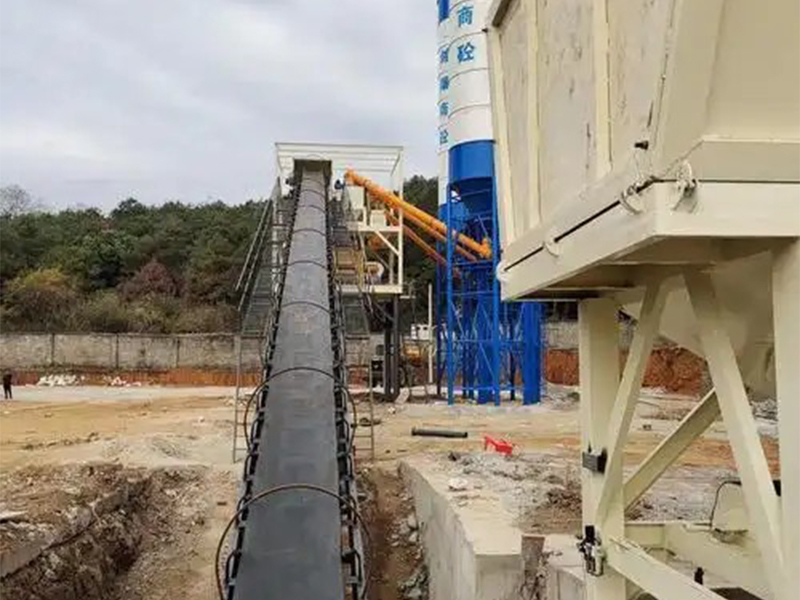
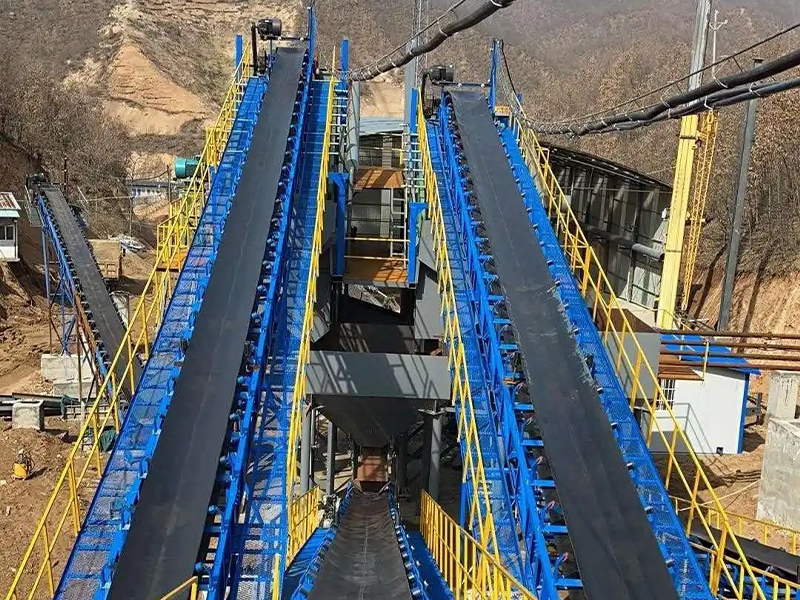
In regions such as Safaga and the Red Sea mining corridor, phosphate and mineral ores must be transported from deep open pits to sorting facilities. Utilizing traditional transport trucks introduces high operational costs and significant emissions. Installing high-incline patterned conveyor systems allows operators to transport raw materials directly up steep quarry walls. Chevron patterns, with rib heights ranging from 5mm to 32mm, lock the dry particles in place, minimizing sliding and wear on the top cover compound. This approach reduces energy consumption and optimizes materials handling throughout the plant.
In Egypt, intense UV rays degrade common rubber polymers by breaking chemical chains, leading to micro-cracking and hard-cracking. This breakdown is particularly critical on patterned profiles, where split-joints and profile bases can crack and peel off. Hebei Boao Rubber uses premium EPDM-SBR compounds containing active anti-ozonants and carbon black reinforcement to maintain profile elasticity and wear resistance over long lifespans.
Founded in 2004 and spanning over 30 acres, Hebei Boao Rubber Technology Co., Ltd. is located in the Rubber Industrial Park of Boye County, Baoding, Hebei Province, China. Under our proprietary "Jinao" brand, we have established ourselves as a premier global manufacturer integrating product development, design, testing, and business services for heavy-duty conveyor belts and accessories.
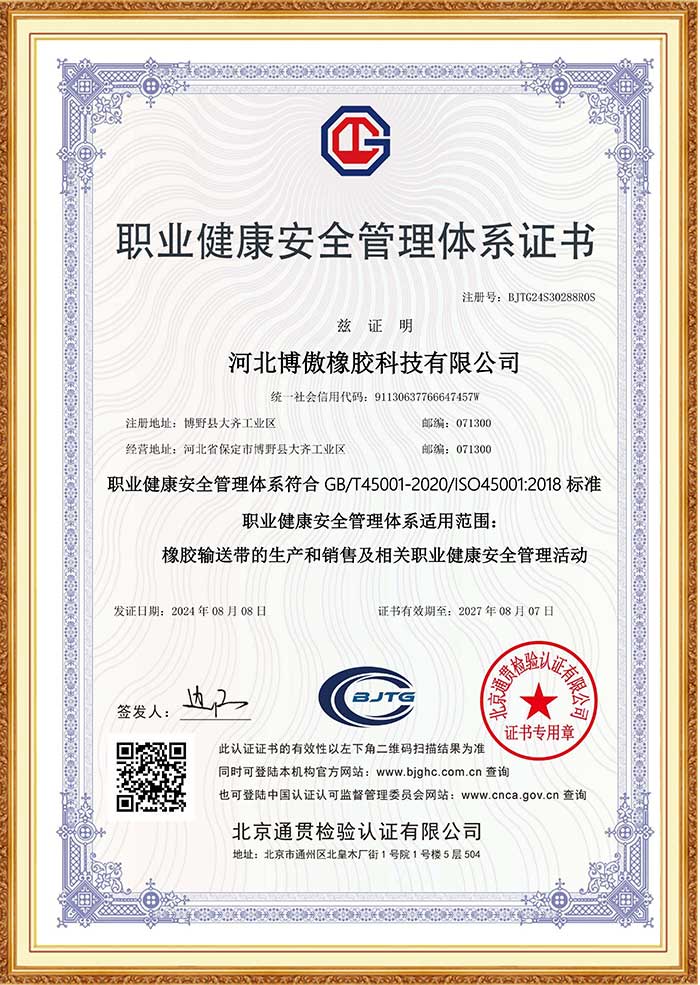
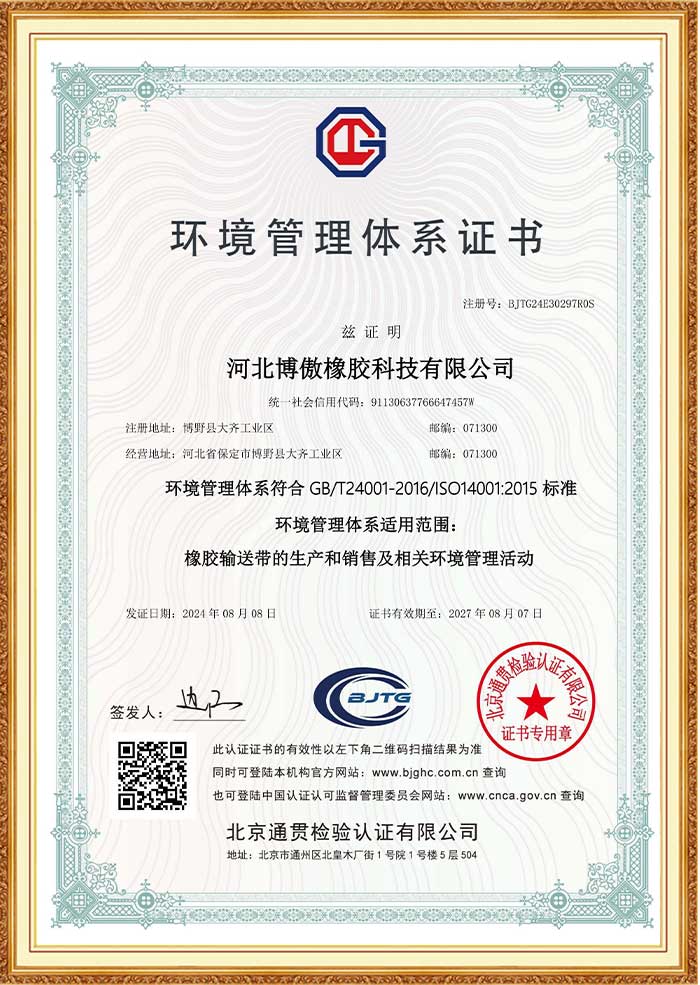
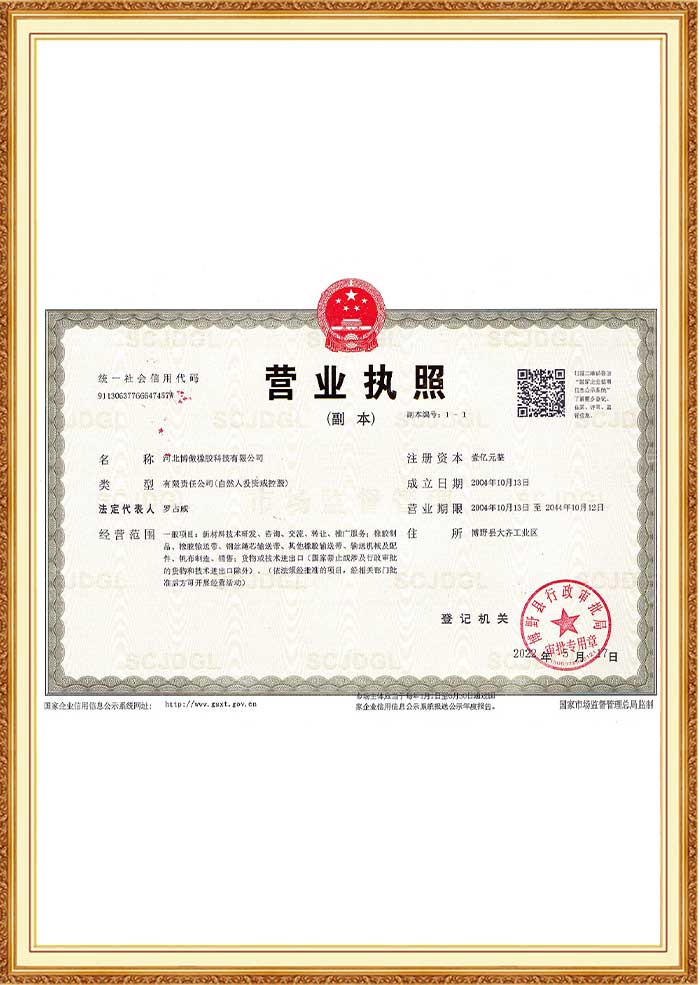
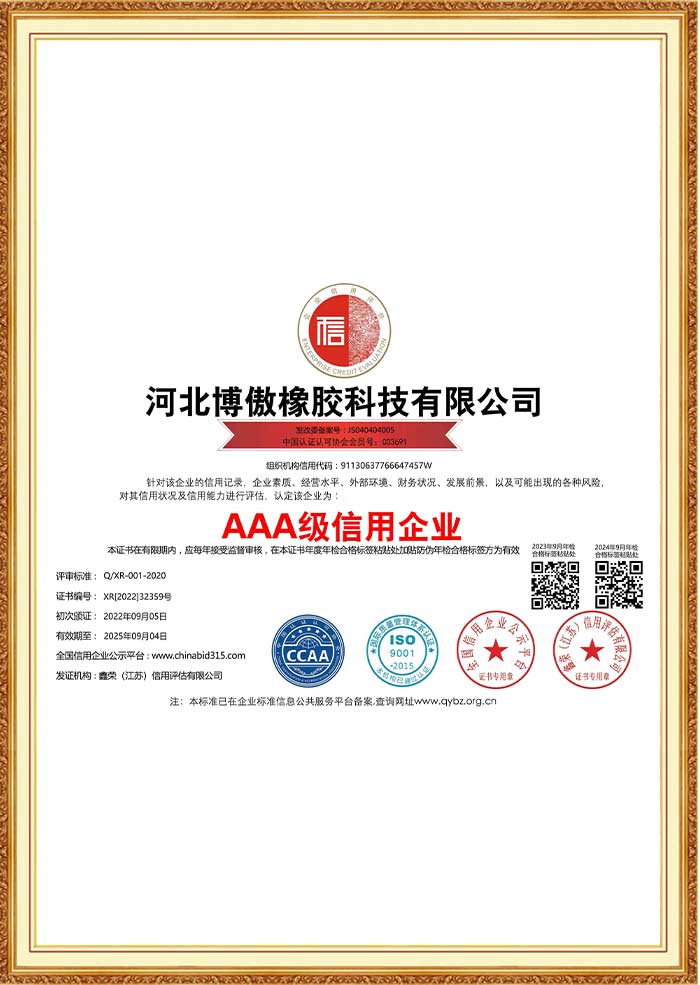
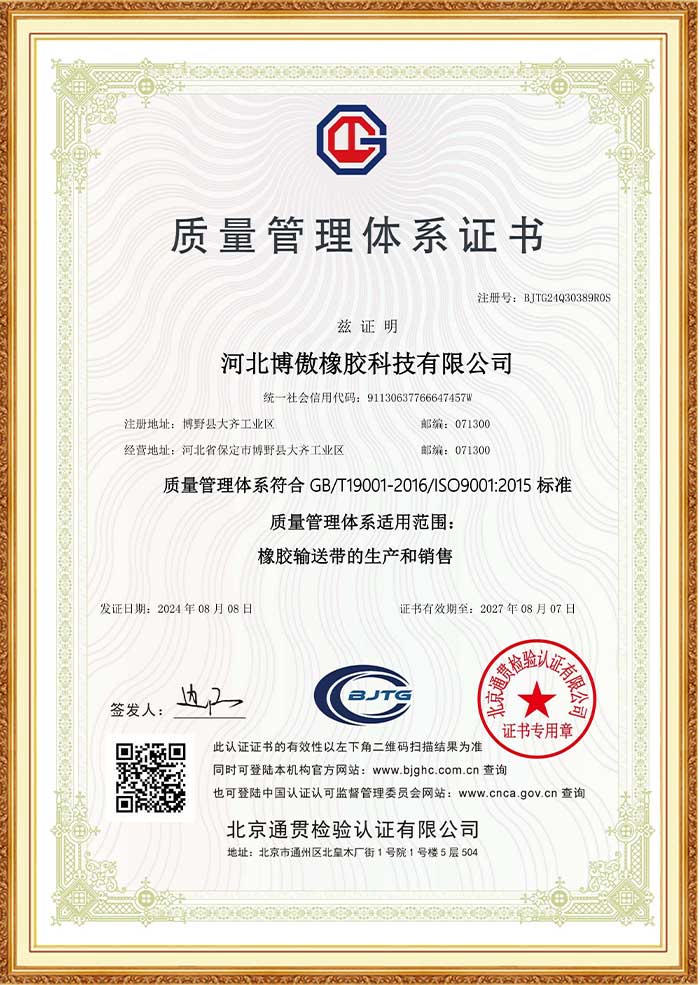
Our facilities are certified to international quality standards, reflecting our commitment to quality assurance and control. With advanced production lines covering compounding, rolling, forming, vulcanizing, and exhaustive rubber laboratory testing, Boao ensures that every conveyor component leaving our facility stands up to the harshest industrial applications worldwide.
How Boao engineers belt parameters to tackle heat, abrasion, corrosion, and load weight for modern heavy applications.
We offer Nylon (NN) and Polyester (EP) woven ply frameworks alongside heavy-duty Steel Cord designs. This range meets different tensile requirements, minimizing operational elongation and resisting impact damage in heavy mining applications.
Our formulas integrate SBR, EPDM, and NBR rubbers. These materials provide heat resistance up to 250°C and protect against swelling and degradation when conveying oily or acidic aggregates.
Molded profile bases are vulcanized directly with the belt cover. This process prevents separation under heavy loads, ensuring reliable conveyor performance and material containment on steep inclines.
At Boao, quality starts with testing. Our laboratory is equipped with state-of-the-art testing systems. Raw materials are checked for polymer purity, density, and cure kinetics. During manufacturing, laser monitoring systems verify belt thickness, while automated vulcanizing presses maintain constant temperature and pressure curves. Finished belts undergo rigorous tensile strength, DIN abrasion, and adhesion tests to verify that every roll matches customer specifications before shipment.
In addition to strict quality control, Boao maintains an agile supply chain. Our manufacturing capacity allows us to manage large production volumes without sacrificing turnaround times. We coordinate with shipping hubs in Tianjin and Qingdao to secure space on major sea lines, helping to keep delivery schedules on track for our customers in Egypt.
A conveyor belt represents a significant capital investment. To maximize returns, Boao provides comprehensive technical plans designed to optimize operational efficiency, minimize wear, and extend service life.
Procuring raw industrial components involves calculating the Total Cost of Ownership (TCO). High-quality, durable conveyor components from Boao are engineered to reduce energy costs and minimize unscheduled downtime.
Investing in belts with low abrasion loss (DIN < 90mm³) can lead to significant reductions in annual repair and replacement costs, lowering long-term operating expenses.
Our adherence to ISO standards and track record of working with major enterprises demonstrate our commitment to reliable manufacturing.
China Railway
Conch Cement
Datong Coal
Tsingshan Group
Taihang Steel
Zijin Mining
Answers to common technical questions on selecting, installing, and maintaining patterned conveyor systems in demanding environments.
The choice of profile depends on the material type, size, and conveying angle. Low profiles (5mm–15mm) are typically used for fine materials up to 25°. Higher profiles (15mm–32mm) are recommended for bulkier materials on steeper inclines. For very steep angles or vertical conveying, sidewall or wavy-edge designs are preferred.
High temperatures can accelerate rubber aging, leading to micro-cracking and loss of flexibility. We use specialized EPDM formulations that maintain physical properties at continuous operating temperatures, protecting the belt carcass from heat damage.
EP fabric features low stretch and high moisture resistance, making it suitable for long-distance conveyors. NN fabric offers high elasticity and impact resistance, which helps absorb shock in high-impact dumping zones.
Delamination is usually caused by inadequate vulcanization pressure or dynamic bending stress. We vulcanize the base belt and profiles in a single process step under high pressure, ensuring a strong, integrated bond.
We supply acid and alkali-resistant belts formulated with specialized chemical-resistant elastomers. These compounds prevent swelling, cracking, or chemical degradation when conveying acidic ores or chemical processing materials.
Pulley lagging increases friction between the pulley and the belt, reducing slippage. Properly designed rubber or ceramic lagging also helps sheds water and mud, preventing buildup that can lead to belt misalignment.
Lead times vary depending on specifications and order volume. Standard production takes 20 to 30 days, followed by approximately 20 to 25 days of ocean freight from China to ports such as Alexandria or Sokhna.
Our wear-resistant covers are formulated for low DIN abrasion loss, meaning they resist scratching and gouging from sharp, heavy materials. This helps maintain the belt's thickness and extends its overall service life.
Get in touch for custom design recommendations, compound selections, and detailed quotation sheets tailored to your specific conveyor system.
Send Inquiry NowOur complete range of conveyor solutions engineered to withstand extreme heat, abrasion, chemical corrosion, and heavy impact loads.
 Boao Rubber