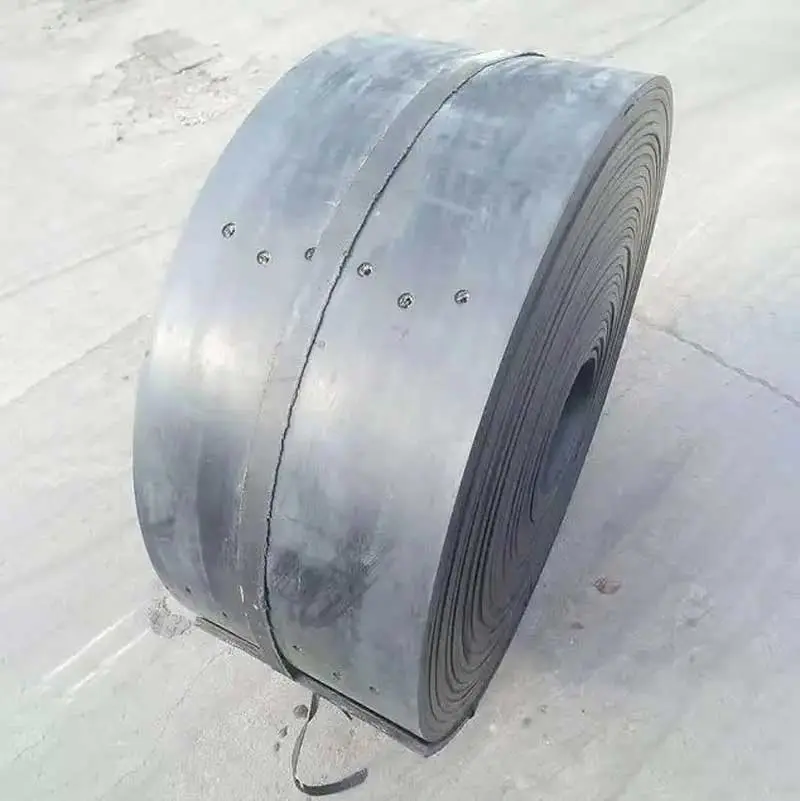
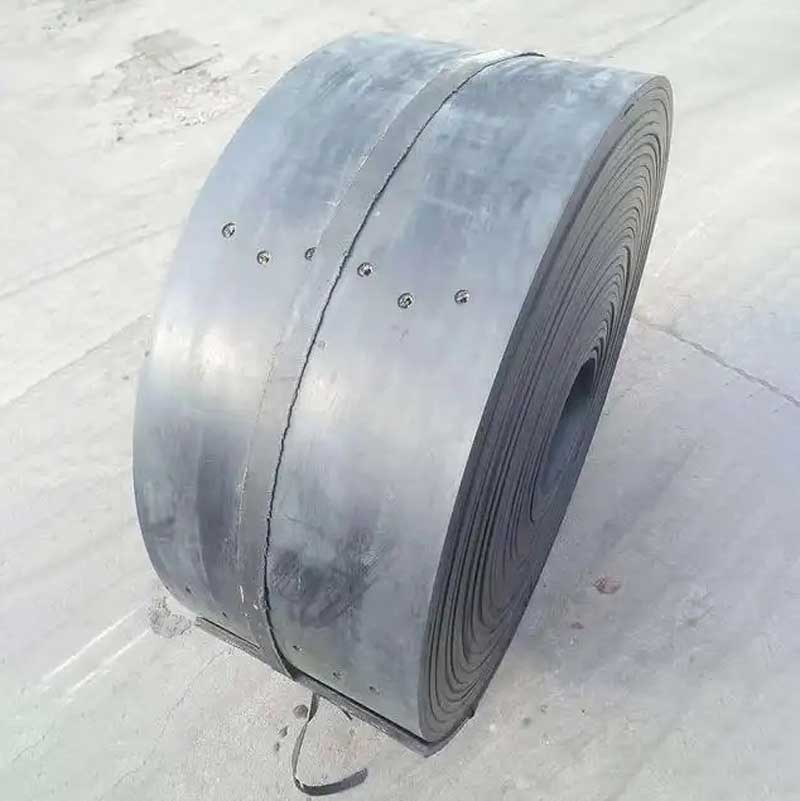
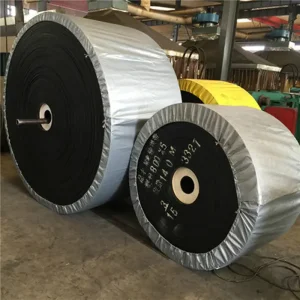
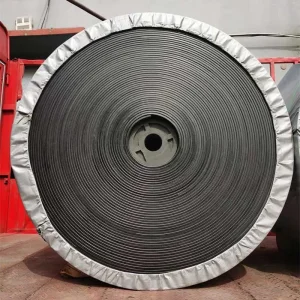
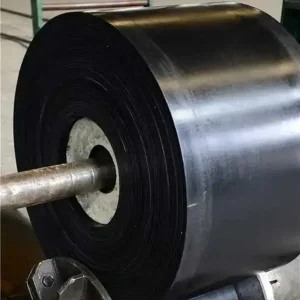
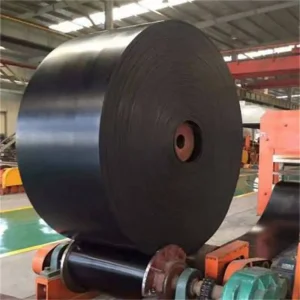
Product Introduction
The strength specifications (N/mm) series of fabric core lifting belts include: 100, 125, 160, 200, 250, 315, 400, 500, and above; The width specifications (mm) series include: 150, 200, 300, 400, 500, 600, 650, 700, 800, 1000, 1200, 1400, 1600.
The strength specifications (N/mm) of the steel wire rope core lifting belt include: St630, St800, St1000, St1250, St1600, St2000, St2500; The width specifications (mm) include: 200, 250, 300, 350, 400, 450, 550, 600, 680, 800, 850, 1000, 1050, 1200, 1300, 1400.
Adhesive tape marking example 1:
1000 B 9508 4.5T × 3.0 1000 NN5 indicates that the strength specification of the bucket type lifting belt is 1000N/mm. It was produced in August 1995, with an upper cover layer thickness of 4.5mm and a reinforcement layer, a lower cover layer thickness of 3mm, a belt width of 1000mm, and a core material of nylon canvas, totaling 5 layers.
Adhesive tape marking example 2:
St1000 B 9508 5T × 5T 1200 Φ 3.5 indicates that the tape specification is a steel wire rope core bucket type lifting belt, with a strength specification of 1000N/mm. It was produced in August 1995, with a thickness of 5mm for both the upper and lower cover layers and a reinforcement layer. The belt width is 1200mm, and the steel wire rope diameter is 3.5mm. Currently, this type of product complies with the chemical industry standard HG/T 2577-1994 "Rubber Lifting Belt".
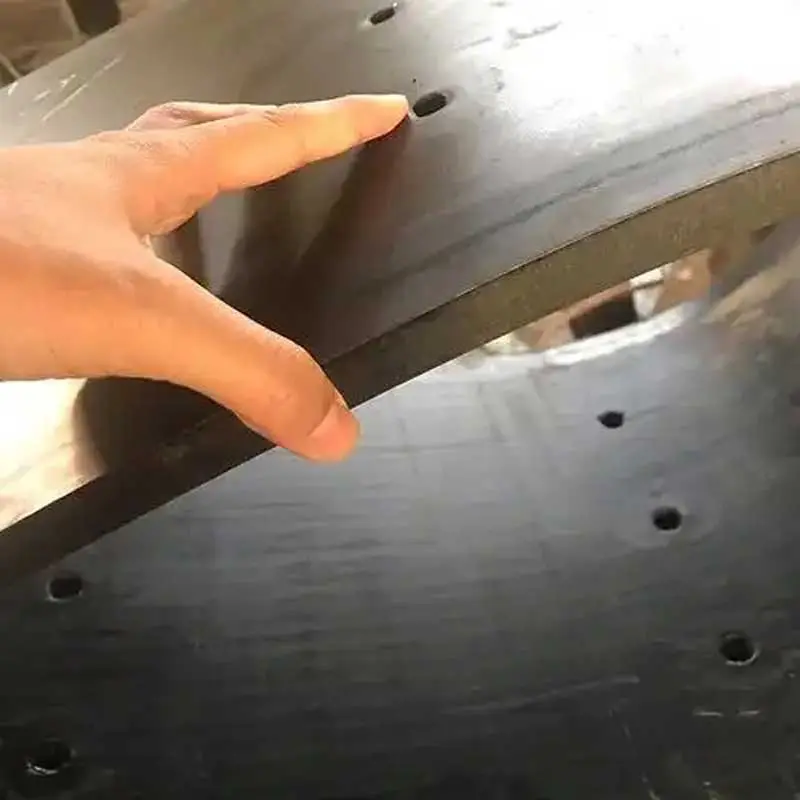
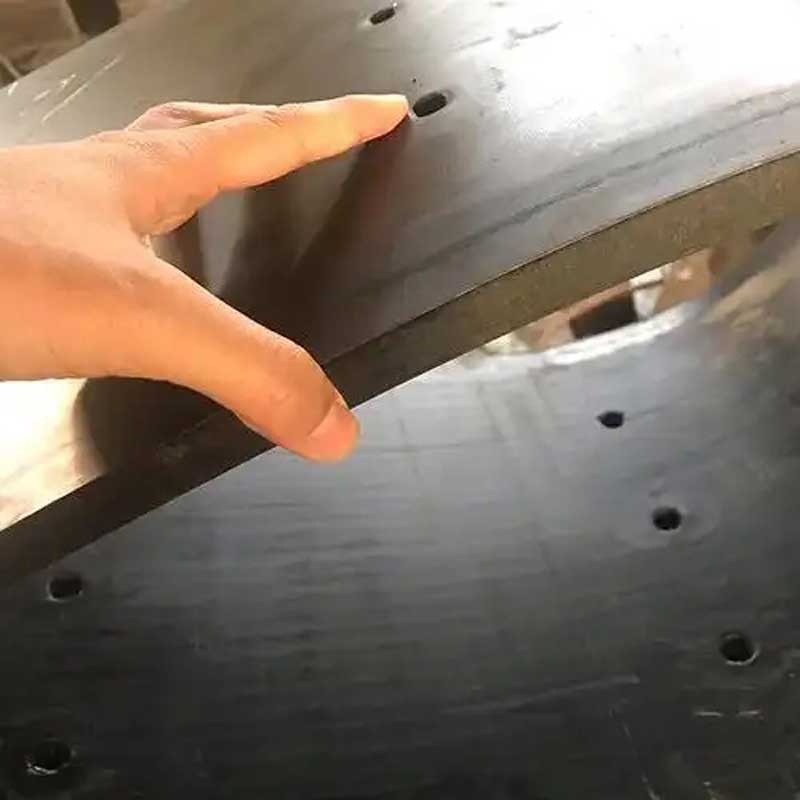
This standard was revised in 2005 and is currently awaiting approval. The revised standard has been renamed as "Rubber or Plastic", and the strength specifications and width specifications of fabric core lifting belts and steel wire rope core lifting belts are consistent with those of general-purpose fabric core conveyor belts and general-purpose steel wire rope core conveyor belts, respectively. The performance of the covering layer is divided into three types: general environmental conditions (L-type), heat resistance not exceeding 150 °C (T3 type), and heat resistance of 175 °C (T4 type). The revised standard also specifies the punching and drilling of lifting belts.
Expand
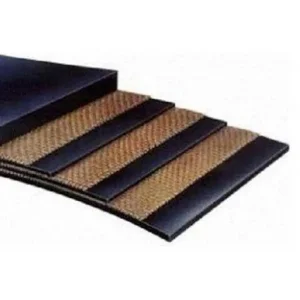
The rubber lifting belt is made up of multiple layers of adhesive fabric, and the core of the belt should generally be covered with adhesive. According to different usage temperatures, it can be divided into heat-resistant lifting belts and ordinary lifting belts; According to the different core materials, it can be divided into full cotton, polyester cotton interwoven, nylon, and EP lifting belts. According to different performance characteristics, lifting belts can also be divided into heat-resistant lifting belts, ordinary lifting belts, etc.
Key Specifications & Classifications:
- Covering Adhesive Performance: Divided into strong wear (D-type), moderate wear (L-type), and heat-resistant type (T-type) according to the wear resistance and load of the conveyed material.
- Width Specifications: The main specifications of lifting belts include 150, 200, 250, 300, 350, 400, 500, 600mm, etc.
Frequently Asked Questions
Q1:
What are the core materials available for fabric core rubber lifting belts?
Fabric core lifting belts can be classified based on different core materials, which include full cotton, polyester cotton interwoven, nylon (NN), and EP (polyester) lifting belts.
Q2:
What are the standard width specifications for rubber lifting belts?
Width specifications vary. For fabric core lifting belts, width options range from 150mm up to 1600mm. For steel wire rope core belts, widths range from 200mm up to 1400mm. Standard general width specifications include 150mm, 200mm, 250mm, 300mm, 350mm, 400mm, 500mm, and 600mm.
Q3:
How is the performance of the covering layer classified?
The performance of the covering adhesive is classified into three types based on wear resistance and load: strong wear (D-type), moderate wear (L-type), and heat-resistant (T-type).
Q4:
What are the temperature limits for heat-resistant rubber lifting belts?
Under the revised standards, heat-resistant covering layers are divided into T3 type (for heat resistance not exceeding 150 °C) and T4 type (for heat resistance up to 175 °C).
Q5:
Which industry standards do these rubber lifting belts comply with?
Currently, these products comply with the chemical industry standard HG/T 2577-1994 "Rubber Lifting Belt". The standards are updated to align strength and width specifications with general-purpose fabric core and steel wire rope core conveyor belts.
 Boao Rubber