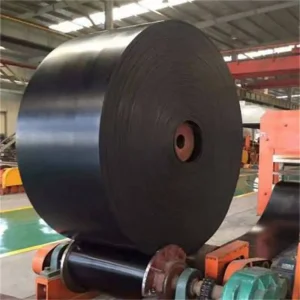
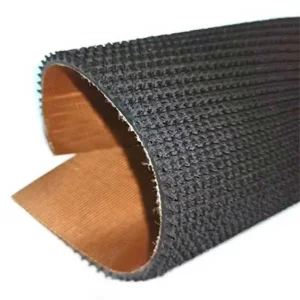
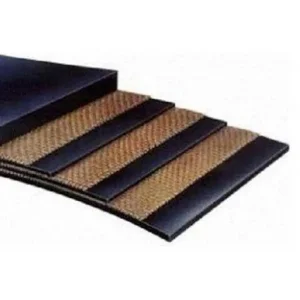
Direct supply from Hebei Boao Rubber Technology's manufacturing hub. Built to withstand extreme thermal stresses and aggressive mechanical wear.
An in-depth evaluation of chemical formulation, thermal degradation pathways, and self-extinguishing mechanics.
Industrial conveyor belts operated in confined spaces—such as underground coal mines, grain silos, and chemical processing facilities—represent a serious risk for flame propagation. A single localized friction spark, belt misalignment, or electrical fault can ignite standard hydrocarbon-based rubber, resulting in catastrophic losses. The design of flame resistant conveyor belts hinges on preventing ignition and ensuring that if a fire starts, the material is self-extinguishing.
At Hebei Boao Rubber Technology, we formulate our rubber covers with inorganic halogen-free flame retardants, chlorinated compounds, and antimony trioxide synergists. When exposed to flame, these specialized elastomeric compounds undergo an endothermic decomposition process. They release chemical water vapor and build a solid, carbonaceous char layer. This barrier prevents oxygen from reaching the underlying fabric or steel-wire core, effectively choking the flame.
Different markets mandate unique safety testing protocols. In Europe and many international jurisdictions, the ISO 340 test is standard, requiring that a belt sample exposed to a flame for a set duration must self-extinguish within an average of 3 seconds after the flame source is removed, with no single sample burning for more than 15 seconds. In the United States, the Mine Safety and Health Administration (MSHA) requires rigorous gallery testing (under 30 CFR Part 18) to simulate actual coal mine fire scenarios.
| Standard | Primary Test Method | Mandatory Criteria | Typical Applications |
|---|---|---|---|
| ISO 340 / EN 12882 | Laboratory burner test with and without airflow | Average self-extinction ≤ 3s, Max individual ≤ 15s | General industrial, ports, chemical, European mining |
| MSHA 30 CFR Part 18 | Gallery flame exposure of full-width belt | No propagation; strict limit on afterglow and burning duration | US underground coal mining and gaseous environments |
| AS 1332 (Australia) | Friction drum and flame propagation testing | Must not ignite under intense mechanical friction | Australian heavy mining and mineral processing |
| DIN 22109 | Combustibility testing on multi-ply rubber belts | Strict flame spread and electrical conductivity limits | European coal mining and power plants |
Hebei Boao Rubber Technology Co., Ltd. – Leading China's Conveyor Belt Industry Since 2004.
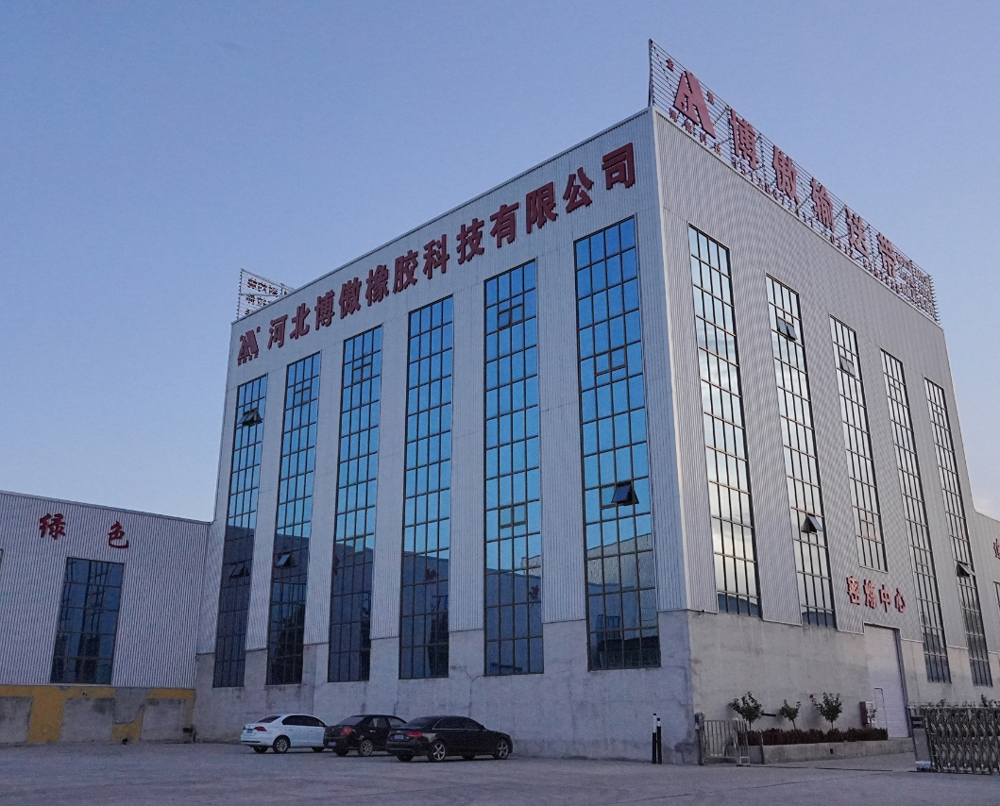
Founded in 2004 and situated within the Rubber Industrial Park of Boye County, Baoding, Hebei Province, Hebei Boao Rubber Technology Co., Ltd. operates under the brand name "Jinao". Over the past 22 years, we have emerged as a premier manufacturer in China, integrating product research, custom engineering, and business services for heavy-duty rubber conveyor belts and accessories.
Our facility houses high-efficiency calendering machines, multi-platen vulcanization presses, and advanced chemical laboratories. We test every batch of rubber from raw compound to the finished product. This ensures compliance with international tension, elongation, flame-retardant, and antistatic criteria.
How our geographic positioning and scale efficiency deliver significant cost advantages and high quality.
Located in the heart of Boye County's Rubber Industrial Park, Boao Rubber benefits from a highly integrated local supply chain. Direct partnerships with high-tensile fabric suppliers (Nylon 66 and EP fabrics) and chemical synthesis factories allow us to purchase high-grade raw rubber and flame-retardant additives at lower costs. We pass these savings directly to our customers.
We operate advanced, wide-width curing press lines that process multiple kilometers of heavy-duty belting in a single continuous cycle. This equipment maintains uniform temperature and pressure distributions during vulcanization, preventing micro-voids in the rubber cover. It delivers consistent tensile performance and flame retardancy throughout the belt length.
Our proximity to major Northern China ports (such as Tianjin Port) allows us to offer efficient container freight options. We manage the entire export chain, including custom packing, specialized sea-freight crates, and fast export clearance. This ensures on-time delivery to mining and industrial sites worldwide.
How we tailor belt specifications to meet the specific requirements of international engineering projects.
Global procurement teams in mining, metallurgy, and port operations look beyond surface-level specifications. Our Jinao brand flame resistant belts can be customized with specific performance additives to meet challenging operational conditions:
Ensuring smooth installation and reliable service life through comprehensive engineering support.
Deploying flame-resistant belts requires precise alignment, reliable splicing, and proper tensioning. Jinao provides complete engineering packages, including hot vulcanizing kits, cold bonding materials, and on-site splicing guidelines. Our technical documents ensure that your maintenance crew can establish high-strength joints that preserve the belt's flame-retardant properties.
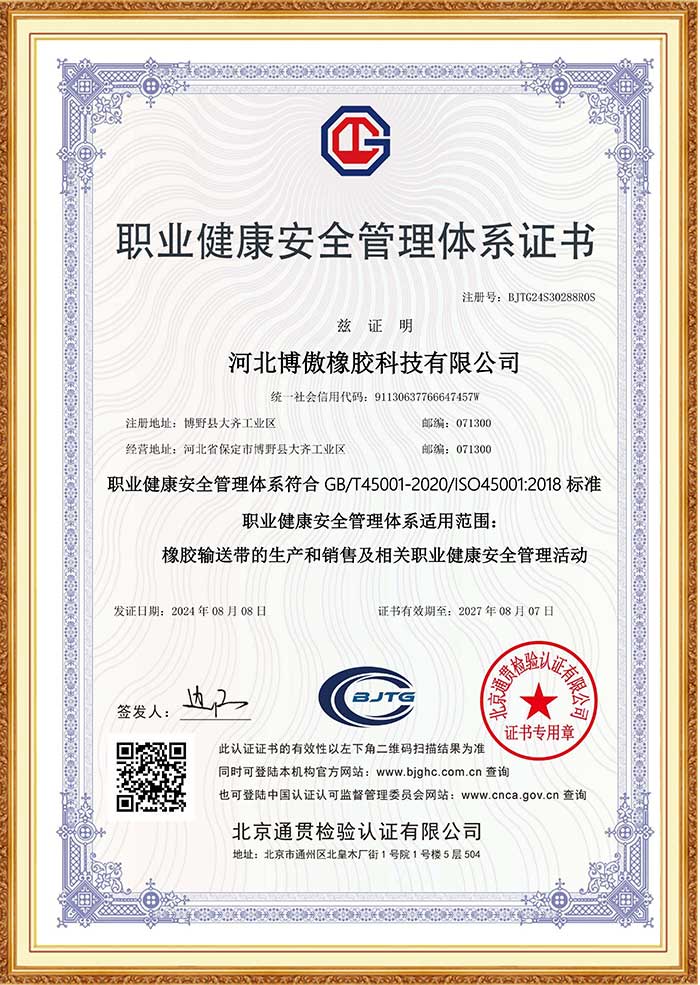
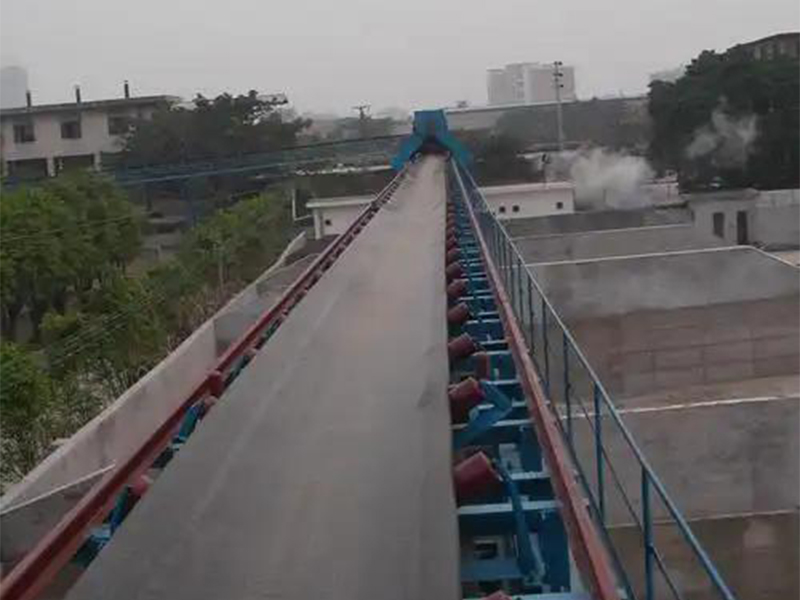
Our quality management systems are certified to ISO 9001 standards. This guarantees that all conveyor belts leave our facility with comprehensive inspection documents, including tensile testing, flame propagation results, and electrical resistance reports.
Where Jinao flame resistant belts are actively preventing hazards and optimizing bulk material handling.
Accumulation of methane and coal dust makes underground coal mining a high-risk environment. Our flame-resistant and antistatic (FRAS) belts prevent static electricity buildup. They self-extinguish quickly if exposed to fire, ensuring the safety of personnel and underground equipment.
Conveying hot coke, sintered ore, and pulverized coal requires belts with dual resistance. Jinao belts are formulated to withstand high continuous material temperatures while retaining their flame-retardant properties, preventing fires caused by hot materials.
Dust clouds generated during bulk agricultural handling can lead to explosive atmospheres. Our antistatic, flame-resistant belts prevent electrostatic discharges, protecting large-scale grain elevators and port terminals from dust explosions.
Our heavy-duty conveyor belts are used by leading companies in steel manufacturing, cement production, and bulk mining operations.
Taihang Steel
Tsingshan Group
Zijin Mining
China Railway Group
Conch Cement
The convergence of material science, sensor technologies, and environmental sustainability.
Modern conveyor systems increasingly integrate digital monitoring technologies. Embedded RFID chips and continuous fiber-optic loops are vulcanized directly into the rubber cover. These sensors provide real-time data on belt temperature and mechanical wear, warning operators of potential hot spots before combustion can occur.
Strict environmental regulations are driving a shift away from traditional halogenated fire retardants, which can release toxic gases during thermal decomposition. Development is focused on compound formulations using ecological phosphorus-based and inorganic mineral matrices. These materials provide high flame retardancy while reducing smoke toxicity.
Technical guidance and purchasing answers curated by our engineering team to help you make informed procurement decisions.
Flame resistance is achieved by blending natural or synthetic elastomers with additives like chlorinated compounds, phosphorus, or inorganic fillers like Aluminum Trihydrate (ATH). These additives produce an endothermic reaction when heated, releasing water vapor and forming a char layer that blocks oxygen from reaching the core fabric or steel wires.
ISO 340 is a laboratory-scale test evaluating flame self-extinction under controlled conditions with and without airflow. MSHA (under 30 CFR Part 18) utilizes larger gallery tests to simulate underground mine conditions. High-risk applications like underground mining require materials certified to both flame-retardant and antistatic (FRAS) standards.
Yes. Our "Jinao" brand conveyor belts can be customized in widths ranging from 400mm up to 2200mm, with thickness profiles tailored to your specific mechanical requirements. We also offer custom rubber cover thicknesses (top and bottom) to optimize wear life for different handled materials.
Our plant operates an independent chemical analysis lab and physical testing rooms. We test raw materials prior to compound mixing, and run tensile, elongation, and flame-retardancy tests on every batch of finished belts. All export shipments are accompanied by detailed factory test certificates (MTC).
Explore our full range of technical belts, from flame-retardant options to chemical-resistant and cold-resistant compounds.
 Boao Rubber